
The Self-Sustaining Dream Is Over for College Athletics
“The days of self-sustaining athletic departments are in the rearview mirror.” That’s the blunt assessment from University of Louisville athletic director Josh Heird, a statement that signals a fundamental reckoning across major college sports. WDRB+WAVE reported on Heird’s comments, which come as athletic departments grapple with a perfect storm of new costs and uncertain revenue.
For years, Louisville prided itself on being one of the few programs that could pay its own way. But the old assumptions have shattered. Now, with the mandatory costs of paying athletes directly through revenue sharing, combined with massive investments in coaching and facilities, the financial math has changed irrevocably. Heird’s admission is not a sign of failure, but a reflection of a new reality that is forcing universities to ask a much bigger question: what is the value of an athletic brand to the institution itself?
The Financial Brutality of the New Model
The scale of the financial pressure is staggering. According to a U.S. Government Accountability Office report, just 22 of 352 Division I athletic programs—about 6%—operated without university subsidies in the 2023-24 academic year. The other 330 needed support. And that was before the first season of revenue sharing began. For Louisville, the numbers are particularly acute. The athletic department projects a Fiscal Year 2027 deficit approaching $30 million, a gap it plans to cover by extending its line of credit, which was already $25 million.
It’s a high-stakes calculation. “If you stop spending now, you lose,” Heird told the university’s board of trustees. The university, for its part, has drawn a firm line. President Gerry Bradley made it clear: “We’re not using general funds to offset deficits within athletics.” This leaves Louisville trying to finance an increasingly expensive operation on a shrinking foundation.
I think the bigger and broader question that every university administration board has to answer is what’s the value of an athletic brand to that institution. And if you can determine that, then I think you can figure out what’s the level of investment that we, when I say we, any university is willing to make.
Josh Heird, University of Louisville Athletic Director
Steering Conversation Toward Intangible Value
Heird is trying to steer the conversation away from simple balance sheets and toward the intangible value of athletics. He points to Louisville’s membership in the Atlantic Coast Conference as a prime example. Without its sports programs, he argues, the university wouldn’t belong to a conference with some of the nation’s most prestigious academic institutions. “We’re not in the ACC without our sports programs,” he said.
But that conference affiliation comes with its own heavy price tag. President Bradley returned from ACC meetings and described conference administrators as “banging their heads off the table” over the financial challenges facing the entire enterprise.
Heird also speaks to the cultural and economic impact that defies a simple ledger. “When our basketball program does well, as Pat Kelsey says, the city has a smile on its face,” he noted. He mused that in Kentucky, perhaps only the Kentucky Derby and bourbon have a greater effect on the public mood than the fortunes of Louisville and Kentucky athletics.

The Search for New Peanuts
So, if the traditional revenue streams aren’t enough, where does the money come from? Heird’s strategy is two-fold: first, maximize what you already have, and second, find creative new opportunities. That means squeezing more value out of L&N Stadium, which is used only a handful of times a year. “You know, that stadium gets used six or seven times a year, where really that entire bowl is being utilized,” Heird said. “And so, how do we continue to create opportunities there?” The same logic applies to other facilities and potential revenue streams beyond the playing field.
However, Heird is quick to temper expectations. “I sure don’t think there’s this magic bullet of, hey, you know what, there’s this idea nobody’s thought of, and we’re going to get an extra $20 million out of that,” he said. Instead, he recalled a piece of wisdom from former Louisville CFO Nick Bowes, now with the Big 12: “Peanuts feed elephants.” Louisville, in this analogy, has a much larger elephant to feed than it did a few years ago, and finding enough peanuts has become a full-time job.
The university has created Cardinal Ventures to pursue new commercial and NIL (Name, Image, and Likeness) opportunities, but it’s proceeding cautiously. “I would say we haven’t really gone down the road of quote-unquote deploying Cardinal Ventures yet,” Heird admitted. This hesitation is partly due to uncertainty over federal legislation that could reshape the entire financial system of college athletics. Louisville is being asked to make long-term financial commitments without knowing what the final rules on revenue sharing and NIL will be.
The Unavoidable Elephant in the Room
And it’s not just Louisville. The entire system is under pressure. The university recently approved an eight-year, $64 million contract extension for football coach Jeff Brohm and has made substantial investments in men’s basketball under Pat Kelsey. Both programs are now operating in a marketplace where retaining and acquiring top talent requires significant financial commitments that were never part of the traditional budget.
The old goal was for athletics to pay its own bills. The new, more complicated question is how much a university is willing to pay for the intangible benefits of athletics. And perhaps the most important, unanswered question of all is who gets to decide what it’s worth.
Keep reading

Wyoming Digital Government Summit focuses on AI and cybersecurity
Wyoming’s Digital Shift: Cybersecurity and AI at the Forefront On May 20, 2026, state and local government leaders...
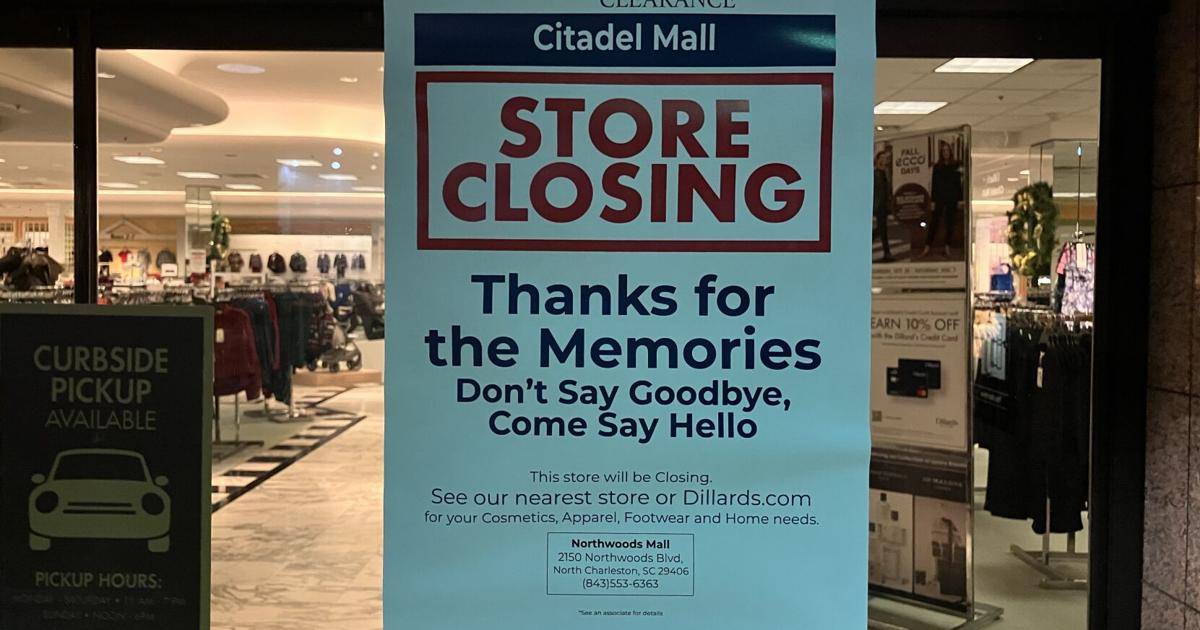
Dillard’s to Close Citadel Mall Location After 34 Years
Dillard’s to Exit Citadel Mall After 34-Year Run The West Ashley retail landscape is losing one of its...

Virginia Beach Launches Military-Themed Gingerbread Holiday Trail
Virginia Beach Expands Holiday Gingerbread Tradition to Military Families The annual gingerbread competition in Virginia Beach is evolving...

Two Men Charged in Burlington Card Shop Break-ins
Burlington Police Arrest Two Men Following Series of Trading Card Shop Break-ins Two men are now in custody...