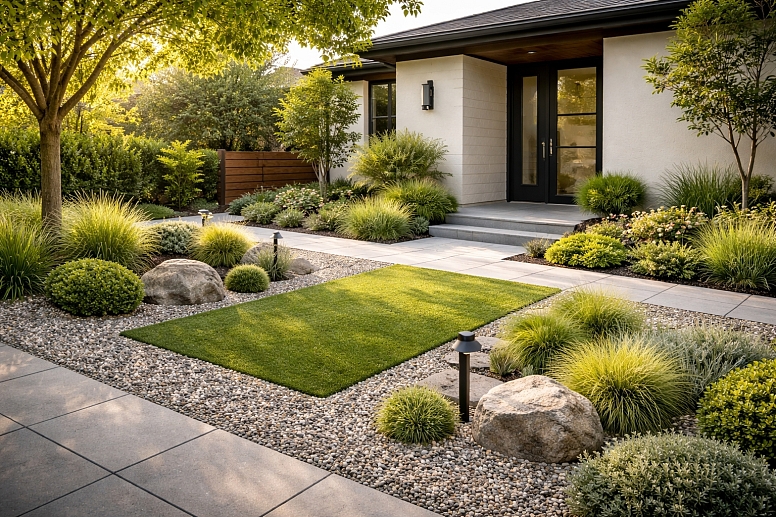
Baton Rouge homeowners looking to cut down on weekend yard work can refresh their front yard by sizing beds to fit available time, matching plants to local sun and drainage conditions, and keeping mulch layers thin.
Most front yards fail to stay low-maintenance because beds are built larger than necessary. Every square foot of bed space requires ongoing weeding and mulch management, according to KTG Lawnservices. Framing the house structure rather than the entire property line creates a sharper look while reducing upkeep.
Simple curves or straight lines make mowing and edging much easier than wiggly borders.
Before buying new greenery, homeowners should observe their property’s sunlight patterns and drainage during heavy rainstorms. Ground conditions vary widely between a baking afternoon strip and a soggy corner. Selecting university-tested varieties prevents plants from struggling in the wrong spot.
Recommended Louisiana Plants
Different microclimates require specific plant selections to thrive without constant intervention. Sunny and well-drained spots suit Drift roses, which grow about 2 to 3 feet tall, alongside Gulf Coast muhly grass. For foundation plantings in sun to part shade, Cinnamon Girl distylium offers an evergreen option that reaches 2 to 3 feet in height while tolerating both wet and dry soil conditions. Shady beds accommodate aucuba, fatsia, and Florida anise, while damp low spots are best left to native Louisiana iris.
Mulching properly helps retain soil moisture and suppress weeds. Guidance from the LSU AgCenter recommends applying about 1 inch of mulch around bedding plants and perennials, 2 inches around shrubs, and 3 inches around trees. Spreading the material flat without piling it against stems keeps beds healthy. Spring-blooming shrubs require pruning only after their flowers fade, while ornamental grasses need a single cut down to about 8 to 12 inches in late winter.
Headquartered in Baton Rouge, the LSU AgCenter is an agriculture research center associated with the Louisiana State University System. Operating through the Louisiana Cooperative Extension Service with offices in all 64 Louisiana parishes, the center extends research-derived knowledge to the public through educational opportunities and advice covering lawns and gardens. Its published mulch and pruning recommendations serve as practical yard-care guidance for local residents rather than legally binding mandates.
Worth a look
Sheriff’s Deputies Search for Gunman Who Killed Man in Vista Dispute
Sheriff's deputies are searching for a man who shot and killed another man during a dispute in Vista...

Lincoln Singer Ingrid Griffin Brings Nebraska Roots to Nashville Scene
Lincoln-born singer-songwriter Ingrid Griffin is bringing her Nebraska upbringing to the Nashville country music scene, balancing her burgeoning...

Man in Late 20s Shot Dead After Fight at Chelsea High School Football Game
A man in his late 20s died after being shot during a fight on the sidelines following a...

Route 66 Pony Bridge Named National Historic Civil Engineering Landmark
The William H. Murray Bridge, widely recognized as the Pony Bridge, has officially been designated a National Historic...