
The William H. Murray Bridge, widely recognized as the Pony Bridge, has officially been designated a National Historic Civil Engineering Landmark by the American Society of Civil Engineers.
This recognition arrives as the historic Route 66 structure, which spans the South Canadian River near Bridgeport, Oklahoma, celebrates its role in American travel history.
Stretching 3,944 feet, the bridge is the longest span on Oklahoma’s portion of the historic highway. The structure was named for the state’s ninth governor, William H. “Alfalfa Bill” Murray, and was built to accommodate a Route 66 realignment that bypassed the original town of Bridgeport. The Kansas City Bridge Company completed the project ahead of schedule to overcome challenges posed by the river’s shifting channel.
The bridge gained cultural prominence after appearing in the 1940 film “The Grapes of Wrath,” capturing the era when it served as a vital passage for migrants traveling west. Its design, characterized by 38 distinctive yellow trusses, was intended to bypass the original town of Bridgeport due to the shifting channels of the South Canadian River, Frequency66 noted.
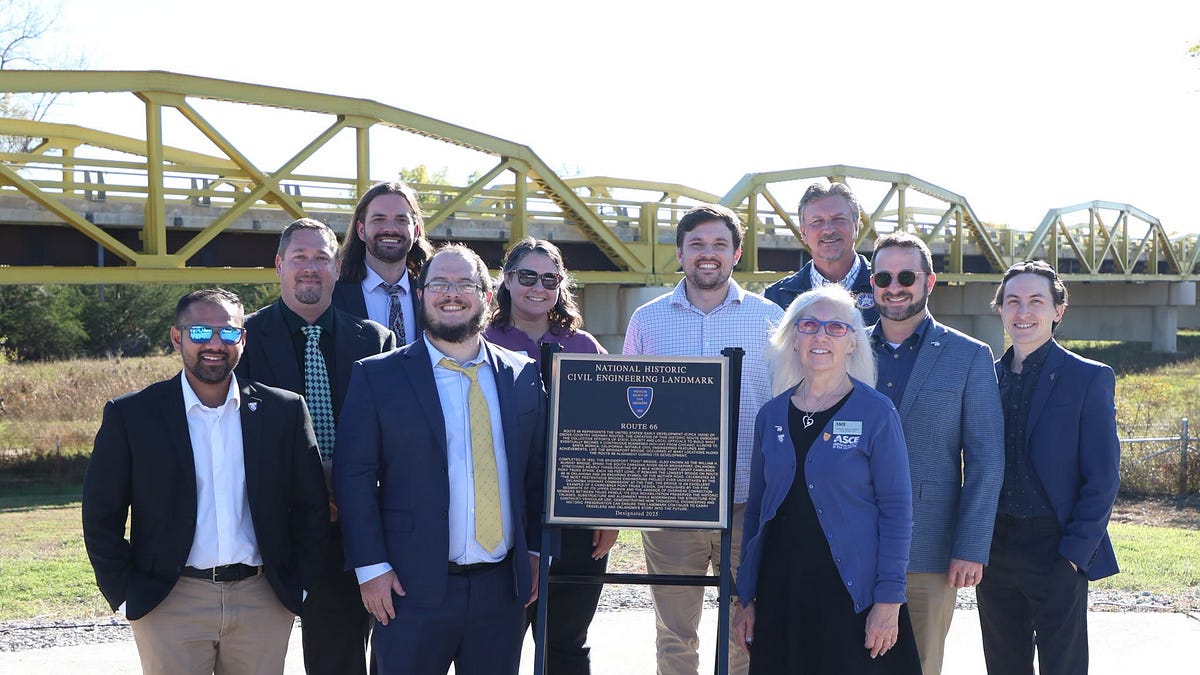
The bridge earned its place on the National Register of Historic Places in 2020, according to Bridgehunter’s Chronicles. During the Dust Bowl years, the structure served as a vital crossing for thousands of migrants heading west in search of work and hope, as reported by Frequency66.
To address structural deficiencies, the Oklahoma Department of Transportation oversaw an ambitious project that removed and refurbished all 38 original trusses. According to Frequency66, crews reinstalled these as aesthetic elements on a modern deck, marking the first use of ultra-high-performance concrete on an Oklahoma highway bridge.
The structure gained lasting fame after appearing in the 1940 film “The Grapes of Wrath,” where a scene was filmed on its western approach depicting the death of Grandpa Joad.
Frequency66 reports that officials added a new parking and observation area with interpretive kiosks to help mark the crossing for modern motorists.
The bridge underwent a $35 million transformation to address structural deficiencies, closing for nearly two years before reopening in May 2024, KFOR-TV reported. The project was funded in part by a federal BUILD grant and involved a collaboration between the Oklahoma Department of Transportation, the design firm STV, and the Oklahoma Bridge Company.
As part of the upgrades, crews installed a 25-foot-tall yellow compass sculpture to assist travelers, according to Frequency66. While Bridgehunter’s Chronicles cites a count of 36 trusses, both Route 66 News and Frequency66 report the structure features 38 trusses.
Related reading
Sacramento County 2026-2027 Property Tax Deadline: First Installment Due Dec. 10
The first installment of Sacramento County secured property taxes for the 2026-2027 tax year is due no later...

Sheriff’s Deputies Search for Gunman Who Killed Man in Vista Dispute
Sheriff's deputies are searching for a man who shot and killed another man during a dispute in Vista...

Lincoln Singer Ingrid Griffin Brings Nebraska Roots to Nashville Scene
Lincoln-born singer-songwriter Ingrid Griffin is bringing her Nebraska upbringing to the Nashville country music scene, balancing her burgeoning...

Man in Late 20s Shot Dead After Fight at Chelsea High School Football Game
A man in his late 20s died after being shot during a fight on the sidelines following a...