
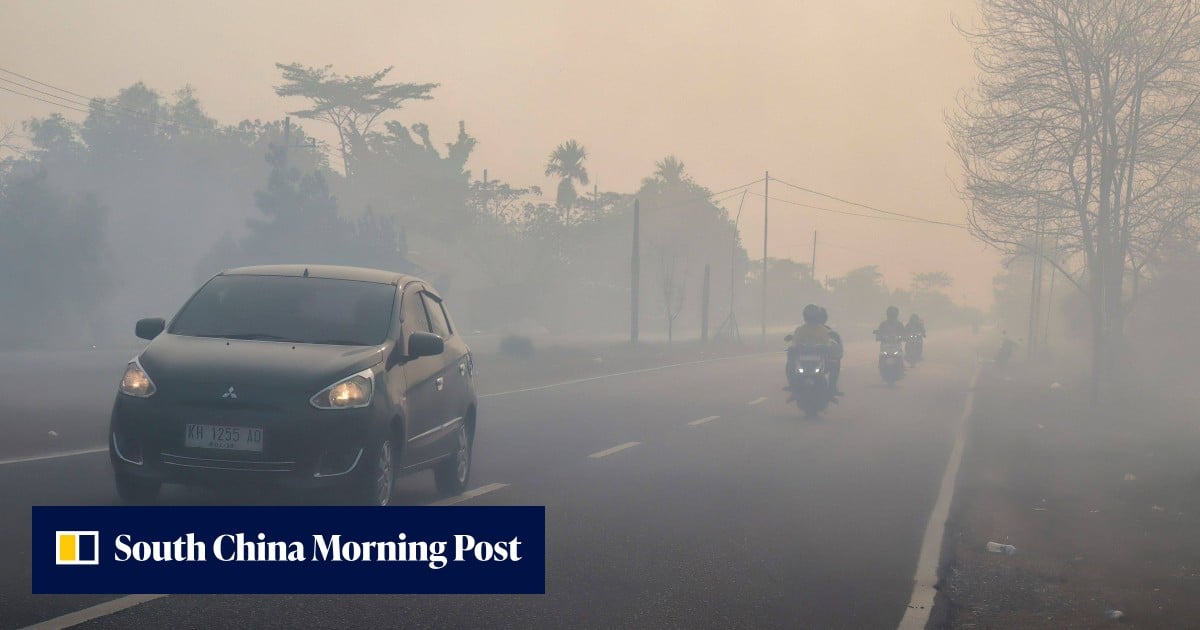
As dry weather and rising hotspots push air pollution to unhealthy levels across parts of Malaysia and force hundreds of school closures in Sarawak, Malaysia urged Asean member states on August 21 to activate coordinated regional prevention and monitoring measures under the transboundary haze agreement.
Sarawak School Closures and the Spike in Air Pollution
Transboundary haze has once again disrupted daily life across Malaysian Borneo. The worsening air quality forced nearly 600 schools in Sarawak to shut on Friday, affecting close to 200,000 pupils. The closures encompassed 509 primary schools and 82 secondary schools, according to an announcement from the Sarawak Education Department.
Monitoring data from the Malaysian Air Pollutant Index Management System captured the severity of the surge. By morning, the worst-hit district of Serian—located near the border with Indonesia’s Kalimantan—reached a very unhealthy air pollution index level of 239. Across the wider region, air pollutant readings climbed sharply into unhealthy territory in multiple districts, including Sri Aman, Kuching, Samarahan, Sarikei, Sibu, and Bintulu.
An API reading of 0 to 50 indicates good air quality, 51 to 100 moderate, 101 to 200 unhealthy, 201 to 300 very unhealthy and anything above 300 hazardous.
Diplomatic Appeals and Regional Channels
In response to the escalating crisis, Kuala Lumpur turned to regional and diplomatic channels to demand collective action. Foreign Minister Datuk Seri Mohamad Hasan stated that Malaysia would utilize Asean diplomatic channels to negotiate a resolution to the cross-border smoke, noting that ASEAN menjadi platform terbaik bagi membincangkan isu yang melibatkan negara-negara dalam rantau ini.
As part of those diplomatic efforts, Natural Resources and Environmental Sustainability Minister Datuk Seri Arthur Joseph Kurup dispatched an official message to Asean Secretary-General Dr. Kao Kim Hourn on Friday (Aug 21). Minister Kurup also arranged to write directly to his Indonesian counterpart.
The Threat of a Strengthening El Nino Phenomenon
Malaysian officials warned that the current bout of smoke could intensify in the coming weeks. Prolonged dry weather across the southern Asean region has driven an increase in active hotspots and haze generation, a situation that could worsen as the El Nino phenomenon is expected to strengthen gradually over the coming months.

“Pelaksanaan intervensi awal, pertukaran maklumat secara tepat serta koordinasi serantau yang erat merupakan elemen asas dalam menangani isu jerebu secara berkesan,”
Datuk Seri Arthur Joseph Kurup, Natural Resources and Environmental Sustainability Minister
That assessment aligns with broader regional observations. The Asean haze centre noted that scattered hotspots in Kalimantan and isolated detections in Sumatra, Sabah, and Sarawak were masked by extensive cloud cover, complicating efforts to track the full extent of the fires visually.
Malaysia’s Demands Under the Asean Haze Agreement
Malaysia’s strategy rests on the framework of the Asean Agreement on Transboundary Haze Pollution (AATHP), with the regional goal of achieving a haze-free Asean by 2030 through the effective implementation of the agreement. While acknowledging that fires remain contained within individual member borders, Kuala Lumpur stressed that regional vigilance remains essential.
“Walaupun kebakaran ketika ini masih terkawal dalam sempadan negara masing-masing, risiko jerebu merentas sempadan menuntut kesiapsiagaan kolektif serta kewaspadaan tinggi di peringkat serantau.”
Datuk Seri Arthur Joseph Kurup, Natural Resources and Environmental Sustainability Minister
The official messaging emphasized early intervention, exact information sharing, and tight regional coordination. Malaysia also called for maintaining close monitoring in high-risk areas, boosting hotspot surveillance, strengthening enforcement against open burning bans, and ensuring efficient firefighting operational preparedness.
Bilateral Talks in Bandar Seri Begawan
The transboundary crisis also anchored high-level bilateral discussions abroad. While visiting Brunei for a three-day work trip beginning Wednesday—encompassing the 27th Malaysia-Brunei Exchange of Letters (EOL-27) on August 21 and the 27th Malaysia-Brunei Annual Leaders’ Consultation (ALC-27) on August 22—Malaysian High Commissioner to Brunei Datuk Mohd Aini Atan noted that regional haze issues would feature prominently.
Prime Minister Datuk Seri Anwar Ibrahim and Sultan Brunei Sultan Hassanal Bolkiah placed the regional haze issue on their agenda as a matter of shared mutual concern during their official meetings.
Related reading

Arab Media Focuses on Gaza Destruction for October 7 Anniversary
Three years after Hamas launched its October 7 invasion of Israel, Arab media coverage has focused heavily on...

Asim Iftikhar Ahmad Leaves UN Role to Become Pakistan Foreign Secretary
Ambassador Asim Iftikhar Ahmad concluded a consequential two-year tenure as Pakistan's permanent representative to the United Nations in...

AU Mediation Delegation Meets AFC/M23 Leaders in Goma
An African Union mediation delegation met the leadership of the AFC/M23 movement in Goma on Monday, October 5,...
Aid Groups: Israeli Restrictions and Funding Gaps Delay Gaza Shelter Aid
As winter approaches, 1.65 million displaced Palestinians in Gaza face a fourth season in worn tents and damaged...