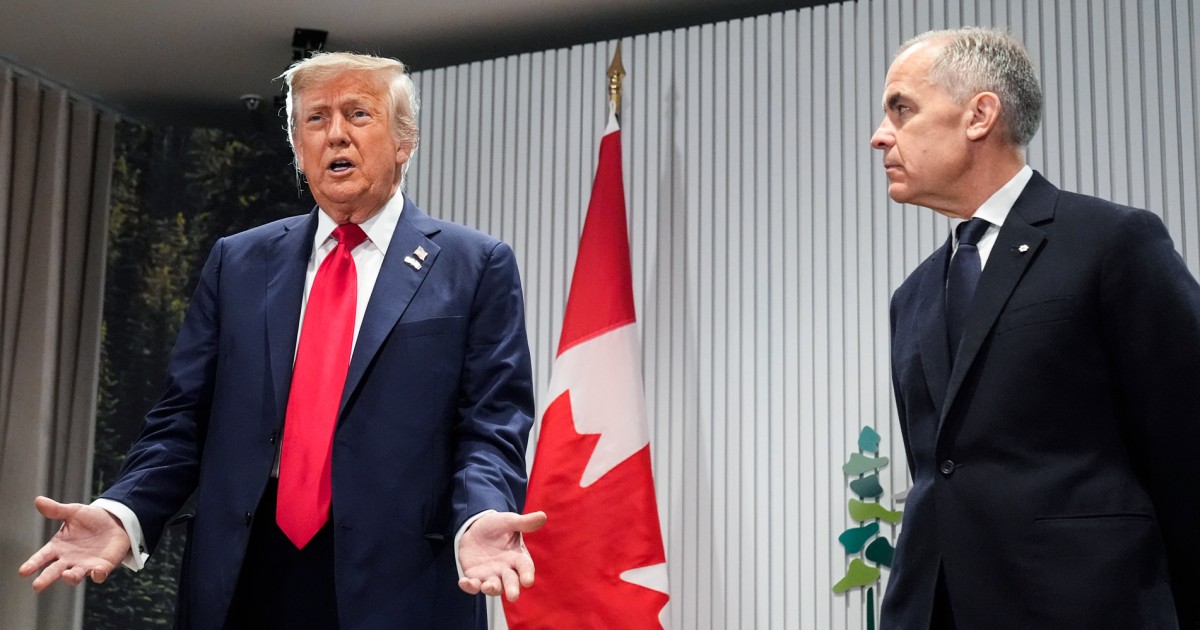
Trade talks between the United States and Canada collapsed following unsuccessful negotiations in Washington between Canadian minister for trade with the U.S. Dominic LeBlanc and U.S. Trade Representative Jamieson Greer, according to the Straitstimes. Canadian Prime Minister Mark Carney announced he had suspended trade negotiations and directed Canadian negotiators to return to Ottawa after reporting that last-minute changes in U.S. proposed terms were unfair, uneconomic, and called into question the reliability of any deal.
Trade Negotiations Collapse After High-Level Discussions Fail
Earlier in the diplomatic process, a visit by Carney to the White House on Oct. 7, 2025, had initially left both nations in reach of a potential trade agreement, with expectations from President Donald Trump that Canadians would be very happy with the outcome, as reported by Politico. Officials had discussed aluminum, uranium, and a steel agreement involving tariff-rate quotas, with instructions to finalize an interim deal. However, tensions escalated after Ontario announced a Progressive Conservative government campaign spending C$75 million on an anti-tariff advertisement featuring a 1987 speech by former President Ronald Reagan, leading Trump to terminate discussions at that time over the commercial. Additional friction built as Carney’s government threatened Detroit automakers and raised vehicle import costs, while the Trump administration separately objected to Canada’s digital services tax.
Administration Imposes New 50-Percent Surcharges on Canadian Goods
Following the breakdown in talks, the Trump administration enacted 50-percent tariffs on approximately US$20 billion worth of Canadian goods, amounting to roughly five percent of the country’s exports to the United States, as detailed by Theglobeandmail. These Section 338 tariffs were scheduled to take effect just after midnight, applying regardless of whether goods qualify for preferential treatment under the United States-Mexico-Canada Agreement.
The White House cited Canada’s retaliation against previous U.S. trade measures as a primary driver, noting that China and Canada were the only two countries to retaliate rather than negotiate. The new measures target a wide array of products, including milk, whey, lactose, beer, wine, whisky, prune wine, sake, honey, down for stuffing pillows, bedsheets, horsehair, flowers, chandeliers, fake beards, cameras, and mosses and lichens. Key exclusions from these specific tariffs include Canadian oil, gas, potash, fish, and critical minerals.
Broader Economic Context and Trade Statistics
The trade friction unfolds against a backdrop of deep economic integration between the two neighbors. According to trade data from the ustr.gov, total U.S. goods and services trade with Canada reached an estimated $872.3 billion in 2025, down 4.6 percent from 2024. U.S. goods exports to Canada dropped to $333.6 billion, while goods imports fell to $381.9 billion, resulting in a goods trade deficit of $48.3 billion.

The overarching framework governing continental commerce remains the USMCA, which entered into force on July 1, 2020, replacing NAFTA and the historic Canada-United States Automotive Products Agreement of 1965. Despite these established trilateral mechanisms and dispute settlement procedures, current retaliatory actions—with Prime Minister Carney stating Canada would retaliate dollar for dollar against the new tariffs—continue to strain bilateral relations.
Keep reading
- UK Police Arrest Seventh Suspect in Investigation Near RAF Fairford
- S. Jaishankar Visits Ghana to Advance India-Ghana Comprehensive Partnership
- PM Takaichi Asks Trump to Urge Kim Jong Un for Japan Summit (archyde.com)
- Republican rebukes Trump for suggesting Iran could ‘take out’ LA or San Diego (newsarchyuk.com)

UK Police Arrest Seventh Suspect in Investigation Near RAF Fairford
Following a suspected plot near RAF Fairford, British police have arrested a suspect on suspicion of preparing terrorist...
S. Jaishankar Visits Ghana to Advance India-Ghana Comprehensive Partnership
External Affairs Minister S.
Omaheke Governor Pijoo Nganate Urges Sustainable Livelihoods for Returnees
"A commemoration must also challenge us to ask: What are we doing for the living? What are we...
Australian Soldier Killed and Five Injured in Northern Territory Training Crash
An Australian Army soldier died and five others sustained injuries on October 5, 2026, during a vehicle rollover...