
Hung Phan thought he had perfected the art of the airport mule.
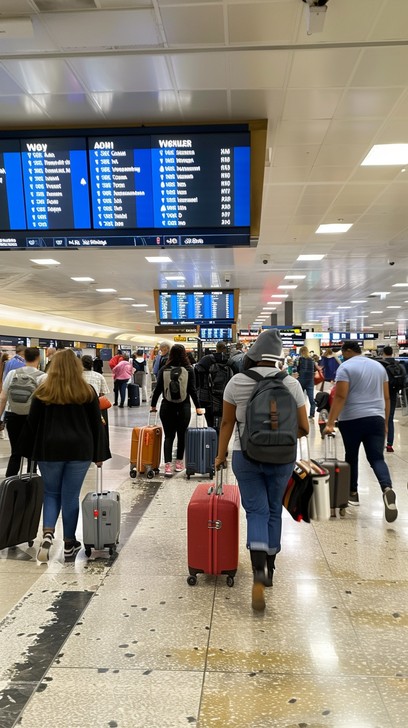
After successfully navigating security checkpoints in the past, he arrived at Portland International Airport in October 2025 with over 50 pounds of marijuana packed into his checked luggage. He wasn’t just carrying a personal stash; he was attempting to transport 16 times the legal limit across state lines, KPTV reported.
For Phan, the motivation was simple, if desperate. Facing significant debt and struggling to make ends meet, he viewed the illicit cargo as a solution to his financial woes.
His process was methodical: he vacuum-sealed the cannabis into small bags, layered them with dryer sheets to mask the odor, and glued the suitcase zippers shut. He believed his concealment system was enough to bypass the Transportation Security Administration. He was wrong.
“I was in a lot of debt and struggling and all I know is how to hustle. I took an order to whoever wanted it. It’s just weed; I’m not killing nobody. Anyone who is 21 can go buy it. So, I got an order, I packed it, and I sent it, and I took it to the airport. And boom.”
Phan told KPTV that he was caught in 2025 as part of a larger sweep where 30 passengers were pulled from the screening line at PDX after agents identified signs of cannabis in their luggage. Following his arrest, he pleaded guilty to charges including unlawful possession, illegal export, and unlawful delivery of marijuana. His sentence included 36 months of probation and $12,750 in fines.
The Mechanics of Organized Smuggling
While Phan claimed he was operating as a solo actor, his case highlights a broader, more systemic issue at PDX. Eric Pickard, a strategic prosecutor for the Multnomah County District Attorney’s Office, notes that the airport has become a focal point for organized smuggling operations. According to Pickard, his office encounters attempts to move 50 pounds or more of marijuana through the airport approximately every two weeks.
The profile of these smugglers often deviates from the image of a seasoned kingpin. Prosecutors frequently see individuals with little to no prior criminal history, often young people who are recruited by larger organizations to serve as the “fall guy.” The financial allure is high, but the risk is systemic.
The scale of these operations can be significant. On March 4, 2025, Tiffany Ramos and Alicia Meza were apprehended before boarding a flight to London with over 100 pounds of marijuana. They admitted to police that they were being paid $5,000 to transport the bags. Similarly, in May 2026, Japreshia Hillie was caught with 60 pounds of marijuana, claiming she didn’t even know what was in the bags she had been paid to move.
The Escalation at PDX
The data from the Port of Portland suggests that the frequency of these attempts is on a clear upward trajectory. In 2022, there were six arrests for smuggling at least 2 pounds of marijuana, followed by five arrests in 2023. By 2024, that number tripled. As of September 2026, there have been 19 recorded arrests involving marijuana smuggling at the airport.

The strategy for law enforcement is preemptive. TSA officials notify Port of Portland police the moment they detect contraband in checked bags. The goal is to intercept the individual before they reach their gate. “We want to make sure we hold them accountable. If they fly away, that’s more of a challenge for us,” Pickard explained.
For those considering the risk, the legal reality is often a combination of hefty fines and long-term supervision. The promise of quick cash frequently evaporates under the weight of legal fees and probation requirements. As Pickard puts it, the profit margins for these smugglers rarely survive the encounter with the justice system.
Phan, now halfway through his probation, is looking to move past his arrest. As of November 2026, the Port of Portland continues to coordinate with federal and local agencies to stem the flow of illicit cannabis through the facility, signaling that the current trend of increased enforcement and surveillance is unlikely to subside.
Worth a look

Tax Retreat Opens Registration for 2027 Minneapolis Event
Registration is officially open for the fourth annual Tax Retreat, which will take place July 28–31, 2027, at...

Woman Dead, Man Injured in Detroit East Side Double Shooting
A double shooting on Detroit's east side left a woman in her 20s dead and a man in...

Boston Celtics face Philadelphia 76ers at Xfinity Mobile Arena
Just ten games into the 2026 season, the Boston Celtics travel to face the Philadelphia 76ers for their...

Dr. Enrico Novelli to Lead Sickle Cell Disease Care in Maryland
Dr. Enrico Novelli has taken the helm of a major regional effort to transform care for patients with...