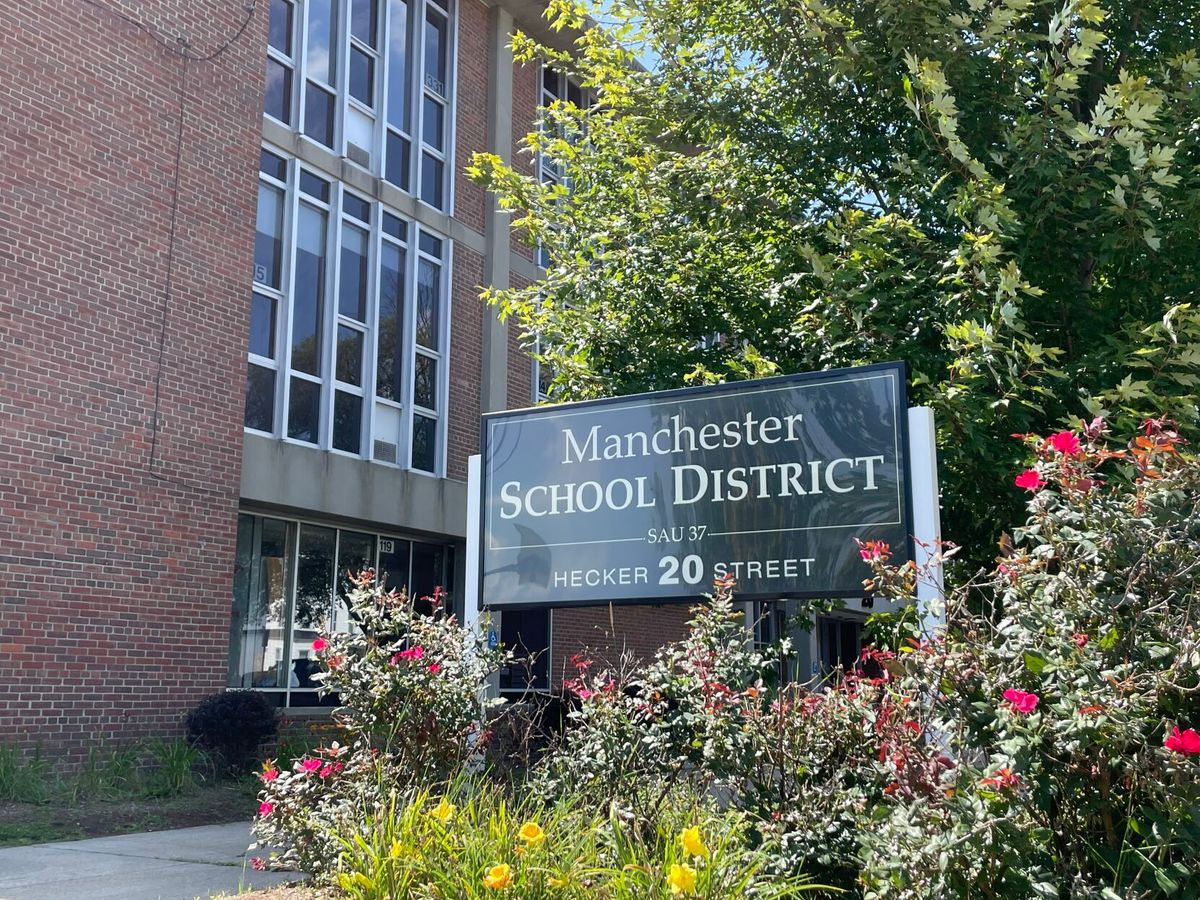
Manchester school board members tabled a proposal to eliminate German, Latin, American Sign Language and Family and Consumer Sciences courses for the 2026-2027 school year, citing a need for more discussion on low enrollment and staffing.
High school academic instructional director Geoff Giotas presented the recommended cuts to the Teaching and Learning Subcommittee. The list includes Family and Consumer Sciences at Central High School only, where enrollment is currently zero with no staffing; Latin district-wide, offered at Memorial and Central with 41 total students; German district-wide, offered only at Memorial with 24 students; and American Sign Language at Central High only, with 16 students enrolled.
“We looked at historic enrollment class sizes and the student impact this might have,” Giotas said.
Ward 1 school board member Julie Turner said she lacked sufficient information to vote.
“So, I don’t know that I have enough information tonight to confidently make an informed decision to say, ‘Yes these all get axed,’ and we’re just gonna move forward from there,” Turner said. “I’m not super comfortable approving the proposed eliminations.” School board member Sean Parr questioned why German and Latin enrollment lagged behind other languages. “I think the biggest reason is that it’s an elective credit and it’s not required, and French and Spanish are the more popular languages,” Giotas said. “For me when I look at it, what I see is that it’s not required by our diploma or the state diploma and it’s an elective credit. I do know world language overall over the course of years has been dwindling.” “Language is kind of going through a kind of existential moment right now, not just in high school, but also in college, right? And there are cuts across the board and all over,” Parr said. “In a real way, learning another language is very beneficial to students. That much is clear, right? But we are seeing that requirements for students to learn second languages have been changing and lowering in a lot of ways there, and I think that that has had a big effect on how we think of these types of courses.” Parr cited studies showing Latin helps multilingual students learn English better. “So there are a lot of good reasons to kind of think about why courses like that are good and useful and helpful and things that maybe should be offered at a district like Manchester, where one of our biggest strengths is the number of offerings we have at high school, right?”
Parr said. “From my perspective, eliminations like this need a little bit more of a plan. What do we think we want Manchester students to learn with regard to second languages in high school, and what’s our plan to make sure that we have the right offerings for that? I guess from my perspective, it seems a little bit hasty to cut these languages.” “Latin is a root of many of our words,” said Ward 12 school board member Julie Smith. “If they really understood Latin, they could use that even in English or in some of the other languages, so I hate to see Latin go.” Assistant Superintendent Nicole Doherty defended the administration’s rationale, noting the difficulty of justifying staffing for very small sections. “To justify a teacher coming in to teach 10 students, and then 9 students, on a section, it’s hard for me to swallow and justify when we have other opportunities for them to choose as dual enrollment, AP, other interests,” Doherty said.
“They do have other languages that they can choose besides German and Latin. Sometimes there’s a lot of options for the child to take, the student to take, and there’s only so many sections in a day for them to be able to put that in that slot out of their four years.” Parr shared his own experience studying multiple languages without achieving fluency, but valuing the cultural understanding gained. “I took five years of Latin, I took two years of German, two years of French, two years of Italian — I’m fluent in nothing,” Parr said.
“I’m fluent in nothing, but I can do certain things with those languages, and I understand cultures in different ways because of that study, and I can translate on my own in a lot of different languages. I know there’s a lot of value to the study of languages, but I think I said before we need new models for how languages can be taught and what they can offer our students, and I don’t think we’ve quite adapted to the moment we’re in right now with languages, requirements, AI and so forth.” The item was tabled for additional discussion at a later date.
Related reading

U.S. Army Plans 10,000-Pound Detonation in Iowa After Court Clears Way
The U.S. Army plans to detonate nearly 10,000 pounds of bomb-making material at its Middletown, Iowa, ammunition plant...

Cam Talbot Seizes Blue Jackets Starting Goalie Role Over Jet Greaves
Columbus Blue Jackets veteran goaltender Cam Talbot has seized the starting role just 22 games into the season,...

St. Paul Council Majority Opposes Mayor’s Plan to Clear Two Homeless Encampments
St. Paul Mayor Kaohly Her announced Nov. 19 that the city will clear its two remaining large homeless...

The Principal License Became Active 13 Days
The principal license became active 13 days after Reed submitted a new application on Nov. 10, according to...