
Venezuela’s government published a macroeconomic framework Tuesday putting total public debt at $237.5 billion — 242% of GDP — and laid out a restructuring plan it calls “clear and credible.”
The nearly 200-page document, titled “Venezuela Reborn,” marks the first comprehensive debt disclosure in years and a formal step toward what could become one of the world’s largest sovereign restructurings. Wall Street analysts had long estimated the load at roughly $180 billion. The document was released November 24 local time, according to Reuters reporting from Caracas, London, and New York.
Debt Breakdown: Bonds, PDVSA, Overdue Interest
Financial debts — bonds and loans — account for more than 49% of the total, reaching $116.5 billion. Non-financial contractual liabilities concentrated in state-owned oil company PDVSA make up 28%, or $67.3 billion. Eurobond liabilities alone total $110.1 billion, including $45.9 billion in unpaid interest.
The government said its public debt “is in a state of protracted default and is unsustainable, reflecting the constraints imposed by financial sanctions, the decline in hydrocarbon revenues and years of macroeconomic imbalances.”
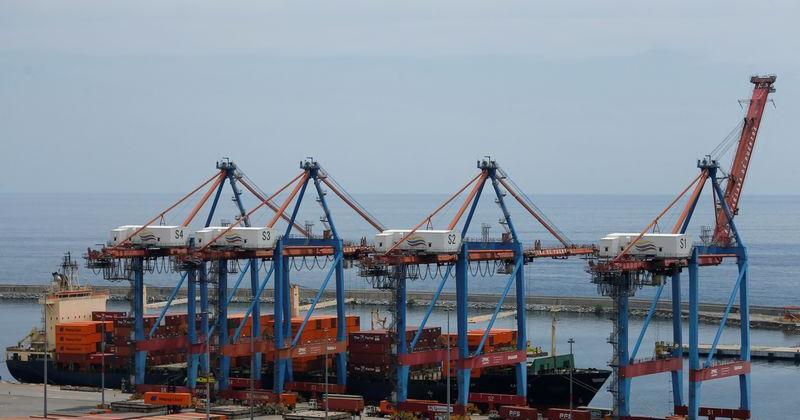
Oil Targets and Growth Projections
The framework projects oil production will grow 9.1% annually to 2.9 million barrels per day by 2036. Net public hydrocarbon revenue, including PDVSA’s fiscal position, is estimated at $12.8 billion in 2026, rising to $18.4 billion by 2031. Economic output is expected to more than double within five years to $200.9 billion. The framework projects oil export revenue of $30.1 billion this year.
In power since 1999, Venezuela’s socialist government expects economic output to more than double in the next five years, to $200.9 billion, according to the nearly 200-page document. The government expects domestic oil production to nearly triple to 2.9 million barrels per day over the next decade and talked up the country’s natural gas potential.
The oil-rich country has endured more than a decade of economic crisis marked by widespread shortages of basic necessities, power outages and a migrant crisis that has seen millions of people flee its borders.
Restarting International Engagement
Venezuela defaulted on its international bonds in 2017 and remained largely shut out of global capital markets until U.S. forces seized former President Nicolás Maduro in January. Since then, the government has re-engaged with multilateral institutions. The Venezuelan government and PDVSA have been in default since 2017. However, since the U.S. military captured former President Nicolás Maduro in January this year, the Venezuelan government has pursued debt restructuring as it seeks to return to international financial markets.

ExxonMobil signed a preliminary agreement with PDVSA this month to study a return, and a confidential KPMG report detailed how a Treasury-run account handled Venezuelan oil revenue. Venezuela announced its restructuring plans in May and promised key figures within a month, but twin earthquakes in June complicated the assessment, according to Reuters.
“We have normalized Venezuela’s representation before multilateral and financial organizations, and we are in advanced discussions to resolve the existing arrears with some of them,” Calixto Ortega, top economic adviser to acting President Delcy Rodriguez, said on state television Tuesday. “We will restructure public debt in a comprehensive manner, and four principles guide us in pursuing this objective: sustainability, comprehensiveness, good faith and transparency.”
Years of politicized management, including the 2002 firing of over 19,000 workers and a shift toward funding political projects over maintenance, eroded technical capacity and triggered endemic corruption, with at least $11 billion stolen between 2004 and 2015.

PDVSA’s collapse decimated the hydrocarbon revenues that once underwrote Venezuela’s sovereign obligations, helping push the country into a protracted default on its international bonds in 2017.
IMF Response and Outstanding Hurdles
“We are currently reviewing the information made available by the authorities and it would be premature to comment on specifics at this stage,” an International Monetary Fund spokesperson said. The Fund added that “restoring fiscal and debt sustainability are critical objectives for Venezuela’s economic stabilization and recovery. Resuming relations allows Venezuela to exercise its rights and fulfil its obligations as an IMF member, including those related to surveillance, capacity development, and access to IMF financial support, consistent with IMF policies,” the spokesperson said. Analysts note the plan lacks a published debt sustainability analysis detailing a repayment schedule, and U.S. financial sanctions remain in place.
Venezuelan sovereign and PDVSA bonds rose more than 4 cents on the dollar after the release, while the Venezuela Creditor Committee declined to comment. On expectations of a debt restructuring, prices of Venezuelan government bonds and bonds issued by PDVSA rose by more than 4 cents per $1 of face value that day.
Still, major obstacles are expected before the debt restructuring can be completed. An analysis of debt sustainability, which could assess Venezuela’s ability to repay its debt, has yet to be made public, and U.S. financial sanctions remain in place.
Keep reading
Chinese Scholars Claim Batanes; Chinese Vessels Appear Off Islands
Chinese academics declared the Philippines' northernmost province Chinese territory at a Guangzhou symposium on June 30, and Beijing...

Ukrainian Sea Drones Sink Russian Corvette Off Libya
Ukrainian naval drones sank a Russian corvette and struck a cargo ship off Libya on Sunday, extending Kyiv's...

Gen Muhoozi Denies UPDF Link to Plane Shot Down in Minembwe
UPDF had nothing to do with the aircraft that was shot down in Minembwe. We have penalized that...

Fonterra Applies to Dump 22 Million Litres of Raw Milk
Fonterra applied on October 2 to vary seven Canterbury resource consents so it can dispose of up to...