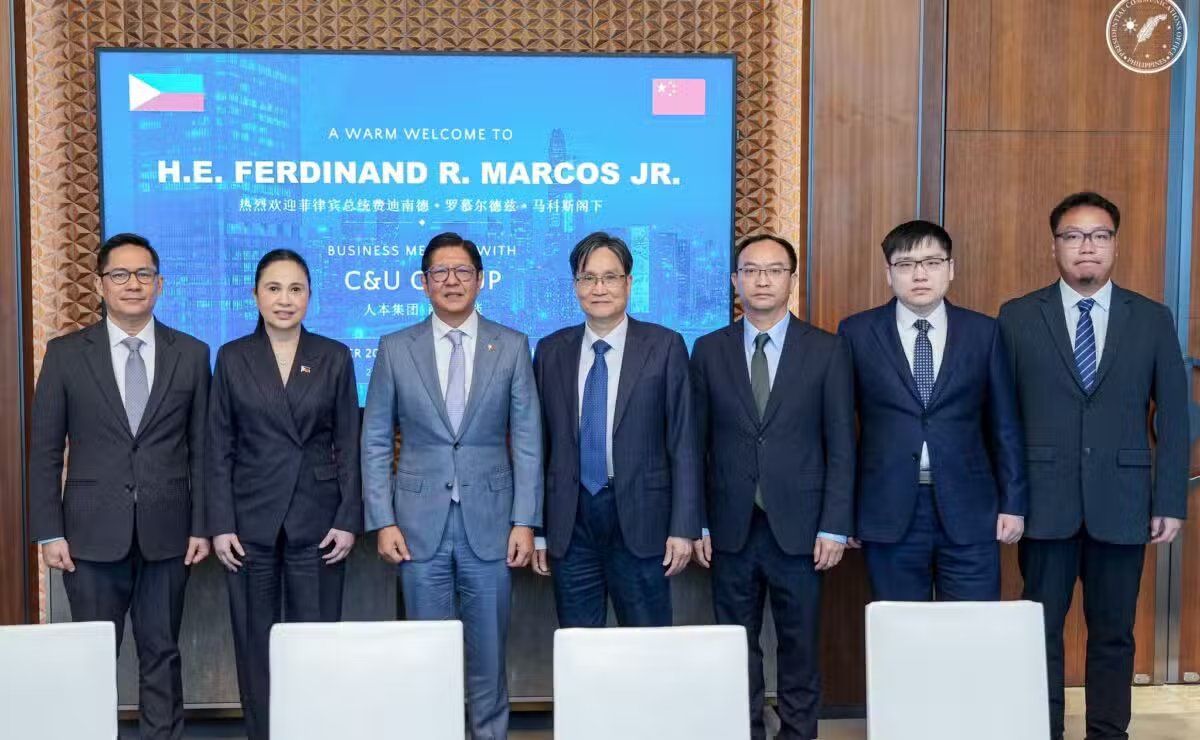
President Ferdinand R. Marcos Jr. returned to Manila on Friday following a three-day trip to Shenzhen, China, where he attended the 33rd Asia-Pacific Economic Cooperation (APEC) Economic Leaders’ Meeting.
The presidential aircraft touched down at Villamor Air Base in Pasay City, marking the conclusion of a diplomatic and business-focused mission that resulted in PHP 41.1 billion in investment pledges, according to the Philippine News Agency. The administration expects these commitments to generate more than 7,000 jobs for Filipino workers.
The investment haul spans several key sectors, including manufacturing, electric vehicles, and renewable energy. During his visit, the President engaged in roundtable discussions with various Chinese firms, including the TCL Group, Huaxin Building Materials Group, Shenzhen Grandsun Electronics and PCON International Corp., as reported by the Philippine News Agency. These meetings were aimed at expanding production capacities and modernizing local manufacturing facilities.
A significant portion of the new capital is tied to the C&U Group, a prominent Chinese bearing manufacturer. The company has committed an initial $87 million to develop a 20-hectare facility in Alitagtag, Batangas. Once operational, this site is envisioned to become the company’s largest production base outside of China and its only manufacturing facility in Southeast Asia, according to details provided by the Philippine News Agency.
Beyond the manufacturing deals, the trip served as a platform for broader regional economic diplomacy. President Marcos emphasized the importance of maintaining open, rules-based trading systems. During the summit, the Philippines also finalized the Comprehensive Economic Partnership Agreement with Chile, marking the country’s first bilateral free trade agreement with a Latin American nation.
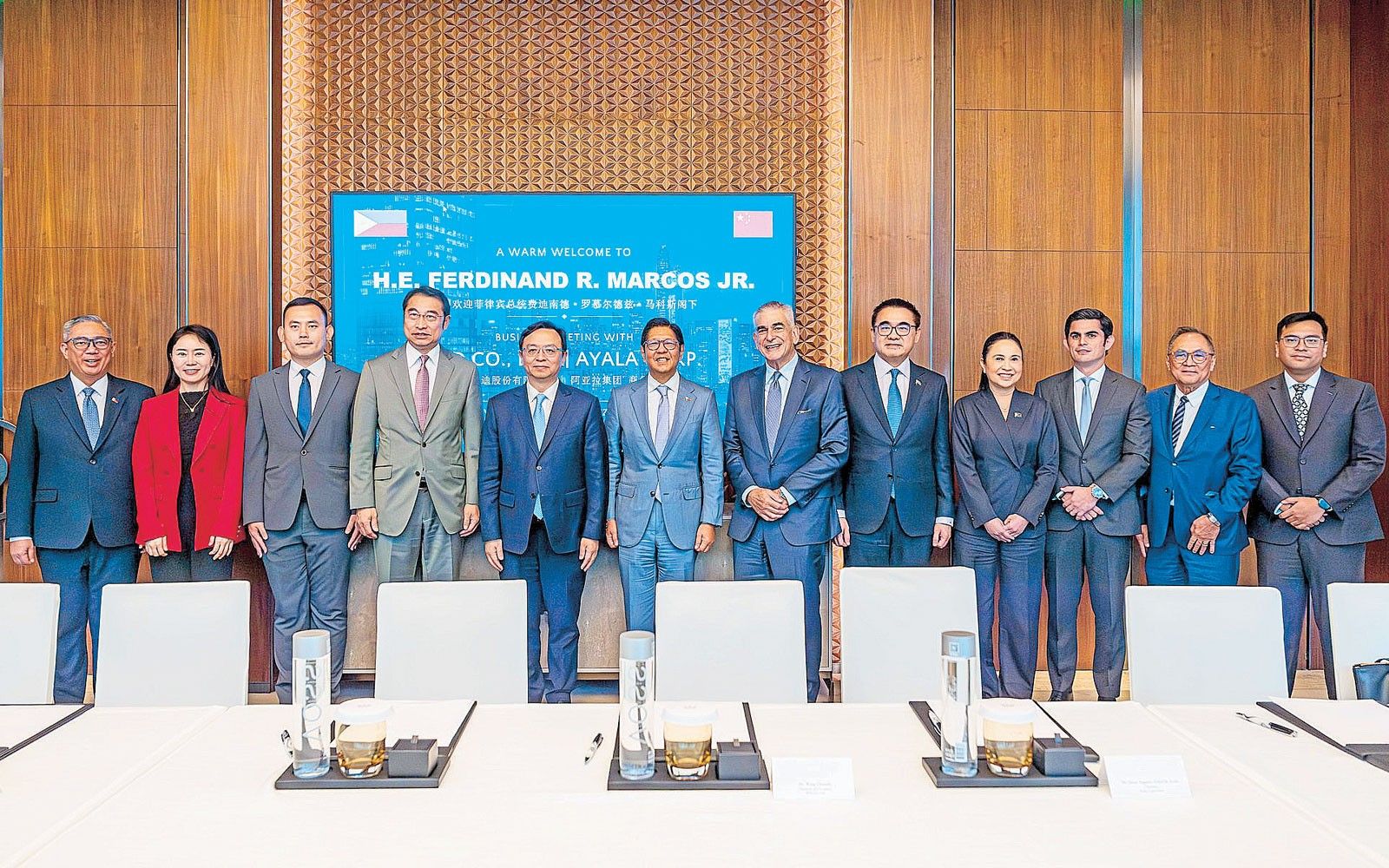
“At the Apec Economic Leaders’ Meeting, I spoke for an open, fair, and rules-based trading system and shared the gains that have made the Philippines an upper-middle-income economy and given us the widest free trade network in our history,” said President Ferdinand Marcos Jr., as quoted by the Inquirer.
The economic focus of the trip unfolded against a backdrop of complex regional dynamics. While the primary objective was securing commercial investment, the President also addressed maritime concerns on the sidelines of the summit.
According to ABS-CBN, he held discussions with Chinese Foreign Minister Wang Yi regarding the de-escalation of tensions in the West Philippine Sea, noting that he believes there is a shared interest in finalizing a Code of Conduct in the South China Sea.
The President’s agenda also touched upon the future of digital infrastructure and artificial intelligence. Addressing other APEC leaders, he advocated for human-centric approaches to AI governance, emphasizing that the technology must earn public trust to be effective.
This digital focus extended to domestic policy discussions as well, including the proposed “Pax Silica” initiative in New Clark City. While some have raised environmental concerns regarding the project, the President clarified that the site is intended for AI development rather than housing data centers, as reported by ABS-CBN.
The following table summarizes the primary investment commitments and targets identified during the summit:
| Investment Category | Key Partner/Entity | Project Scope |
|---|---|---|
| Manufacturing | C&U Group | $87M facility in Alitagtag, Batangas |
| Renewable Energy | Ming Yang Smart Energy Group | Offshore wind infrastructure |
| Electric Vehicles | BYD | Expansion of local EV industry |
| General Industry | Various | P41.1B total pledges; 7,000+ jobs |
The government now faces the task of translating these pledges into tangible industrial growth. Officials have said that the administration’s recent policy shifts in various economic sectors were designed to provide the necessary incentives to attract these foreign partners. As the country looks to position itself as a regional manufacturing hub, the focus remains on whether these commitments will successfully shield the economy from external commodity shocks.

While the investment figures are substantial, the administration has acknowledged that the road ahead requires careful execution. “There is also a realization that we will never go back to the exact situation of February 27, 2026, when it comes to oil, when it comes to petroleum products, even food,” the President said, according to Philstar.com, highlighting the evolving economic reality that has prompted this aggressive pursuit of foreign manufacturing partnerships.
The Philippines, an archipelagic nation consisting of about 7,641 islands, occupies a strategic position in Southeast Asia between the South China Sea and the Philippine Sea. With a population exceeding 114 million, the country has a long history of international trade, having once served as the western hub of trans-Pacific commerce during the colonial era.
Today, the nation is transitioning from an agricultural base toward a service- and manufacturing-centered economy, an evolution underscored by its ongoing efforts to integrate into broader regional supply chains.
As the Philippine delegation settles back into Manila, the long-term impact of these agreements remains to be seen. The success of the Batangas facility and the potential for further integration into the regional EV supply chain will be the primary metrics for evaluating the effectiveness of this diplomatic venture.
Worth a look

Cyberleek Circulates 209GB GTA 6 Xbox Build, Vows Executable Release on Nov 23
The CyberLeek gang has circulated a 209GB set of files claiming to be a full November 2026 build...

Indonesia Demands Google Explain 19,000+ YouTube Channel Closures and Detection Methods
More than 19,000 Indonesian-language YouTube channels vanished in a sweeping platform crackdown, leaving government officials demanding a technical...
Survey: TB Delays Childhood Cancer Diagnosis, Disrupts Treatment Across Asia
A survey of pediatric oncologists across 25 Asian countries reveals that tuberculosis is routinely derailing childhood cancer care,...

Eight Minors Booked for Assaulting Young Couple in Mumbai Park
A disturbing viral video has brought a public park in Mumbai’s Kurla West into the national spotlight, showing...