
Former President of Ireland Mary Robinson called on the European Union to reject the draft agreement emerging from the COP31 climate summit in Antalya, Turkey, after negotiators stripped all references to fossil fuels from the text, RTÉ reported.
The demand came Friday as talks involving nearly 200 countries entered their scheduled final day, with the revised nine-page draft dropping language on phasing out coal, oil, and gas that had appeared in Monday’s 18-page version. The omission marks the second UN climate conference where fossil fuel language has vanished from the final agreement, following a similar outcome at COP30 last year.
“It just undermines the credibility of the whole thing if it’s not possible to get reference to what is causing the harm,” Robinson told RTÉ’s Morning Ireland. “There’s reference to overshoot and then there’s no reference to what is actually causing the harm. That doesn’t make any sense.”
Finance alone will not be sufficient to deliver climate adaptation. Our @RohiniKohli1 reflects on the progress countries have made and what it will take to turn adaptation plans into #ClimateAction at scale.#COP31 https://t.co/p9wzMcjBuD
A ‘Ghost Cop’ Takes Shape
Climate campaigners echoed Robinson’s assessment. The Climate Action Network International, representing more than 2,300 organizations, labeled the summit the “worst Cop ever” and chanted “shame, shame” at a press conference Thursday, according to The Irish Times. Mohamed Adow, director of Power Shift Africa, warned the summit risked becoming a “ghost Cop” if the text stands.
“Frontline communities will look on with despair,” Adow said. “If this version of the text remains, it will be a ghost Cop.”
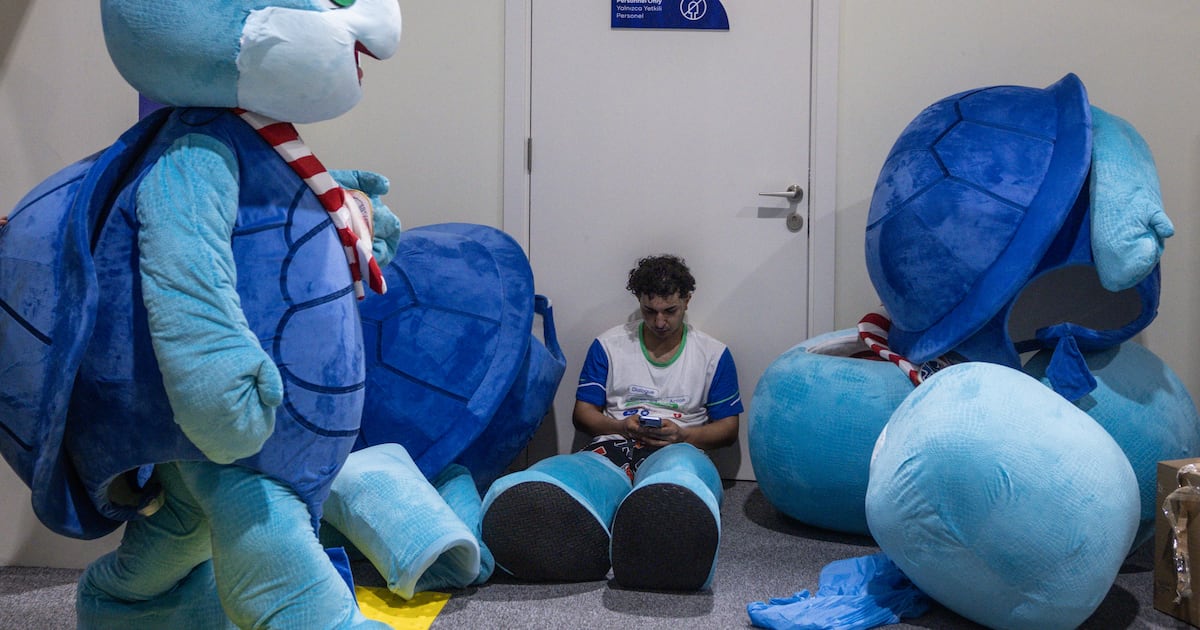
The draft does acknowledge for the first time in a cover decision that global warming is projected to breach the Paris Agreement’s 1.5°C threshold. It replaces the fossil fuel phase-out with a pledge toward an “irreversible global transition towards low greenhouse gas emissions and climate resilience.”
The Electrification Trap
A centerpiece of the Turkish presidency’s agenda — a voluntary “35 by 35” target to raise global electrification to 35% by 2035 from 23% today — survived the rewrite. But the text does not require that electricity come from renewable sources, a gap critics call fatal.
“Electrification without a clear commitment to the transition away from fossil fuels sends an incomplete signal,” Gustavo Pinheiro of the think tank E3G told CNN. Brian Ó’Gallachóir of University College Cork told the Irish Examiner the target addresses a “missing piece of the climate mitigation jigsaw” but warned the fossil fuel omission shows “global consensus on this topic is not achievable at this point.”
A climate deal that leaves out fossil fuels is like a plan to quit smoking that never mentions cigarettes. Yet – once again – today’s revised #COP31 draft drops every mention of fossil fuels, just as last year’s final text did. Read more:https://t.co/ddfdg5b7Hd pic.twitter.com/4nMO0GxhHB
Draft Weakens Adaptation Finance Language and Delays Mechanisms
The draft also weakens language on adaptation finance for developing nations, pushing concrete mechanisms to future meetings, The Irish Times reported. Developing countries, including India and China, have countered with demands that wealthy nations hit net-zero by 2030 and net-negative by 2045, according to The Hindu.
Negotiations are further complicated by the absence of the United States, which has withdrawn from the Paris Agreement. “We don’t want this COP to become a ‘fossil’ COP,” an anonymous EU official told RTÉ, calling the draft “not acceptable and not ambitious enough.”

Geopolitics at the Gate
Expectations for a breakthrough were low entering the summit, with delegations facing competing crises including a war in Iran and the closure of the Strait of Hormuz. Ó’Gallachóir noted the conflict accelerated EV adoption in Ireland as petrol prices spiked.
Brazil’s national secretary for climate change, Aloisio Lopes Pereira de Melo, captured the mood Thursday: “At this point, no one is happy.”
Talks are expected to spill into the weekend. A third draft is anticipated Friday night or early Saturday. Ireland and Tuvalu will co-lead a parallel “Transition Away From Fossil Fuels” initiative for the coming year, aiming to maintain momentum outside the formal UN process.
Robinson, born in 1944 in Ballina, County Mayo, became Ireland’s first female president in 1990, winning as an independent without Fianna Fáil support after serving as a senator from 1969 to 1989. She later served as United Nations High Commissioner for Human Rights from 1997 to 2002, and founded the Mary Robinson Foundation – Climate Justice after returning to Ireland in 2010.
“I’m always hopeful. I’m a prisoner of hope,” Robinson said.
Keep reading
Indonesia Dismantles Two Networks Recruiting Citizens for Russia-Ukraine War
Indonesian authorities have dismantled two distinct recruitment pipelines sending citizens to fight in Russia’s war against Ukraine, exposing...

UK and EU Agree Post-Brexit Reset Deal; Tuition Fees Still Open
British Prime Minister Andy Burnham agreed to a long-awaited post-Brexit reset deal in Brussels on Friday, though the...

Trump, Putin, Xi Hold First Trilateral Summit in Shenzhen
U.S. President Donald Trump, Vladimir Putin and Xi Jinping held their first trilateral talks Thursday in the southern...

Burnham to Finalise EU Reset Deal in Brussels Friday
British Prime Minister Andy Burnham will finalise a reset of relations with the European Union in Brussels on...