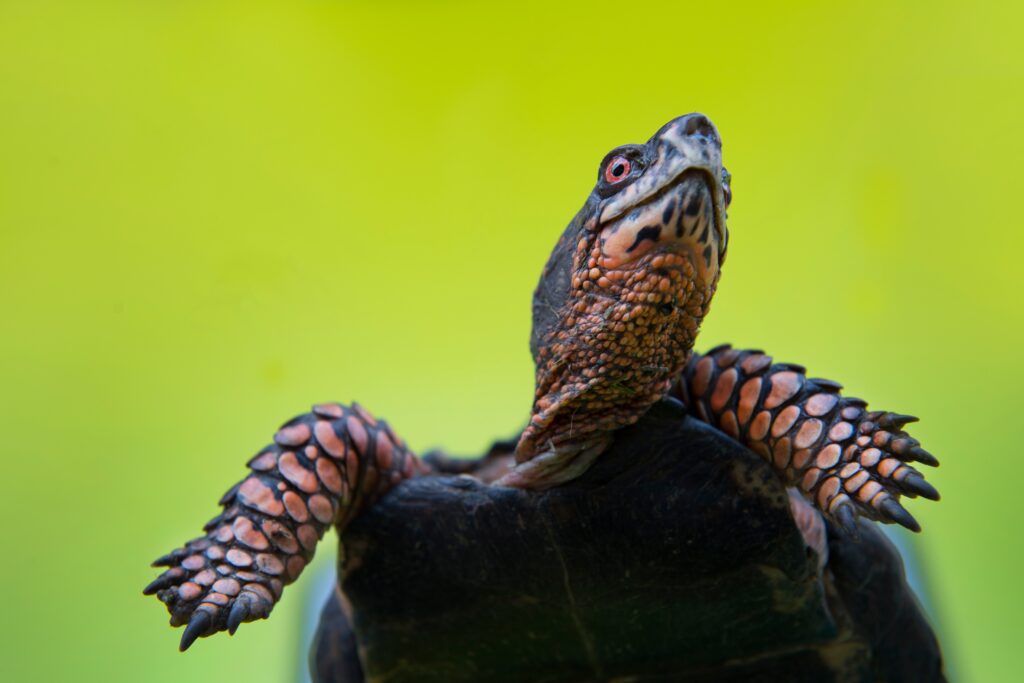
- Eastern box turtle numbers dropped roughly 67 percent over nearly 30 years at a Lothian wetlands sanctuary, a USGS study found.
- Current rules allow taking one turtle from the wild to breed or sell with few restrictions.
- In October 2024, officials seized 43 eastern box turtles in St. Mary’s County; 27 died or were euthanized.
- Public comment on the proposed regulations closes Nov. 27; new rules would take effect spring 2027.
The species is classified as vulnerable by the International Union for Conservation of Nature.
Maryland’s Department of Natural Resources said turtles are “some of the most globally imperiled vertebrate groups” because of growing illegal collection and trade.
Life history makes recovery slow
Box turtles can take seven to eight years to reach breeding age, and juveniles face high predation rates, the Maryland DNR stated. “The loss of mature female turtles can quickly send populations into decline,” said Beth Schlimm, the department’s state herpetologist. Many turtles live 40 years or more in the wild and may reproduce annually, so removing adults has an outsized impact.
Poaching case illustrates the trade
Mary’s County. The animals were housed in “abysmal and cramped conditions,” highly stressed, in poor body condition, and incredibly sick, the DNR said. Despite veterinary care from the Maryland Zoo, 27 turtles died or were euthanized; survivors can never return to the wild due to disease risk.
The individual was charged with 48 counts of animal cruelty, 53 counts of possession without permits, and three counts of failure to obtain a permit, with total requested restitution around $4,100.
Proposed rules broaden protection
They would also limit the “possession, breeding, sale, and trade” of native reptiles and amphibians except by special permit. People who legally possess a native amphibian or reptile under current regulations would qualify for a free “grandfather permit” to keep their pets.
Zoo veterinarians assess seized turtles
The Maryland Zoo’s veterinary team conducted health assessments and provided supportive care for the 43 eastern box turtles and three painted turtles confiscated in St. Mary’s County, the Department of Natural Resources reported.
Dr. Ellen Bronson, the zoo’s senior director of animal health, conservation and research, said the first consideration was the animals’ well-being and whether native turtles could be safely released. Because of the conditions the turtles endured, release was not possible due to the risk of spreading disease, Bronson said.
Zoo and DNR staff placed the surviving turtles at accredited facilities, and some will live out their lives in the box turtle habitat within the Maryland Wilderness portion of the Maryland Zoo, Bronson said.
Regulators cite outdated rules and trade surge
Maryland’s Department of Natural Resources said current regulations are outdated and have left eastern box turtles and other reptiles and amphibians vulnerable to disease, poaching and overcollection, dnyuz.com reported. Officials said the proposed changes would bar wild collection not only of eastern box turtles but also certain other reptiles and amphibians, and would limit possession, breeding, sale and trade of native species except by special permit.
Beth Schlimm, Maryland’s state herpetologist, has dedicated her career to conserving the state’s reptiles and amphibians. As a conservation specialist with the DNR’s Natural Heritage Program since 2016, she has led projects like restoring wetland habitats for the federally protected bog turtle and monitoring the eastern tiger salamander.
Her expertise in tracking turtle movements and restoring habitats informs her warning about removing mature females, as she understands how their loss disrupts fragile populations. Before joining DNR, Schlimm earned an M.S. in Forest Resources from the University of Georgia and worked on herpetology research in Georgia and Massachusetts.
Public comment period underway
Public comment on the proposed regulations runs through Nov. 27, the DNR website shows. Once approved, the rules are expected to take effect in spring 2027, and the department plans an education campaign explaining why turtles should be left in the wild. “We want people to enjoy them and see them,” Schlimm told dnyuz.com, “but be left where they are — outside.”
Related reading

Utah 2026 Midterms: Low GOP Turnout and Crossover Voting Fuel Democratic Gains, Not Realignment
"The story for 2026 is not people changing their identity. It’s people crossover voting or not voting," said...

Colorado Claims Four of Nation’s Top Seven Ski Hotels in USA Today 10Best Rankings
USA Today 10Best named four Colorado hotels among the nation’s top seven ski hotels for the 2026-27 season...

TSA Prepares for Busy Thanksgiving Travel at Phoenix Sky Harbor
TSA projects 78,000+ screenings at PHX on Nov. 29 and 71,000+ on Nov. 30. Nationwide, TSA may screen...

Vermont Woman Sentenced to 20 Months for Defrauding Elderly Dementia Victim of $84,000
A Vermont woman who exploited a grieving elder with dementia for more than $84,000 was sentenced on Friday...