
“We really do not know much about what this is going to mean for counties,” said Sarah Sample, associate policy director at the Maryland Association of Counties.
Budget Secretary Yaakov “Jake” Weissmann sent a letter over the weekend telling local school systems to prepare essentially flat budgets for fiscal 2028, a signal that the state cannot sustain its share of the Blueprint for Maryland’s Future without new revenue, Maryland Matters reported. The directive arrives as analysts project a nearly $3 billion shortfall in the coming year and up to $16 billion across five years.
The Blueprint’s dedicated fund will be exhausted next year, forcing Gov. Wes Moore and lawmakers to cover an estimated $1.8 billion from the general fund — only $500 million of it for new costs.
Senate Minority Leader Stephen S. Hershey (R-Upper Shore) said the letter “certainly appears to acknowledge that the looming shortfall is not simply a general revenue problem, but rather the state’s inability to sustain its existing Blueprint funding commitments.”
Maryland State Education Association President Paul Lemle called the approach unacceptable. “Its devastating consequences for our students are completely unacceptable,” Lemle said in a statement. The union estimates $430 million in lost state aid and another $270 million in potential county cuts. “This approach should be rejected,” Lemle said, calling for tax increases instead. “Make sure the ultra-wealthy and corporations are paying their fair share.”

The Public School Superintendents Association of Maryland echoed the demand for sustained funding. “Maryland’s school systems have held up our end of the Blueprint bargain,” the association said in a statement.
“The State must sustain its side of that partnership.” It also asked that one-year changes not lock in lower per-pupil spending and sought “meaningful flexibility to protect classroom instruction and direct staff and resources where students need them most.”
Senate President Bill Ferguson (D-Baltimore City) told business leaders last week that the General Assembly will take an “all-options approach” when it returns in January. “It is going to be a balanced approach. It is going to be a four-year plan,” Ferguson said.
David Moon (D-Montgomery) said at a Maryland Chamber of Commerce event that he expects both cuts and revenues, including a possible sales-tax increase or expansion to services, corporate-tax changes, and other proposals rejected in recent sessions.
Sample estimated that at most six of the state’s poorest jurisdictions might see any relief from a Blueprint cost reduction, while some scenarios shift additional costs onto counties. Local subdivisions are already paying $2.2 billion above anticipated Blueprint costs, according to the Association of Counties.
Analysts Detail Growing Budget Gap
Education spending is identified as one of the primary drivers of the multibillion-dollar challenges facing the state.

Of that amount, only $500 million relates to new program costs, while the remainder covers existing commitments the dedicated fund can no longer support.
Legislative Leaders Outline Revenue and Cut Strategies
Moon said that other proposals rejected in recent sessions may also return for consideration.
Constitutionally, the legislature must complete a balanced budget before adjourning, setting a firm deadline for the “very hard conversations” Ferguson previewed.
Budget Secretary Yaakov “Jake” Weissmann draws his authority from his cabinet role as Secretary of Budget & Management, a position that places him atop the Department of Budget and Management and on the Governor’s Executive Council, where the council “coordinates, directs, and supervises the Executive Branch of State government.” The department’s budget letter to local school systems carries the weight of the executive branch’s fiscal direction under the governor.
Weissmann’s background in Maryland fiscal policy spans more than a decade in the State Senate, including service as chief of staff to multiple Senate presidents with an “expansive portfolio that included the state budget, tax policy, and major health care and education initiatives,” plus a tenure as assistant chief administrative officer for Montgomery County coordinating economic development and several county departments.
Bond-rating agencies are pressing the state to align recurring revenues with spending rather than rely on one-time fixes. Moore, Ferguson and House Speaker Joseline Peña-Melnyk (D-Prince George’s and Anne Arundel) have agreed in principle to craft a four-year budget solution starting in January.
Keep reading
- Madison Comedian Dina Nina Martinez-Rutherford Becomes First Out Transgender Person Elected to Wisconsin Legislature
- Army to Detonate 5 Tons of Lead Azide in Iowa Wednesday; Plume Models Show Drift Into Missouri
- Oklahoma Clinics Answer 80% of Mobile Crisis Calls via 988, State Says (world-today-news.com)

Madison Comedian Dina Nina Martinez-Rutherford Becomes First Out Transgender Person Elected to Wisconsin Legislature
Madison comedian Dina Nina Martinez-Rutherford won the 76th Assembly District seat in November, becoming the first openly transgender...
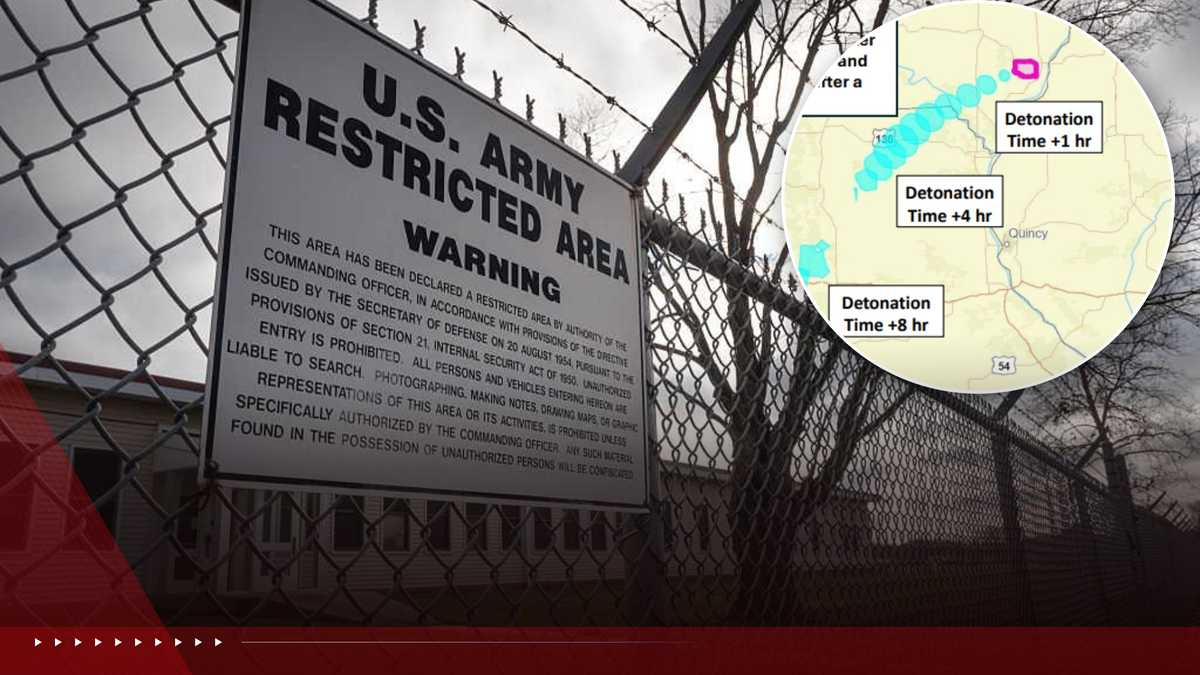
Army to Detonate 5 Tons of Lead Azide in Iowa Wednesday; Plume Models Show Drift Into Missouri
The U.S. Army plans to detonate about five tons of degraded lead azide stored in 68 barrels at...

Burlington Stores Q3 Comps Rise 1% as Warm Weather Drags Traffic; EPS Tops Guidance
Burlington Stores reported third-quarter comparable sales growth of 1%, a pace management said was held back by a...

Ohio Swears In 633 New Lawyers; Justices Urge Service and Mentorship Over AI
Ohio admitted 633 new attorneys to the bar during ceremonies at the Palace Theatre in downtown Columbus, the...