
“The U.S. Space Academy belongs in Maryland. Period,” Gov. Wes Moore said Friday as the state submitted its formal proposal to host the new federal institution.
Maryland’s bid, led by the Department of Commerce, the University of Maryland, College Park (UMD), the University of Maryland Eastern Shore (UMES), and the Maryland Economic Development Corporation, proposes UMD as the interim campus while a permanent site is developed near NASA’s Goddard Space Flight Center in Greenbelt, according to the state’s press release.
UMES, one of the few historically Black universities with an aviation program, would run a summer rotational program linked to the Wallops Flight Facility in Virginia, WMAR 2 News Baltimore reported. Maryland is also home to the U.S. Naval Academy in Annapolis.
President Donald Trump established the academy by executive order in August, directing it to train astronauts, scientists, engineers, and warfighters for future space operations, CBS News Baltimore reported. President Trump signed order establishing the Space Academy. President Donald Trump established the U.S. Space Academy in an executive order in August.
The order reads, in part, “To continue to lead the world in space exploration and technology, while securing and defending our national interests in space, the nation must prepare the next generation of astronauts, scientists, engineers, operators, entrepreneurs, civil servants, and warfighters and ensure that they are capable of advancing American interests in space.”
Competing states
Maryland faces bids from at least nine other states. Louisiana has proposed LSU New Orleans with backing from House Majority Leader Steve Scalise, while Pennsylvania offered 300 acres near Pittsburgh International Airport, The Banner reported. Alabama, Arizona, Colorado, Florida, Nevada, Tennessee, and Texas are also vying for the site.
Maryland has submitted a proposal to host the U. S. Space Academy, a NASA-led initiative requested by President Trump, competing against at least Texas, Pennsylvania, Colorado and Louisiana for the designation. The state's proposal would place the academy near NASA's Goddard… pic.twitter.com/ss4kfvkTrR
Congressional and industry backing
Maryland’s entire congressional delegation — Sens. Chris Van Hollen and Angela Alsobrooks and Reps. Steny Hoyer, Glenn Ivey, Sarah Elfreth, Andy Harris, Kweisi Mfume, Jamie Raskin, Johnny Olszewski Jr., and April McClain Delaney — endorsed the proposal in a joint statement. They argued the academy’s success requires “an unprecedented blend of leadership from academia, civil and commercial space, and the U.S. military.”
Alsobrooks, Representative Steny H. Hoyer, Representative Glenn F. “Maryland offers an extensive network of scientific talent, commercial entrepreneurship, and military expertise that will be vital to an Academy experience for the talented individuals it will support and develop,” said Maryland Congressional Delegation.
Commerce Secretary Harry Coker Jr. cited the state’s concentration of federal assets — including the Pentagon, Johns Hopkins Applied Physics Laboratory, NOAA Satellite Operations Control Center, and the National Security Agency — all within roughly an hour of the proposed campus.
“From uncrewed systems and defense intelligence, to satellite design and sensor innovation, we’re already producing the latest, most advanced space technology. We should be producing our nation’s space leaders as well,” Coker said in the state release. “From uncrewed systems and defense intelligence, to satellite design and sensor innovation, we’re already producing the latest, most advanced space technology. We should be producing our nation’s space leaders as well.” “It’s the only choice.”
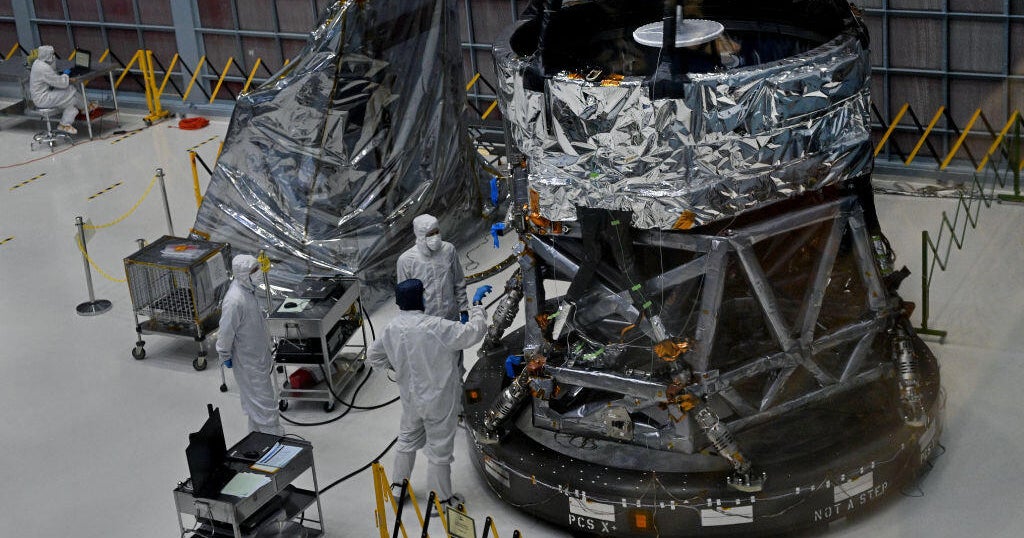
The state’s aerospace sector comprises more than 9,000 companies supporting over 172,000 jobs and generating $47.7 billion in economic impact, according to figures from the Department of Commerce.
Maryland cites federal assets and FBI precedent
Commerce Secretary Harry Coker Jr. said the state’s facilities and aerospace sector mean Maryland is already producing the latest space technology and should produce its leaders, adding, “It’s the only choice.”
NASA’s Goddard Space Flight Center, established May 1, 1959, as the agency’s first space flight center, anchors the proposed Greenbelt site with roughly 10,000 civil servants and contractors on campus today.
As the largest U.S. organization of scientists and engineers dedicated to space-based observation of Earth, the solar system, and the universe, GSFC develops and operates uncrewed scientific spacecraft and manages flagship missions including the James Webb Space Telescope and Hubble Space Telescope.
The center operates the Space Network and Near Earth Network for tracking and data acquisition and develops satellite systems for NOAA, providing the proposed academy immediate access to operational spaceflight infrastructure and a workforce spanning scientific investigation, engineering, manufacturing, and mission operations.
Nine other states competing for the academy
A final location has not been announced.
More on Space Academy
Both Maryland and Virginia are vying for the new U. S. Space Academy. The governors are touting their states as the best fit for the new service academy and are offering locations near already established NASA facilities.https://t.co/RhBggoPVcE
Worth a look
- LSU Coach Lane Kiffin Uses Profanity During Live Radio Interview
- Coastal Storm Threatens 100th Macy’s Thanksgiving Parade With Wind, Rain; Balloons Grounded If Gusts Exceed 34 mph
- Assistant Football Coach at Mass. Maritime Academy Arrested for Soliciting, Possessing Child Sexual Abuse Material (world-today-news.com)

LSU Coach Lane Kiffin Uses Profanity During Live Radio Interview
LSU head coach Lane Kiffin dropped an F-bomb during a live halftime radio interview Saturday in Knoxville as...

Coastal Storm Threatens 100th Macy’s Thanksgiving Parade With Wind, Rain; Balloons Grounded If Gusts Exceed 34 mph
A coastal storm threatens to bring wind and rain to the 100th Macy's Thanksgiving Day Parade on Thursday,...

ASU Blows 17-Point Lead, Loses to Oklahoma State in OT on Fette Interception
Freshman quarterback Jake Fette threw his first college interception on the opening play of overtime, sealing Arizona State’s...
Paul Finebaum Says He Thinks Curt Cignetti’s Social-Media Campaign Blew up in His Face
Indiana fell 27‑24 in overtime to unranked Washington (6‑4) on Saturday, dropping the Hoosiers to 9‑2. ESPN’s Heather...