
Massachusetts Cannabis Control Commission voted unanimously Tuesday to allow marijuana retailers and medical dispensaries to offer drive-thru service.
The 3-0 vote resolves a regulatory gray area that left drive-thru sales neither explicitly allowed nor banned, boston.com reported. Neighboring Rhode Island has operated drive-thru cannabis windows for some time.
Chair Chris Harding said the commission is focused on maintaining public health and safety while providing clarity for licensees and room for business growth.
“We’re striking a balance here by requiring strict security around drive-thru service subject to local control while allowing licensees to offer their customers and patients more convenience,” Harding said.
Executive Director Travis Ahern said the commission recognizes that drive-thru service may benefit retailers, dispensaries, consumers and patients, offering easier access for those with mobility issues. The commission previously authorized curbside pickup at medical marijuana establishments from March 2020 until December 2023, when that policy expired.
Requirements for drive-thru operations
Licensees must submit drive-thru plans for review by the Chief of Investigations and Enforcement and the Executive Director, including floor plans and standard operating procedures, according to the Cannabis Control Commission.
Operations must satisfy camera coverage rules, verify the age of all vehicle occupants at both the point of entry and the point of sale, prevent transactions from public view, keep products from being visible from drive-thru windows, post signage listing requirements, and secure any municipal approvals or permits required under local law.
Voters reject marijuana repeal
Massachusetts voters overwhelmingly defeated a November ballot question that would have repealed legal recreational marijuana, with over 80% of voters in Wellfleet and Provincetown each opposing the measure, the Cape Cod Times reported. The Cannabis Control Commission voted unanimously on Nov. 17 to authorize drive-thru service for retailers and medical establishments. Massachusetts legalized marijuana in 2016 and the first shops opened in 2018.
Chair Chris Harding said the commission is focused on maintaining public health and safety while providing clarity for licensees and room for business growth.
Elysian Cannabis pauses Quincy drive-thru
Elysian Cannabis in Quincy operated a drive-thru for about three months this summer and fall from a former Burger King and bank building before pausing in October during the commission’s review, MassLive reported.
Spokesperson Peter D’Agostino said the dispensary hopes to restart window sales soon but doubted drive-thru service would become widespread quickly among the state’s more than 430 operating dispensaries. “There are probably a handful out there that are in an old bank or old ‘Dunks’ or old fast food restaurant that are perfectly situated to do it,” he said.
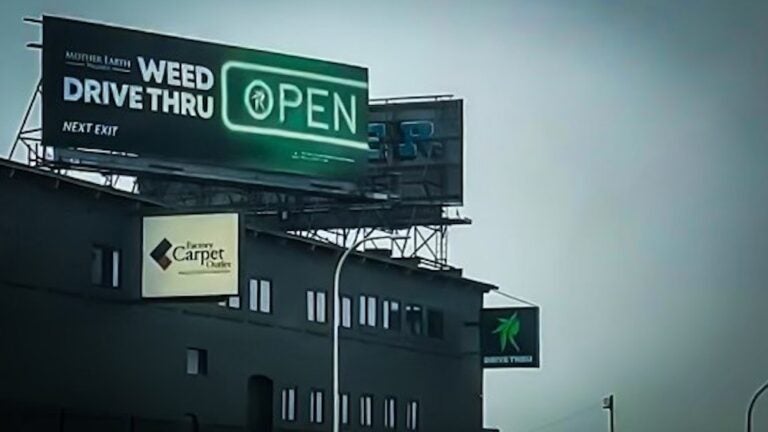
Theory Wellness plans to reopen a drive-thru window in Chicopee that it previously used during the pandemic. “It provides a really seamless experience for customers,” he said.
Theory Wellness plans Chicopee drive-thru reopening
Elysian Cannabis in Quincy operated a drive-thru for about three months this summer and fall from a former Burger King and bank building before pausing in October during the commission’s review, MassLive reported. Spokesperson Peter D’Agostino said the dispensary hopes to restart window sales soon. Theory Wellness plans to reopen a drive-thru window in Chicopee that it previously used during the pandemic.
D’Agostino doubted drive-thru service would become widespread quickly among the state’s more than 430 operating dispensaries. “There are probably a handful out there that are in an old bank or old ‘Dunks’ or old fast food restaurant that are perfectly situated to do it,” he said.
“But he doubted it would become widespread quickly. Those dispensaries would still need town approval and a permit to allow drive-thru sales. There are ‘very few that will be able to do it quickly,’ D’Agostino said.”
D’Agostino said oversight officials intend to monitor the rollout closely.
“To operators who are exploring this business model, just know that we will be very interested to just keep watch on what’s going on,” DeLobato said during Tuesday’s meeting. “And I think that’s important for them to know, because we want to ensure that this is a model that is sustainable, it’s creative, … it’s safe, it fits in our [regulations].”
More on Chair Chris Harding

Brentwood Emerged as Aggressively Marketed Jacksonville Streetcar Suburb
Long before Interstate 95 severed Jacksonville's Northside, Brentwood emerged as one of the city's most aggressively marketed streetcar...

Earthquakes Hit California; Delta Flight 1972 Aborts LAX Landing as Terminal Shakes
Two earthquakes struck Southern California on Saturday, shaking Los Angeles International Airport and forcing a Delta Air Lines...

Pitt (8-0) at Missouri for ACC/SEC Challenge: Panthers 0-3 in Challenge, Lead Nation in Power Wins
Pitt takes an 8-0 record to Missouri on Dec. 1 for the ACC/SEC Challenge, the first time the...

Providence and Ayr Scotland Sign Friendship Pact During Tartan Army St Andrew’s Weekend
Providence and Ayr, Scotland, will sign a friendship pact Monday at City Hall, formalizing ties forged when thousands...