
Massachusetts cannabis products treated with radiation to eliminate bacteria and mold may soon carry mandatory labels under a testing overhaul advanced by state regulators.
The proposed requirement for sanitized or remediated cannabis was advanced on Thursday by the Massachusetts Cannabis Control Commission as part of a broader review of laboratory testing procedures. The changes will not take effect until 2027 at the earliest, pending a public comment period.
State regulators are pursuing the rules to address consumer distrust and improve safety monitoring in the state’s medical and adult-use marketplaces. CCC Chairperson Chris Harding said in a statement reported by MJBizDaily that the updates will strengthen trust in the market.
“These new regulations are intended to reduce variability in testing, improve the accuracy and reliability of test results, and strengthen the Commission’s ability to identify testing deficiencies and take necessary enforcement actions,” Harding told MJBizDaily.
In many states, cannabis flower that fails initial microbial testing can be cleared for sale after undergoing remediation. Radiation is a common technique that exposes contaminated products to gamma rays from the radioactive element cobalt-60 to wipe out pathogens like bacteria and mold.
While the method is widely used and considered safe in both the food production and cannabis industries, Massachusetts operators rely on it to meet strict state limits for microbial contaminants. At the same time, consumer skepticism has left businesses reluctant to self-label their remediated goods.
Other states have taken differing approaches to transparency. Cannabis remediated with radiation must be labeled in Maine, though state regulators admitted earlier this year that the rule is not actively enforced.
Meanwhile, researchers note that radiation can eliminate live pathogens while leaving behind potentially harmful toxins such as mycotoxins. Under the proposed CCC rules, commercial testing labs would also be required to automatically retest any products that fail initial screenings to verify whether contamination occurred or if the lab made an error.
The testing overhaul arrives as the $1.65 billion annual cannabis market in Massachusetts undergoes regulatory restructuring. On Election Night, voters soundly defeated a ballot initiative to repeal adult-use sales, with more than 75% rejecting the repeal effort.
Following that vote, Gov. Maura Healey and state lawmakers overhauled leadership at the CCC in the spring. Harding replaced former Chairperson Shannon O’Brien after a state audit revealed widespread dysfunction within the agency.
State leaders also raised the retail license cap from three total permits to six and eliminated the requirement for medical operators to be vertically integrated. In tandem with these shifts, the CCC launched an investigation into commercial cannabis testing laboratories suspected of manipulating safety and THC potency results.
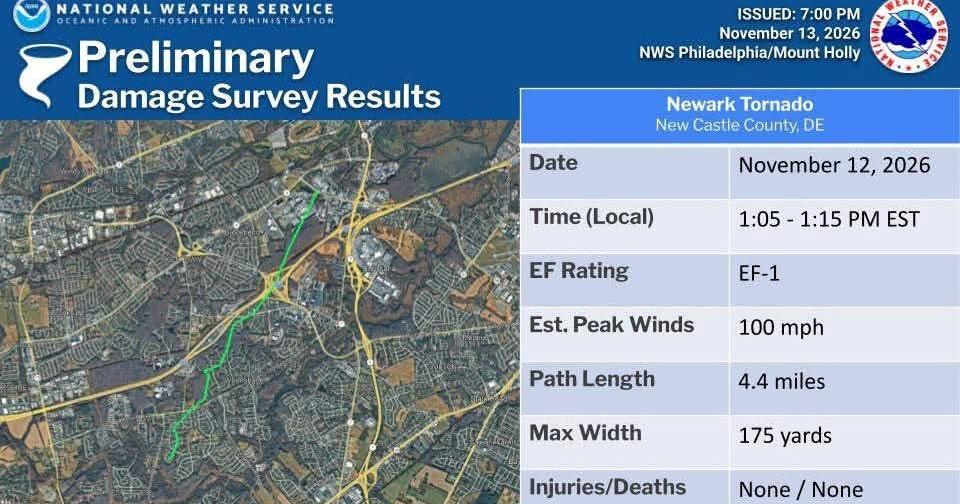
EF-1 Tornado Hits Newark Damaging Christiana Hospital Helicopters
Windows blew in on multiple homes as a 100 mph EF-1 tornado tracked 4.4 miles through neighborhoods and...

Carlsbad Defeats Santa Fe Christian 21-13 in Open Division semifinal
Rain and a relentless second-half ground game carried the Carlsbad High School football team past Santa Fe Christian...

Rocktown’s Santana Perry Commits to Concord for College Baseball
Rocktown senior Santana Perry signed to continue his athletic and academic career at Division II Concord during Tuesday...

FAA Ground Stop Disrupts Harry Reid International Airport Flights
“We need to always ensure the safety of the traveling public, and at the same time, systems that...