On October 14, 2026, the Massachusetts Supreme Judicial Court ruled that trade secret plaintiffs seeking preliminary injunctions are not entitled to an automatic presumption of irreparable harm simply by showing a likelihood of success on the merits, aligning state practice with federal equitable standards.
What did the court decide?
The Massachusetts Supreme Judicial Court handed down its ruling in [Daikin Applied Americas Inc. v. Russo], affirming the denial of a preliminary injunction. Chief Justice Kimberly S. Budd wrote for the court that adopting a presumption of irreparable harm would eliminate the irreparable harm inquiry altogether, which is inconsistent with both the Massachusetts Uniform Trade Secrets Act and long-standing common-law equity principles, [Greenberg Traurig LLP reported].
“Were we to adopt [the company’s] theory, as long as parties seeking a preliminary injunction on a trade secrets claim could demonstrate a likelihood of success on the merits, no irreparable harm analysis would be required,” Budd wrote, [as Greenberg Traurig LLP noted].

Why did Daikin seek an injunction?
Plaintiff Daikin Applied Americas, Inc., a heating, ventilation, and air conditioning system provider, sued two former employees and their newly formed competing firm, [Legal 500 reported]. The company alleged that the workers took confidential business information—including customer lists, bid data, and pricing details—to set up a rival business, [Holland & Knight reported].
The dispute began taking shape in 2024 when the employees allegedly sent work contacts, internal service bulletins, and equipment passwords to personal email addresses, [Greenberg Traurig LLP noted]. The workers formed their competing HVAC business in December 2024 while still employed, left in March 2025, and faced a lawsuit filed in May 2025, [according to Greenberg Traurig LLP].
How did the lower court respond?
Daikin asked the trial court to bar the defendants from soliciting 75 identified customers for one year and to withdraw pending bids, [Greenberg Traurig LLP reported]. Before the hearing, the defendants agreed to return the confidential information and not use it, prompting a confirmatory order, [Legal 500 reported].
The motion judge declined to presume irreparable harm and denied the customer-solicitation ban, questioning whether Daikin was likely to succeed given genuine disputes over confidentiality, [Greenberg Traurig LLP reported]. The trial court also found that Daikin’s alleged losses from HVAC sales and maintenance contracts were quantifiable and therefore remediable through a final monetary judgment, [Holland & Knight reported].
Resolving Prior Legal Uncertainty in Massachusetts
The decision stands among the initial rulings from the Massachusetts Supreme Judicial Court to interpret the Massachusetts Uniform Trade Secrets Act enacted in 2018, as Greenberg Traurig LLP reported. Holland & Knight said that the high court reviewed prior rulings from the U.S. District Court for the District of Massachusetts that had applied a presumption of irreparable harm, contrasting with federal appellate circuits that expressly rejected such a rule.
Trade Secret Litigation Lessons
Greenberg Traurig LLP reported that the ruling provides several lessons for litigants involved in trade secret disputes regarding how courts evaluate requests for equitable relief. Legal 500 said that the firm’s intellectual property litigation practice group maintains substantial experience handling disputes involving alleged intellectual property theft, trade secret misappropriation, and related breach-of-contract claims.
Operating as a subsidiary of Japan-based Daikin Industries, Ltd. since 2006, Daikin Applied Americas Inc. designs, manufactures, and distributes commercial heating, ventilation, and air conditioning systems, products, parts, and services globally. Over decades of operation—including its historical evolution from McQuay International—the organization achieved multiple industry milestones, such as pioneering chillers using non-ozone-depleting refrigerants and developing advanced compressor technologies.
Because the corporation relies on a proprietary global network of sales representatives and distributors alongside specialized manufacturing and engineering capabilities, its detailed customer lists, bid data, and pricing strategies function as highly valuable trade secrets within the competitive commercial HVAC market.
Where does federal caselaw stand?
The Massachusetts high court’s ruling mirrors federal decisions rejecting categorical rules in intellectual property disputes. The U.S. Supreme Court held in [eBay Inc. v. MercExchange, L.L.C.] that courts must apply traditional equitable tests in patent cases rather than treating injunctions as automatic.
Federal appellate circuits have applied this framework to trade secrets, such as the Seventh Circuit in [Life Spine, Inc. v. Aegis Spine, Inc.] and the Tenth Circuit in [First Western Capital Management Co. v. Malamed]. Meanwhile, the Second Circuit adopted a more nuanced stance in [Faiveley Transport Malmo AB v. Wabtec Corp.], allowing for a rebuttable presumption only when a misappropriator threatens to disseminate secrets to a wider audience.
Worth a look
Minnesota Farmers Union Adopts 5 Special Orders, Elects 10 Delegates to National Convention
Minnesota Farmers Union members adopted five special orders of business and elected ten delegates to the national convention...

President Donald Trump Called for Nvidia to Reinstate Jensen Huang on Sunday, Days
President Donald Trump called for Nvidia to reinstate Jensen Huang on Sunday, days after his administration demanded the...
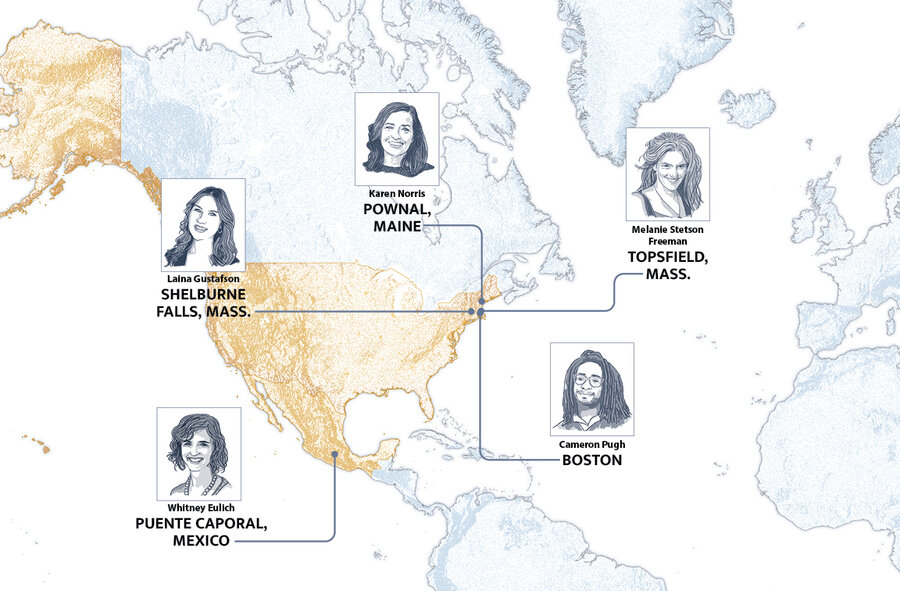
Reporters on the Job: From Maine to Mexico
In a column for The Christian Science Monitor, five staffers describe how Thanksgiving-week assignments took them from a...

Colorado Retires Ralphie VI for ‘Indifference to Running’; Ralphie VII Training as Successor
Colorado has retired its live buffalo mascot, Ralphie VI, after four seasons because the animal showed "an indifference...