
Zuckerberg’s Billion-Dollar Chess Match Over a California Tax
On October 21, Meta announced a 2-for-1 stock split, a common corporate move to make a stock price feel more approachable. But as The Dispatch reported, buried in the 109-page filing was a far more dramatic story: the split was the end result of a protracted negotiation between Mark Zuckerberg and his own board. The second was California’s Proposition 40, a ballot measure that would impose a 5 percent wealth tax on billionaires.
The Tax That Could Dethrone a Founder
The tax applies to about 200 of the state’s wealthiest residents. For someone like Mark Zuckerberg, whose net worth is around $240 billion and more than 90 percent of which is Meta stock, the bill would be staggering—approximately $12 billion. The catch is that to pay, he would have to sell shares, a move that directly threatens his control over the company.
Meta’s structure is designed to make Zuckerberg unfireable. The company has two classes of stock: Class A, which has one vote per share and is available to the public, and Class B, which has 10 votes per share and is held by Zuckerberg. This means he owns only about 13 percent of the company while controlling about 61 percent of the votes. Votes pick the board, and the board picks the CEO. As long as he holds that majority, no one can ever fire him.
This entire control mechanism was put at risk by the tax. According to the recent filing, on July 8, Zuckerberg told a committee chair that paying the Prop 40 tax could force him to sell enough of his Class B shares to drop his voting stake to about 53 percent. Still a majority, but perilously close. He warned that one more tax hike or a big AI fundraise could push him under it. His lawyers even explored leaving California, though that wouldn’t have solved the problem, as the tax applies to anyone who was a resident on January 1, 2026.
META STRIKES DEAL: Meta Platforms has struck a deal with Mark Zuckerberg to keep him living in California after the CEO warned he was considering leaving the state that houses the company's headquarters if voters pass a wealth tax proposal next month. Under the deal,… pic.twitter.com/FHkEKyAnyu
It’s the whole wealth-tax debate distilled into one moment. Forcing a sale of what one owns is a taxing prospect, and for Zuckerberg, parting with his shares means ceding his authority.
The Deal: Creating a New Kind of Share
The negotiation, described by the filing as “protracted and at several points, contentious,” was a masterclass in corporate maneuvering. The board’s solution was to invent a third class of stock. Class C shares have the same economic rights as Class A shares—they rise and fall with the stock price and collect dividends—but they carry no vote at all. The “2-for-1 split” was really the creation of one Class C share for every Class A and Class B share an existing shareholder already holds.
The terms are specific. Every shareholder gets the new Class C shares, but Zuckerberg has a special provision. He can sell 20 percent of his new Class C shares immediately for any reason, including paying his potential tax liability under Prop 40. The other 80 percent is “stapled” to his voting stock. For each of those Class C shares he sells, he must also sell or exchange a corresponding voting share, and these become accessible to him incrementally over a period of eight years. In return for this arrangement, Zuckerberg committed to staying a California resident—or a resident of wherever Meta’s headquarters is—for eight years, unless “material unforeseen circumstances” intervene.
This is where the stakes become truly personal. Zuckerberg takes a $1 salary. If the tax passes and he pays it, he would, in the company’s words, be “effectively paying to serve as the Company’s chief executive officer while residing in California.” The committee concluded that having him physically near Menlo Park and the superintelligence lab was “critically important,” citing the difficulty of running the company when he was away during the pandemic.
What It Means for the Rest of Us
Because once a nonvoting share class exists, the company can print more of it. And Meta needs to raise a staggering amount of money. Just five days after the announcement, Meta announced a financing plan of roughly $98 billion. This includes issuing $22.5 billion of Class A stock, $12.5 billion of preferred shares that convert into Class C, and a $60 billion program to sell Class C shares into the open market.
Nonvoting shares typically trade for a little less than voting ones because a vote is more valuable. Google, which did the same thing in 2014, had to pay Class C shareholders $522 million a year later because the nonvoting shares traded at a discount to the voting ones.
Meta’s need for cash is immense. In a single quarter, the company generated about $32.8 billion in cash after paying for employees and lawyers, but spent $34.9 billion on data centers and chips. The company expects to spend up to $145 billion this year, with future spending commitments for data center leases, computing capacity, and power totaling $825 billion. Selling stock instead of taking on massive debt is a strategic choice to protect its credit rating, though the market punished Meta for the move, and its stock fell the day after the split and the new share class were announced.
As Meta’s market cap has grown from a mere $500 billion when Facebook tried this in 2016 to $1.8 trillion today, the question of who really owns the company has never been more pointed.

Anchorage Police Shoot Burglar Who Fired Gun During Arrest
Anchorage Police Chief Reveals Suspect Stole Hundreds of Keys Before Fatal Shooting On October 29, 2026, a 33-year-old...
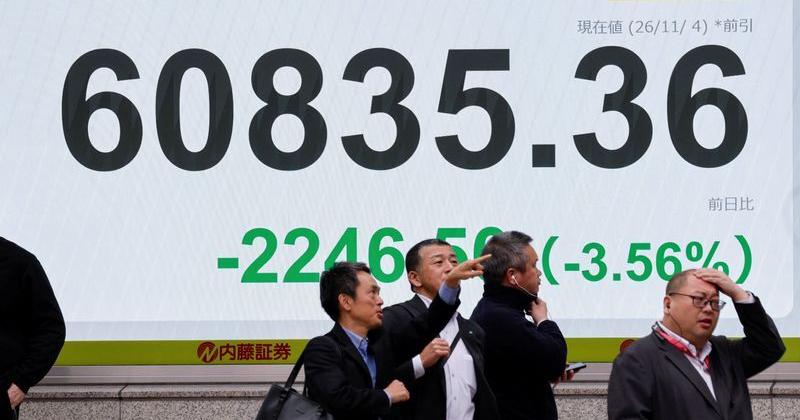
S&P 500 Loses $3 Trillion on Fears of AI Regulatory Crackdown
SINGAPORE – Asia's tech-heavy markets face a brutal Friday after a rout in US AI stocks, triggered by...

Alabama Appeals Court to Decide if Panhandling Laws Violate First Amendment
Alabama Fights to Revive Panhandling Bans After Unconstitutional Ruling Alabama is making a legal push to reinstate its...

It’ll affect schools and teachers and part of those families that are working in other industries
"It'll affect schools and teachers and part of those families that are working in other industries that aren't...