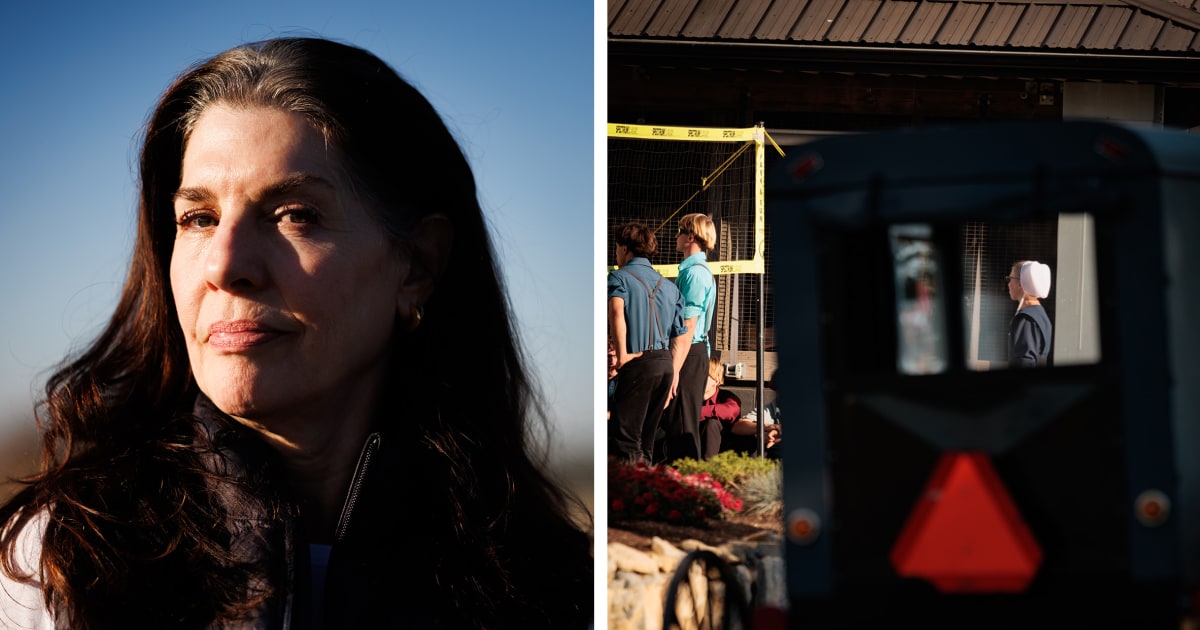
Measles is resurging in rural communities, hitting vulnerable populations like the Amish and leaving medical professionals grappling with a preventable crisis.
The scale of the outbreak is visible in pediatric wards, where doctors are seeing severe complications that were once considered rare in highly vaccinated societies. In Pennsylvania, the situation has reached a critical point with at least two infant deaths reported, according to NBC News.
For Roberta Devers, a midwife in Lancaster County with a 38-year career and nearly 2,000 deliveries under her belt, the outbreak has fundamentally shifted her perspective on immunization. Having previously chosen not to vaccinate her own son, Devers now faces a reality where the virus is actively threatening the families she serves.
“Every single day, someone’s calling to ask what they do. They’re pregnant and they’ve gotten it, or their babies have gotten it,” Devers told NBC News.
The clinical reality of the outbreak
The medical consequences of the current surge extend far beyond a simple fever and rash. Pediatric specialists are witnessing a range of life-threatening symptoms in children and infants.
Dr. Evan Shirey, a pediatric infectious disease physician at Penn State Health Golisano Children’s Hospital, describes a harrowing clinical environment.
“Babies gasping for air, children needing oxygen and respiratory support, patients on ventilators. We see babies and children coming in with infections of organs within the abdomen, their liver, dehydration, babies that can't take bottles” said Dr. Evan Shirey, a pediatric infectious disease physician at Penn State Health Golisano Children's Hospital.
The long-term neurological risks are also a primary concern for clinicians. Some children are developing encephalitis, an inflammation of the brain that can cause permanent damage or take months to resolve, Shirey told NBC News. Some infants are being born with congenital measles.

The fear is not limited to medical staff. Dr. Shirey, who has a 3-month-old son currently too young for the measles vaccine, expressed the personal vulnerability felt by parents during such surges.
“I’m experiencing the outbreak as a doctor, but I’m also experiencing it as a dad, and I can’t protect my baby yet with a vaccine,” Shirey said. “It’s scary.”
Vaccination rates drop below herd immunity thresholds
The rise in cases is tied to a broader, national decline in vaccination coverage. An investigation by NBC News and Stanford University found that measles-mumps-rubella (MMR) vaccination rates have dropped across the United States.
The data shows a concerning trend in herd immunity levels. At the start of the 2025-26 school year, 75% of U.S. counties with available MMR data were below the threshold required to prevent outbreaks, an increase from 67% in the 2024-25 period. In Lancaster County, the MMR vaccination rate had been 95.5% prior to the pandemic, which is the level necessary to maintain community protection.
In many rural and religious communities, the challenge is not just access, but the relationship between healthcare providers and the public. Katherine Wells, the public health director for Lubbock, Texas, said that in areas where there is deep distrust of government, success depends on finding trusted local voices.
Wells suggested that during previous outbreaks, such as those seen in Mennonite communities in Gaines County last year, utilizing the existing relationships between midwives and families could have been a more effective way to mitigate the spread.
Legal barriers to local intervention
Legal restrictions on who can administer vaccines hinder efforts to contain these outbreaks. In most states, traditional midwives are prohibited from giving vaccines without direct backing from a physician.
The demand for information is rising. Devers said that many inquiries come from unvaccinated husbands who fear they will contract the virus at work and bring it home to their pregnant wives and children.
“People ask me, 'Do you have that vaccine in the car?'” said Roberta Devers, a midwife in Lancaster County, and because of current state laws, Devers often has to tell these families that she does not have the vaccine available in her vehicle.
Related reading

Cabinet Approves ₹3,230-Crore Yuge Yugeen Bharat Museum to Become World’s Largest
The Cabinet Committee on Economic Affairs, led by Prime Minister Narendra Modi, officially approved a ₹3,230-crore project on...

Bali and Thailand Explore Strategic Cooperation in Tourism and Medical Services
Bali is looking to expand its economic footprint beyond traditional leisure as the provincial government and the Kingdom...
MITA Opposes DA 60-Day Pork Import Ban to Protect Traders
Agriculture Secretary Francisco Tiu Laurel Jr. issued a 60-day temporary suspension on pork imports this week to protect...
First Indonesian POW Captured in Ukraine After Being Lured by Fake Construction Job
Indonesia has lost its first citizen to the Russian front lines after a 49-year-old man was captured by...