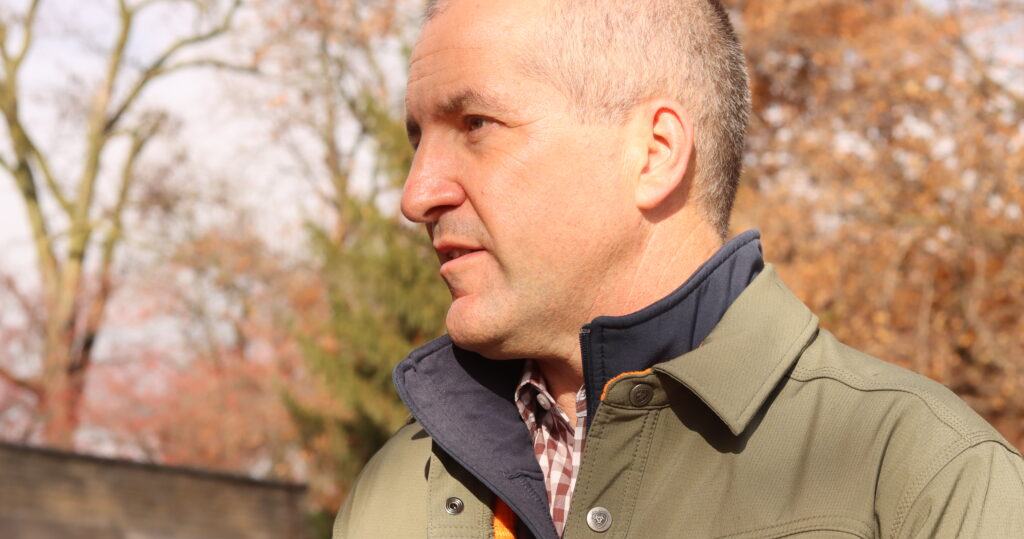
Unofficial results from the Iowa Secretary of State showed Republican Mike Naig leading Democratic challenger Chris Jones 52.7% to 47.2% with all precincts reporting early Wednesday — a margin that stood at less than 1% late Tuesday night before straggling rural vote counts widened it, Yahoo News reported. The Associated Press, with an estimated 96% of the vote reported, had Naig ahead 53% to 47%, Iowa Capital Dispatch reported.
This was not the nail-biter some expected. Jones conceded Tuesday night, and by morning the race was called — keeping the Iowa Secretary of Agriculture’s office in Republican hands for another four years. The GOP has held the post since 2007, when Democrat Patty Judge left the role.
Mike Naig wins re-election to Iowa’s Secretary of Agriculture, AP projects — Story link in bio. pic.twitter.com/SDU9m0zp5i
What made the race worth watching was not the closeness but the question Jones forced onto the ballot: whether Iowa’s dominant corn-and-soybean system, which he argues drives the state’s poor water quality, could be changed from the top of the agriculture department.
Rural precincts decided a race that looked tied at midnight
The two campaigns spent election night in very different positions. Late Tuesday, Naig’s lead was under 1%, thin enough that Jones’s team held a watch party in Des Moines’ East Village without conceding. As rural precincts — the heart of Iowa’s farm economy — submitted their counts, the margin grew. By early Wednesday Naig led 53% to 47%, and Jones had already conceded.
Jones told supporters that Iowa’s water quality will not improve if people just “nudge it.” A “big complex” system like Iowa’s agriculture, he said, changes with a flip.
“So we really need to have grassroots demands here that this is gonna change, that we’re gonna ask for change, we’re gonna demand for change,” Jones said. “Change can happen. We should not be disbanded or despair … I did my best to make it happen. I tried to make words matter.”
A campaign built as a referendum on water quality
Jones, a retired research engineer at the University of Iowa, ran on a platform of improving water quality and dramatic shifts in the farm economy. He is known for his Substack column and his book, “The Swine Republic,” in which he criticizes the large-scale farming model that grows mostly corn and soybeans and, he argues, contributes to Iowa’s poor water quality.
His specific proposals included taxpayer-supported off ramps for producers who want to transition their operations to crops like oats instead of corn and soybeans, a state requirement that a certain share of school lunches be locally produced, and support for new crop markets to move the state away from ethanol. Throughout the campaign he said his candidacy should be considered a “referendum” on Iowa’s water quality.
Jones also pointed to a shift in the political conversation itself. When he launched his campaign in January, he said, he was one of the few candidates talking about water quality. By the end, “every candidate in the state was running on this.”

“We can only hope that maybe some of these people we see on the screen tonight are going to be the second people, that can take it up and take the ball over the goal line,” Jones said.
Naig’s record and the message that won
Naig has been the head of the Iowa Department of Agriculture and Land Stewardship since 2018. His tenure includes the Choose Iowa program, a state brand for local products, and the Farm-to-Faucet legislation passed in 2026, which provided greater state support for conservation practice adoption and water treatment infrastructure.
In a victory statement early Wednesday, Naig framed the result as a rejection of his opponent’s tone.
Republican Mike Naig has won reelection as Iowa's secretary of agriculture, defeating Democrat Chris Jones and securing another term overseeing the state's agricultural policies. pic.twitter.com/GmlHhoRWaC
“Tonight, Iowans rejected divisive rhetoric and attacks on our farming community, choosing instead a positive vision for the future of Iowa agriculture,” Naig said.
He said he was proud of the work done so far and looked forward to building on it: “We’ll continue to strengthen Iowa agriculture by building markets internationally, domestically, and locally, working together to improve water quality, protecting our food supply, and ensuring our farms remain strong for the next generation.”
For Jones’s supporters, the consolation was written into the campaign’s final weeks: water quality, once a fringe issue in Iowa politics, had become something every candidate claimed to run on — a shift the losing candidate could point to even in defeat.
Related reading

Democrats Flip Wisconsin Senate for First Time Since 2010
Democrats flipped the Wisconsin State Senate on election night, The Daily Cardinal reported, ending more than a decade...

Nelson County Man Arrested for Internet Crimes Against Children
The Alleghany County Sheriff’s Office has arrested a Nelson County man in connection with internet crimes against children,...

Melinda Ann Haney Obituary: Remembering a Life of Service in East Prairie
Early Wednesday morning, November 4, 2026, the household on a quiet street in East Prairie, Missouri, fell silent....

Port of Seattle Wins IAP2 Program of the Year for Community Equity
In October, at the International Association for Public Participation's North American Conference in Vancouver, B.C., the Port of...