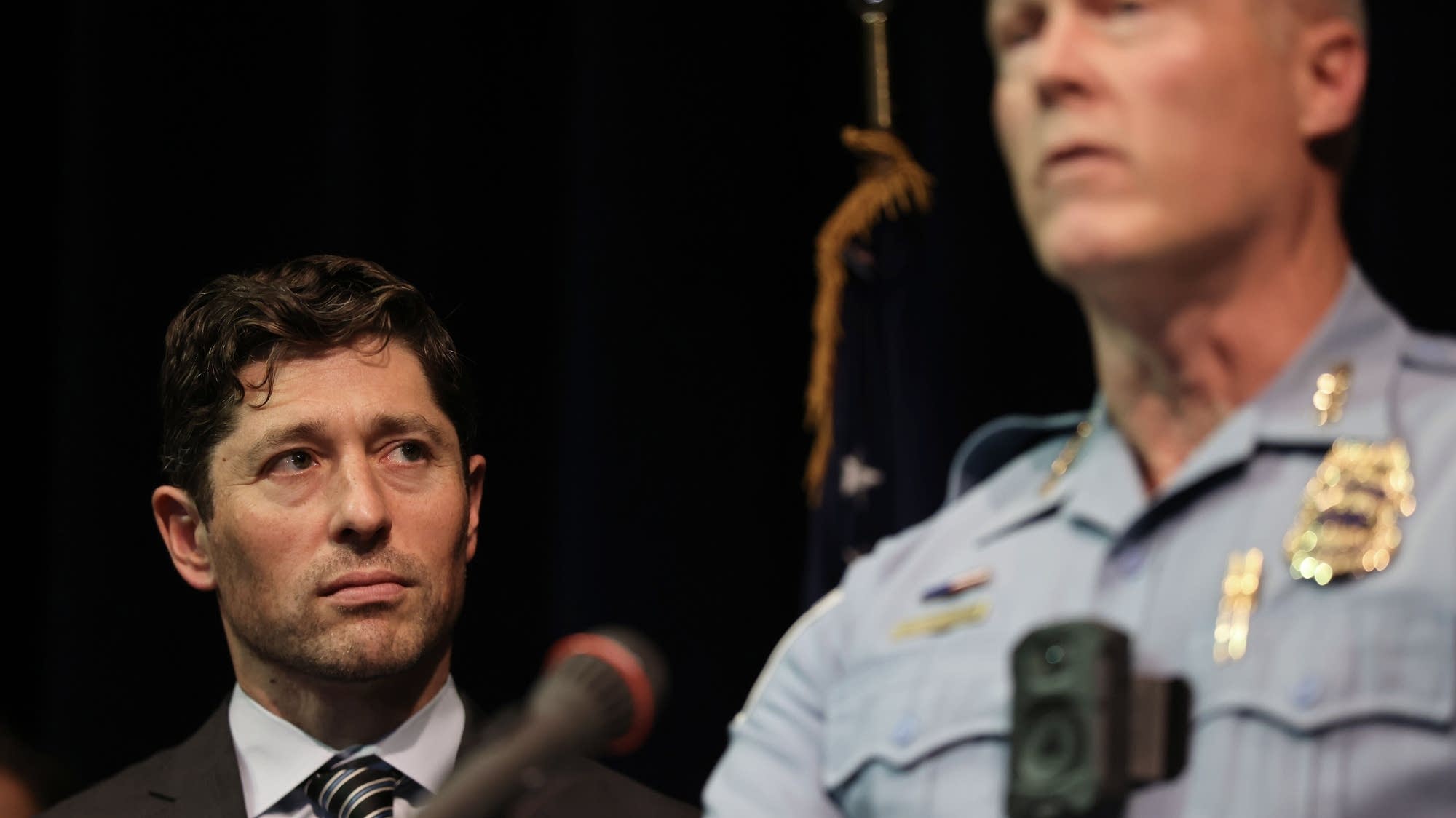
Minneapolis Mayor Jacob Frey vetoed the City Council’s rejection of his police chief nominee and a new data center ordinance on Thursday, setting up override votes for Friday.
The twin vetoes escalate a standoff between the mayor and a council that has opposed him on public safety and development policy. The council needs nine votes to overturn either veto, a threshold neither measure reached in its original passage. MPR News reported the council passed the data center ordinance 7-6 last week and rejected interim Police Chief Bill Peterson’s nomination 8-5.
“Council confirmations should be based on qualifications and record,” Frey wrote in his veto letter on the police chief nomination. “The nominee before you should be judged, not on where a department has been, but where the candidate will take it.”

Peterson, a 31-year veteran of the Minneapolis Police Department, has served as interim chief since Brian O’Hara resigned earlier this year. During hours of questioning last week, council members pressed him on racist language used by officers, use-of-force incidents, homelessness, and budget management. Peterson told the council he would not tolerate discrimination, racism, or sexism and would “deal with them accordingly.”
Police chief nomination hinges on flipped votes
Frey’s veto is a long-shot attempt to salvage Peterson’s nomination. Even if the veto stands, Peterson would still need two additional “yes” votes to reach the nine required for confirmation — and two Frey allies on the council already opposed him. The dynamic echoes the failed reappointment of community safety commissioner Todd Barnette last spring, a nomination that ping-ponged for two months without resolution before Barnette announced his departure.
Council members who voted against Peterson cited the department’s history of biased policing targeting Native American and African American communities. They argued an internal candidate could not deliver the structural change required. Frey countered that community listening sessions showed residents wanted an internal leader who knew what the city had “been through.”
“Voting [Peterson] down because Council Members have a different real or hypothetical idea of a candidate, has no bearing on the actual question in front of them, which is whether Interim Chief Billy Peterson is qualified for the job. To that question, there is only one honest answer: yes.”
Mayor Jacob Frey, veto letter to City Council
Data center veto leaves regulatory vacuum
On the data center ordinance, Frey objected to a last-minute amendment requiring case-by-case council approval for any new facility and a provision limiting new centers to existing buildings in two downtown zoning districts. He argued the compromise would “result in a de facto ban” and create “confounding” zoning standards that lead to “arbitrary rule making.”
The mayor sided with downtown boosters who argue that, with proper guardrails, data centers could spur development and alleviate property tax burdens. “We have an opportunity to provide an important regulatory framework, embrace economic progress, and alleviate a tax burden for our residents,” Frey said.

Council Member Aurin Chowdhury said the veto clears the way for “open season” on data center development. A temporary moratorium expires Saturday, leaving Minneapolis with virtually no regulations on the facilities amid a nationwide backlash over their energy and water consumption.
“The compromise policy would create two downtown districts and give the council members opportunity to allow or deny development of specific data centers.”
CBS News, reporting on the ordinance Frey vetoed
Friday’s override votes will test council unity
The council meets Friday to respond to both vetoes. Overriding the police chief veto requires nine votes — meaning at least one of the eight opponents would need to switch sides. Overriding the data center veto also requires nine votes, one more than the seven who originally passed it. The mediation between the mayor and council earlier this year cost taxpayers more than $1 million.
Keep reading

Cardinals Add Carson Beck to Injury Report With Back Issue Before Chiefs Game
The Arizona Cardinals added quarterback Carson Beck to Thursday’s injury report as a limited participant with a back...
Her Hoop Stats: Tulsa Upset Reveals Oklahoma State Offensive Questions
Oklahoma State lost to Tulsa 62–56 on Sunday, the Big 12’s most jarring result so far this season....
Ahlquist: Whitehouse Climate Record Contradicted by Fossil Fuel Bill Support
Sheldon Whitehouse built a national reputation as the Senate's most relentless climate voice, but a Rhode Island journalist's...
5 Seattle Winter Concerts by Homegrown Artists: Damien Jurado, Dean Johnson, Casi, Noah Gundersen & Ayron Jones
Five Seattle concerts featuring Washington-raised musicians run from late November through the day after Christmas, with shows at...