
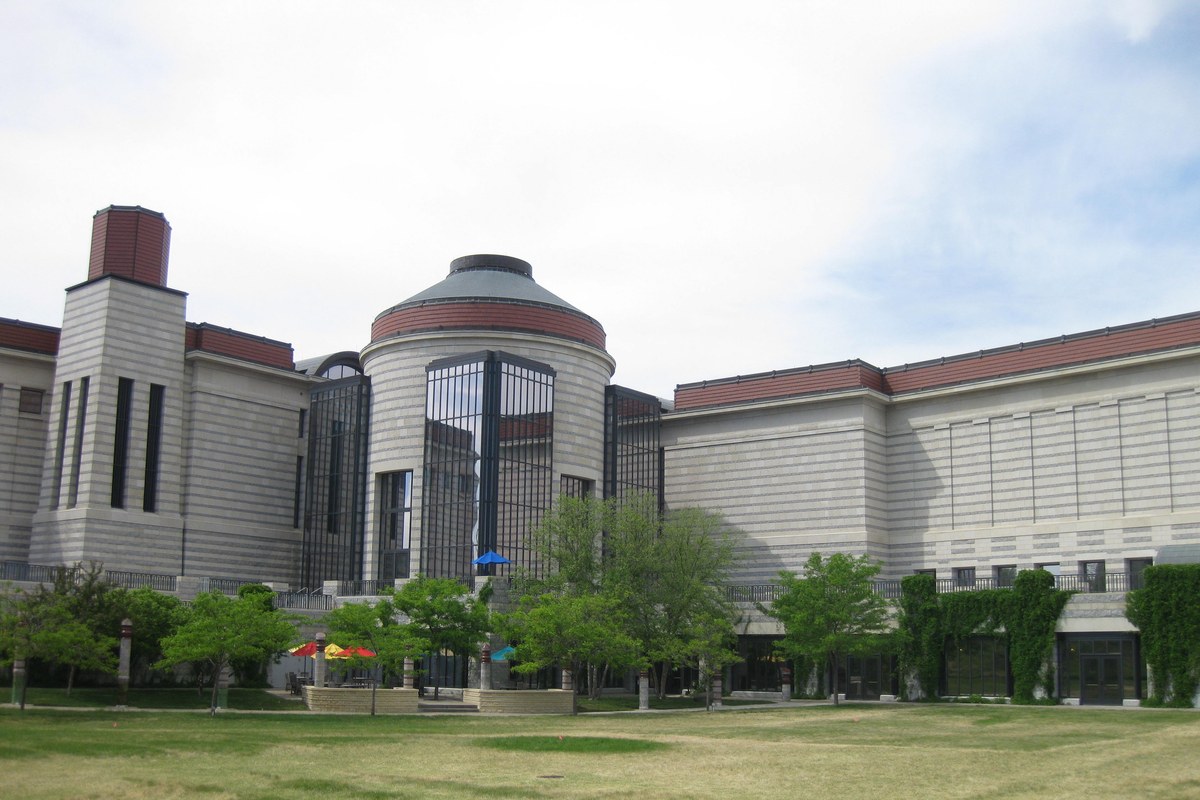
Sixty-three portraits spanning nearly 175 years are now on display at the Minnesota History Center.
The exhibition, “See & Be Seen,” showcases the evolution of portraiture from the 1850s to the present, demonstrating how the form has changed from stiff depictions of prominent figures to more intimate and expressive works. The Minnesota Historical Society announced that the exhibit opened on November 7, 2026, and runs through June 13, 2027. The journey begins with early formal portraits, including a 1857 portrait of Henry Rice, a fur trader and former U.S. senator, by G.P.A. Healy. These works, from a collection of about 1,000 portraits among 7,000 total artworks, feature stony figures in gold frames, symbolizing their status. A rebellious streak emerges in the early 20th century as local artists began experimenting with convention. According to Mpls.St.Paul Magazine, the “Insiders” section highlights a tight-knit group of Minnesota artists, including Clara Mairs and Clement Haupers, whose work reflects the growth of the state’s art institutions and emphasizes a bolder style and more intimate settings. The exhibition explores how relationships between artist and sitter evolved over time. Mpls.St.Paul Magazine reported that one of Fields’s favorites is a portrait of Amelia Ullmann by Thomas Cantwell Healy.
Rydell is a capital M movie star,” and according to Hill’s hand, Fields said, “There’s so much love and awe. A 1999 photograph by Tom Arndt, “Two guys Bde Maka Ska,” captures two friends beside Lake Bde Maka Ska, offering a fullness to the collection of real people. The final section, “Belonging,” features contemporary artists who question what it means to see and be seen. Hoodline.com reports that Seitu Jones’s lithograph prints “Front Reflection” and “Side Reflection” reference 1850 daguerreotypes.
The exhibition pairs historical works with contemporary pieces, including Leslie Barlow’s “Venessa and Felix” and Rose Smith’s “Journey to Minnesota,” a 2008 oil painting depicting her family’s move from Missouri. “It really shows the person, but also the story of Rose Smith’s family coming to Minnesota,” Fields said of the painting.
The Minnesota Historical Society states that the exhibition is funded by the State of Minnesota’s Legacy Amendment, voted into law on November 4, 2008, and by donors and members. Admission is $15 for adults, with discounts for seniors, military, and students, and $8 for children. We want people to think about where portraiture starts but also about where it ends up.”
The exhibition opens at 10 a.m. on November 7, 2026, with a special celebration running from 11 a.m. to 3 p.m., according to the Pioneer Press.
Visitors can participate in hands-on art activities and use a photo booth provided by Time Into Pixels to create their own portraits, as reported by MinneapoliMedia.
The work of artists like Clara Mairs and Clement Haupers reflects the growth of Minnesota’s art institutions, such as the Minneapolis Institute of Art, founded in 1883, and the Minneapolis College of Art and Design, founded in 1886, as noted by Mpls.St.Paul Magazine.

These artists emphasized a bolder style and more intimate settings, revealing more about “the inner life or character of the people” depicted, the magazine reported.
New Jersey Governor Mikie Sherrill’s Congressional Letter Sparks 2028 Presidential Speculation
New Jersey Governor Mikie Sherrill sent a policy agenda to the state's incoming congressional delegation this week, a...

Oklahoma Business Owner Sentenced to 9 Years for $3.5M Pumpjack Theft in New Mexico
An Oklahoma business owner received prison sentences in two New Mexico counties after entering a no contest plea...

Wake Forest Beats Mississippi State 78-71 in Battle 4 Atlantis
Mississippi State fell 78-71 to Wake Forest on Wednesday in the Battle 4 Atlantis Championship Bracket at Imperial...

L’OFFICIEL USA Reports Hotel Openings and Art Renovations in Fashion Capitals Ahead of 2027
Fashion capitals are rolling out a wave of hotel openings and art-driven renovations ahead of the 2027 season,...