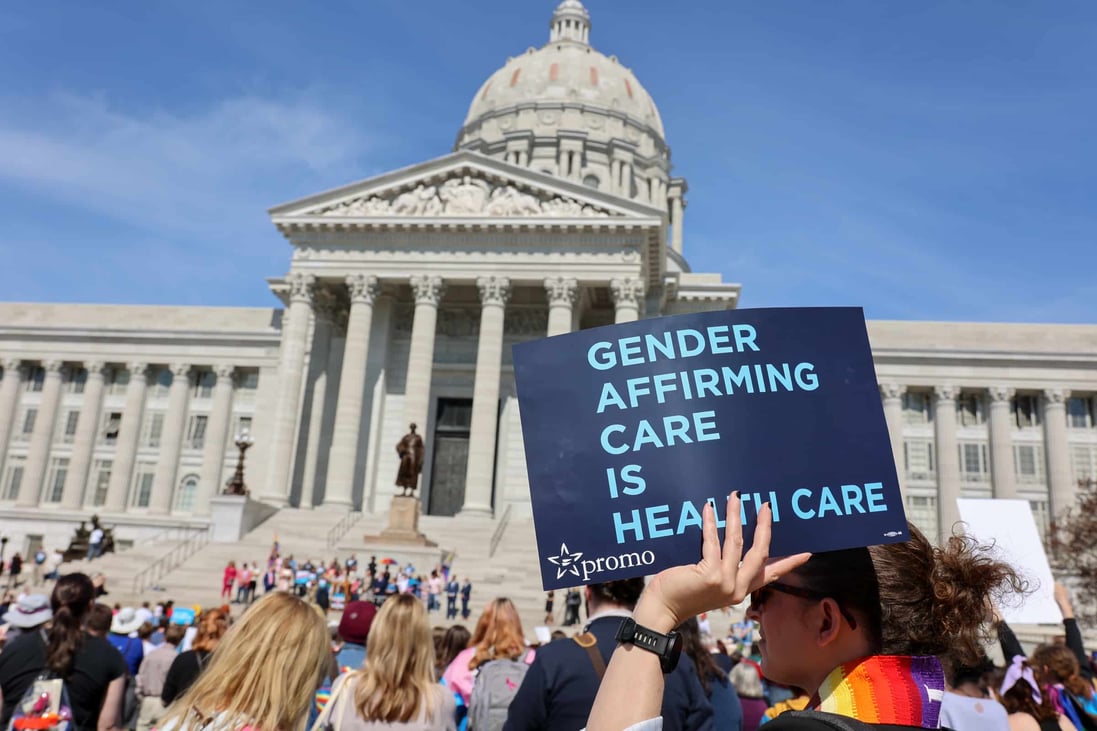
Minors who received gender-affirming care at Rhode Island Hospital could see their private medical files pulled into a federal investigation, after the Justice Department won a same-day court order in Texas compelling the hospital to hand over extensive records — and the hospital now says that order was issued without giving it any chance to respond. The fight landed Wednesday before a three-judge panel of the Fifth Circuit, where the hospital is asking the appeals court to reverse the enforcement order, Courthouse News reported.
The stakes reach far beyond one hospital in Providence. In July 2025, the Trump administration announced it had issued “more than 20 subpoenas” to doctors and clinics that provide gender-affirming care to minors, following a January 2025 executive order calling for an end to such treatments. The department has since reached settlements with at least six other hospitals requiring them to stop providing the care, and this case will help decide whether that pressure campaign can extend into patient files.
A Same-Day Order With No Chance to Respond
Hospital attorney Matthew Fitzgerald told the panel that the enforcement order was entered the very same day the government filed its petition, leaving the hospital no opportunity to be heard — a due-process problem at the heart of the appeal. He argued the subpoena was issued for an improper purpose: not a genuine investigation, but a burdensome demand designed to squeeze the hospital into abandoning gender-affirming care for transgender youth.
Fitzgerald asked the judges to imagine a future Justice Department opposed to the AR-15 rifle that opened investigations of gun manufacturers, demanded personnel files of everyone involved in making the weapons, and requested contact information for every buyer of the rifles over six years — then claimed victory and walked away if the companies simply stopped production.

The Government’s Defense: Off-Label Promotion
Justice Department attorney John Bailey countered that the probe is lawful and narrow in purpose: investigating potential violations of the Food, Drug, and Cosmetic Act. While Rhode Island doctors may legally prescribe puberty blockers and cross-sex hormones for gender dysphoria — uses the FDA has not approved — it is unlawful for drug manufacturers and distributors to promote such off-label uses. The department, Bailey said, wants evidence from the hospital showing improper promotion by those companies.
U.S. Circuit Judge Irma Ramirez, a Joe Biden appointee, pressed Bailey on why the government needs patient records if its target is drugmakers.
“If you are investigating whether the manufacturers are misbranding the drugs, then why not start with the manufacturers or limit the scope of the subpoena to communications to the hospital or to the doctors about these allegedly misbranded drugs? Why ask for patient files and personnel files?”
Two Courts, Two Opposite Rulings
The dispute has produced dueling orders from two federal courts. Despite the hospital being located in Rhode Island, the government brought its enforcement petition in the Fort Worth division of the Northern District of Texas, a jurisdiction where both active federal judges hold deeply conservative views. Chief U.S. District Judge Reed O’Connor, a George W. Bush appointee, entered the enforcement order immediately. Shortly afterward, U.S. District Judge Mary McElroy — a Donald Trump appointee sitting in Rhode Island — granted motions by the hospital and the Rhode Island Child Advocate to quash the subpoena, finding that it violated the constitutional privacy rights of minor patients and lacked a legal basis, since the hospital’s off-label prescribing is not itself illegal.
On Wednesday, Fifth Circuit Judges Kyle Duncan and Kurt Engelhardt, both Trump appointees, criticized the hospital for seeking relief in Rhode Island after O’Connor had already ruled. Duncan called the parallel proceedings a “procedural conundrum,” and Engelhardt described the hospital’s move as a “sharp practice” that potentially raises ethical concerns, Bloomberg Law reported. Fitzgerald responded that the Rhode Island case was initiated by the Child Advocate, and the hospital was justified in joining that challenge because O’Connor’s order was void for lack of due process.
Bailey told the panel that the hospital is already producing responsive records with patient information anonymized, held privately by the Texas court while both appeals are resolved.
A National Pattern of Subpoenas
This is not the first court to weigh in. Many federal judges have blocked or restricted these subpoenas, yet in August a split three-judge panel of the Ninth Circuit — the sole federal appeals court to address the matter thus far — reversed a lower court’s decision to quash a similar subpoena, with a George W. Bush appointee and a Trump appointee in the majority over the dissent of a Bill Clinton appointee. That clinic has asked the full appeals court to rehear the case.
For families of transgender youth in Rhode Island, the outcome determines whether anonymized records of their children’s care become evidence in a federal probe — and whether hospitals nationwide can be pressured, through subpoenas rather than legislation, to end treatments the administration opposes.
Keep reading

Man Dies After Hit-and-Run on Gallatin Pike in Nashville
A grocery cart, the kind shoppers wheel through parking lots and along dark stretches of road, is what...

Pinion Acquires A1 Development Solutions to Expand Land Advisory Services
Established in 2017 to manage the intricate permitting, utility coordination and government relations required for livestock and grain...

School of Medicine Greenville Registrar Manages Academic Records
The Registrar's Office at the University of South Carolina School of Medicine Greenville adheres to the University of...

Transportation Planner Hayden Clarkin: RIPTA Hub Relocation Plan Ignores Bus Riders’ Needs
Providence Transit Planner Argues $77 Million Hub Move Would Harm Bus Riders In a column for pvdeye.org, transportation...