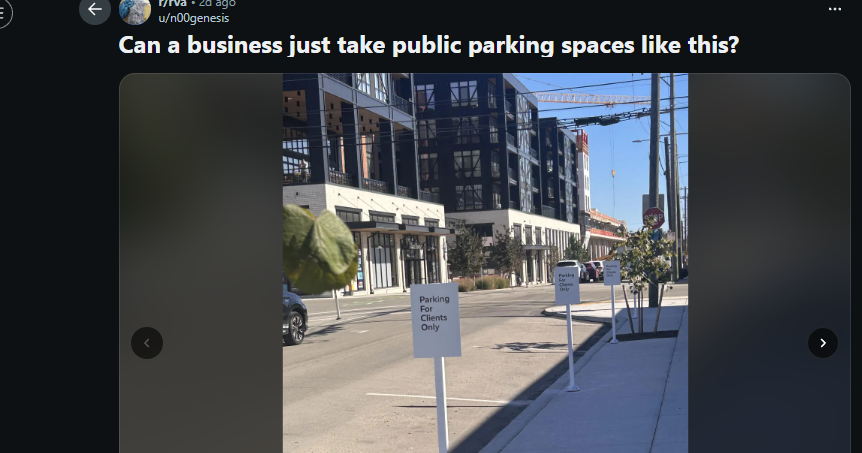
A miscommunication between a Richmond landlord and city officials led to the installation of private parking signs on a public street, sparking a debate over property rights and municipal oversight. The incident, reported by Richmond.com, highlights the growing tension between private landowners and local governments as urban areas grapple with increasingly complex zoning and signage regulations.
The dispute began when a landlord, identified in internal city records as James W. Harper, installed temporary "Private Parking" signs along a 150-foot stretch of Broad Street, a public thoroughfare. According to a city inspection report obtained by Richmond.com, the signs were placed without permits and directly conflicted with existing municipal parking regulations.
“It was a straightforward mistake,” Harper told Richmond.com in a statement. “We received conflicting information from two different city departments about the signage process. We assumed the signs were permissible under a temporary-use agreement we had in place for a nearby lot. It turns out we were misinformed.”
The Fractured Communication Chain
The incident underscores systemic challenges in municipal bureaucracy, where conflicting guidelines from different city departments can create confusion for residents and businesses.
"This isn’t a matter of confusion," said Public Works Director Maria L. Torres in a press briefing. "The rules are clear. What happened here was an oversight, but it’s also a reminder of the need for stricter enforcement."
"This isn’t just about one landlord—it’s a symptom of a broader breakdown in interdepartmental coordination."
The Human and Economic Stakes
The miscommunication directly affected 12 local businesses along Broad Street, which reported a notable drop in customer traffic during the week the signs were in place. “Our customers were confused about where they could park,” said Sarah Lin, owner of Lin’s Café. “Some even left without ordering. It’s not just about the signs—it’s about the trust people have in the city’s ability to manage its infrastructure.”
For Harper, the financial cost of the error is significant. The city’s citation carries a fine, plus legal fees for a hearing. Harper’s attorney, David R. Miller, argued the penalty is disproportionate. “This was a genuine mistake, not a deliberate violation,” Miller said. “The city should focus on educating residents rather than penalizing them for systemic failures.”
The city’s response has drawn criticism from some civic groups. “While we support enforcement of regulations, this situation shows the need for better communication,” said Lena Torres, spokesperson for the Richmond Chamber of Commerce. “Small businesses shouldn’t have to navigate a maze of conflicting rules to operate legally.”
A Precedent with National Implications
This incident echoes a 2018 case in Austin, Texas, where a similar miscommunication led to a significant fine for a local retailer. That case ultimately prompted the city to overhaul its signage permitting process, creating a centralized online portal for all regulatory queries. Richmond’s mayor, Jason D. Moore, has since announced plans to pilot a similar system.
However, critics warn that such solutions may not address deeper issues. "Until there’s a structural shift in how cities manage information, these errors will keep happening."
“This isn’t just a local issue—it’s a national crisis of governance,” said Rep. Elaine G. Ramirez, who has introduced legislation to standardize signage regulations across state lines. “When a landlord in Richmond can’t get clear guidance, it’s a failure of the system that affects every community.”
The Road Ahead
As the city prepares for a formal hearing, the case has become a flashpoint for broader discussions about regulatory transparency. For now, the signs have been removed, but the questions they raised remain unresolved. With urban areas facing increasing pressure to balance private interests with public needs, this incident serves as a cautionary tale about the human cost of bureaucratic fragmentation.

The stakes are clear: a single miscommunication can disrupt lives, strain relationships between citizens and government, and highlight the urgent need for systemic reform. As Richmond navigates this crisis, its outcome could set a precedent for how cities across the country handle the delicate dance between regulation and responsibility.
Worth a look

Henrico County Breaks Ground on Water Line and Road Projects
Henrico County is spending over $300 million to ensure its residents never again face the kind of systemic...

West Virginia’s 1993 Storm Was the Snowiest Halloween on Record
For most West Virginians, a white Halloween is a myth or a distant memory, but the record books...

Nebraska favorites over Washington in Halloween night matchup
The Nebraska Cornhuskers enter their Halloween night matchup against the Washington Huskies as 7.5-point favorites, according to current...

Vermont Statehouse Launches Haunted Ghost Tours in Montpelier
The Vermont Statehouse in Montpelier has launched haunted tours, transforming the historic seat of government into a seasonal...