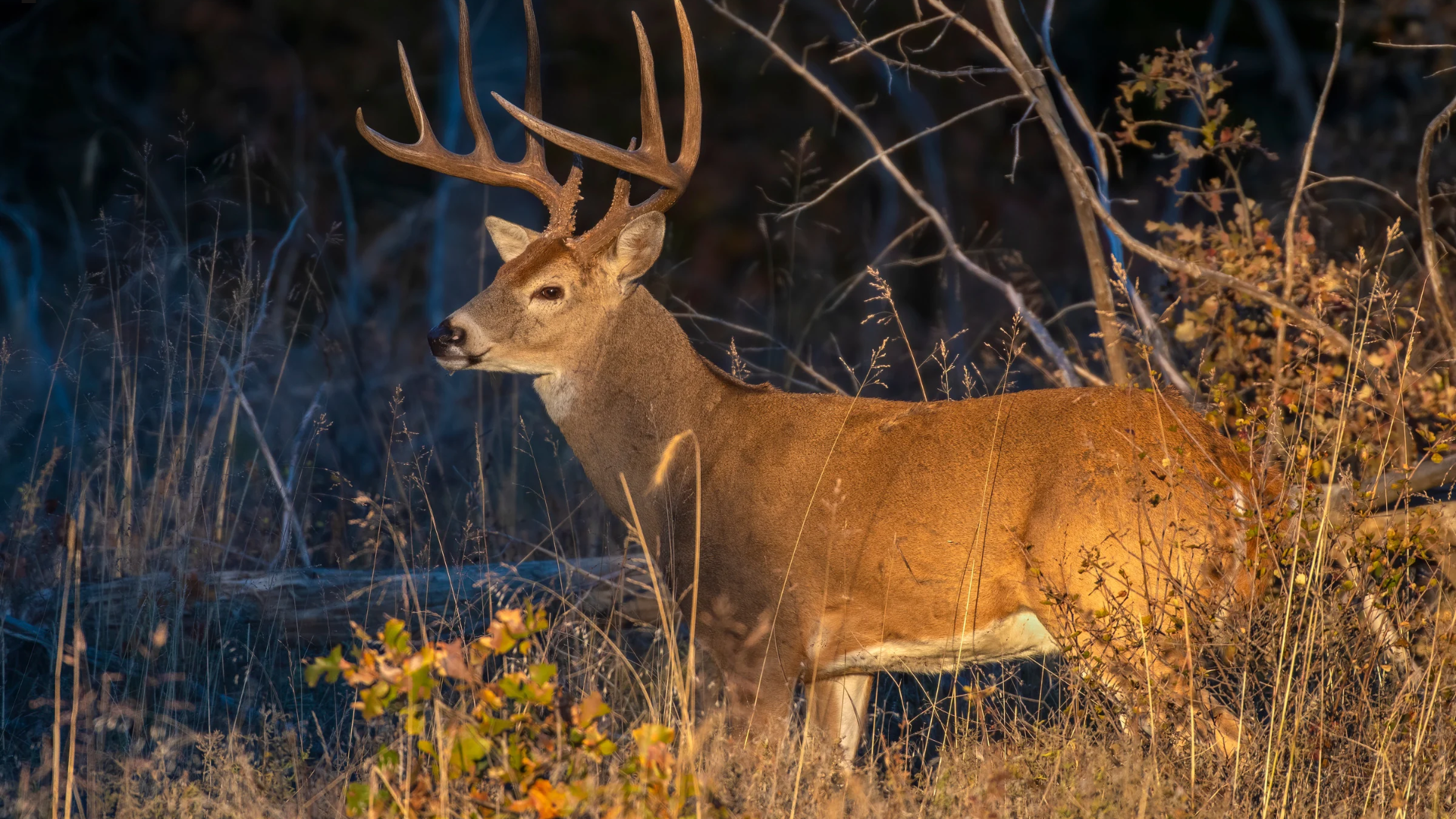
Mississippi wildlife inspectors found widespread record-keeping and sampling failures at 10 of 12 high-fence deer breeding pens this spring, including facilities tied to billionaire brothers Tommy and Jim Duff and former wildlife commissioner Billy Deviney, according to an inspection report released to SuperTalk Mississippi Media.
The Mississippi Department of Wildlife, Fisheries and Parks documented 13 deer that died without required chronic wasting disease samples, at least 53 deer with missing or mismatched tags, and more than 160 animals with incorrect or untraceable records across the inspected facilities, SuperTalk Mississippi Media reported. Only two pens came back clean.
“Why did SE48 (Duff Enclosure) have an administrative quarantine with the 19 incorrect records, three dead breeding pen deer with no samples, and three untagged deer, while SW01 (Deviney) had 97 discrepancies, 12 with no records, 14 vanished, two fawns of unknown origin, two bucks of unknown origin, and three CWD samples unaccounted for and no quarantine?” Lann Wilf, the ex‑chief of MDWFP’s deer program and host of the YouTube channel Old Biologist, inquired.
“This makes no sense and is not logical. Something has to be amiss.” Wilf told SuperTalk Mississippi Media he witnessed “multiple instances where individuals connected politically or who are wealthy received inconsistent enforcement of the law related to enclosure regulations, deer escapes from enclosures, and reproductive material importation” during his tenure, which ended in 2015.
Inspectors quarantine Duff property after finding untested deaths and missing records
Inspectors visited the Duff brothers’ 320-acre Lamar County property, labeled SE48 (Black Creek 2), on April 23. They placed it under administrative quarantine. The report shows five deer died in the breeding pens during the 2025-26 season; three were not submitted for CWD testing.
Three deer carried no tags. Nineteen deer had records that either did not exist for the prior year, did not match the previous two permit years, or lacked acquisition, birth, or release dates. The department said the facts surrounding these possible violations remain under investigation.

What the released report did not show was the reason for the quarantine. A tip later revealed that unpermitted semen had been imported across state lines and implanted in a doe, SuperTalk Mississippi Media reported.
A 2019 study demonstrated that CWD prions can be present in the semen of infected white-tailed bucks; research continues on whether those levels can transmit the disease through artificial insemination. Mississippi’s permitting rules require prior approval and source traceability for semen imports precisely because of that risk. Whether the semen came from a CWD-positive source or produced fawns is still unanswered.
In written answers to follow-up questions, the department said deficiencies have been corrected, permits approved, and quarantines lifted. Yet it also said: “Investigation ongoing and citations have been or will be issued. Any references to citations issued or their status would be improper for the MDWFP to disclose at this time.”
Lifting a quarantine while an investigation remains open contradicts the department’s own guidelines, which allow administrative quarantine only while an investigation is ongoing. The agency cites the investigative-records exemption in the Mississippi Public Records Act to withhold citation status. The Duff camp declined to comment when the story was published.
Deviney enclosure listed conditional after inspectors find unaccounted and untagged deer
Deviney served roughly 14 years on the Mississippi Commission on Wildlife, Fisheries, and Parks during the period when the state’s high-fence and breeding-pen rules were developed. In 2022 he appeared before the commission on behalf of enclosure owners seeking authority to buy and sell captive-bred deer. His 1,012-acre Copiah County property (SW01) was inspected May 7 and listed as “Conditional.”
The report states three deer died in a breeding pen or after release without CWD samples; nine deer could not be accounted for due to faded tags; two untagged mature bucks and two untagged fawns were found in the breeding facility; 12 deer in the pen had no prior records; and 97 deer shown on the previous year’s breeding-pen records were missing during the inspection.
Of those 97, 14 were recorded as moved to another breeding pen but were not present. The report noted the investigation is ongoing and charges are forthcoming.
According to the report, the facility previously sold commercial hunts but possessed no commercial hunting permit in 2025 or 2026 and held no permits whatsoever in 2026 at the time of inspection. State law requires commercial operations to report the hunter’s name, license number, date, and harvest. Whether any commercial hunting occurred without a permit in the last two years remains an open question.
After additional questions, the department answered: “After investigation, it was found that most of the deer had been moved from the breeding pen to the larger enclosure and some had died. The Department will continue to require accurate records on deer movement. The appropriate citations have been issued. In the end, it was determined that there were not, in fact, 97 deer unaccounted for.” Deviney’s camp had not responded to a request for comment by publication time. SuperTalk Mississippi News has since requested all reconciliation records.
Unpermitted semen imports and commercial hunts could trigger federal Lacey Act violations
Unpermitted semen importation across state lines could implicate the federal Lacey Act, which bars interstate movement of wildlife or parts taken, possessed, or sold in violation of state law. If any enclosure conducted commercial hunting without a state permit and harvested deer crossed state lines, that too could raise Lacey Act questions.
The department has not said whether either issue was evaluated under that statute, nor whether the U.S. Fish and Wildlife Service is involved in the state investigations. MDWFP had not answered that question by publication time.
Last week, while these inspection issues were already under scrutiny, representatives of breeders and high-fence owners met with MDWFP officials at the Butler Snow office in Jackson. They advanced a legislative agenda that includes reducing CWD testing requirements, among other items.
What the agency says
Executive Director Lynn Posey acknowledged Wilf’s remarks but did not opine on them. He described the inspection process as collaborative: staff and operators work together on a plan to remedy deficiencies, and criminal penalties apply if the landowner refuses to comply. “This system, per MDWFP, applies evenly to all Mississippi landowners,” Posey said.
“I respect that former employees may hold their own views. I cannot speak about Mr. Wilf’s personal opinions as he left the employ of the agency over a decade ago, prior to my becoming executive director,” Posey said.
“MDWFP takes questions about the consistent application of deer-enclosure rules seriously. High-fenced enclosures are subject to inspection. When a deficiency is identified, staff and the enclosure operator work together to develop a plan to address it. That process does not change the operator’s responsibility to follow the rules, and resorting to the criminal justice system may be appropriate depending on the circumstances.”
Posey emphasized that each investigation is independent and handled case by case, shaped by the facts at the time, current rules, staff observations, and whether a deficiency was corrected. He said that rules have evolved and expects further revisions, possibly as early as January when the wildlife commission next meets.
The initial public records request was filed by Ricky Mathews of SuperTalk Outdoors. Additional requests for the omitted pen report and reconciliation records are pending. The department has not provided a timeline for closing the investigations or releasing citation details.

A Guide to Casual Encounters and Dating in Bismarck, ND
Understanding local demographics and common dating shorthand is essential for casual encounters in Bismarck as platforms evolve beyond...

Wright State Student Questions Columbus Police Response After Three Car Break-Ins
Three smashed car windows in two months have left a Wright State student questioning whether Columbus police have...

Albany Man Arrested on Drug, Weapon Charges After Foot Chase, Domestic Assault Link
A foot chase through Albany streets on Monday led to the arrest of 59-year-old Andre D. Dolberry, an...

Hundreds of Community Infrastructure Initiatives Across New Mexico Are Facing a Sudden Fiscal Cliff
Hundreds of community infrastructure initiatives across New Mexico are facing a sudden fiscal cliff as the state prepares...