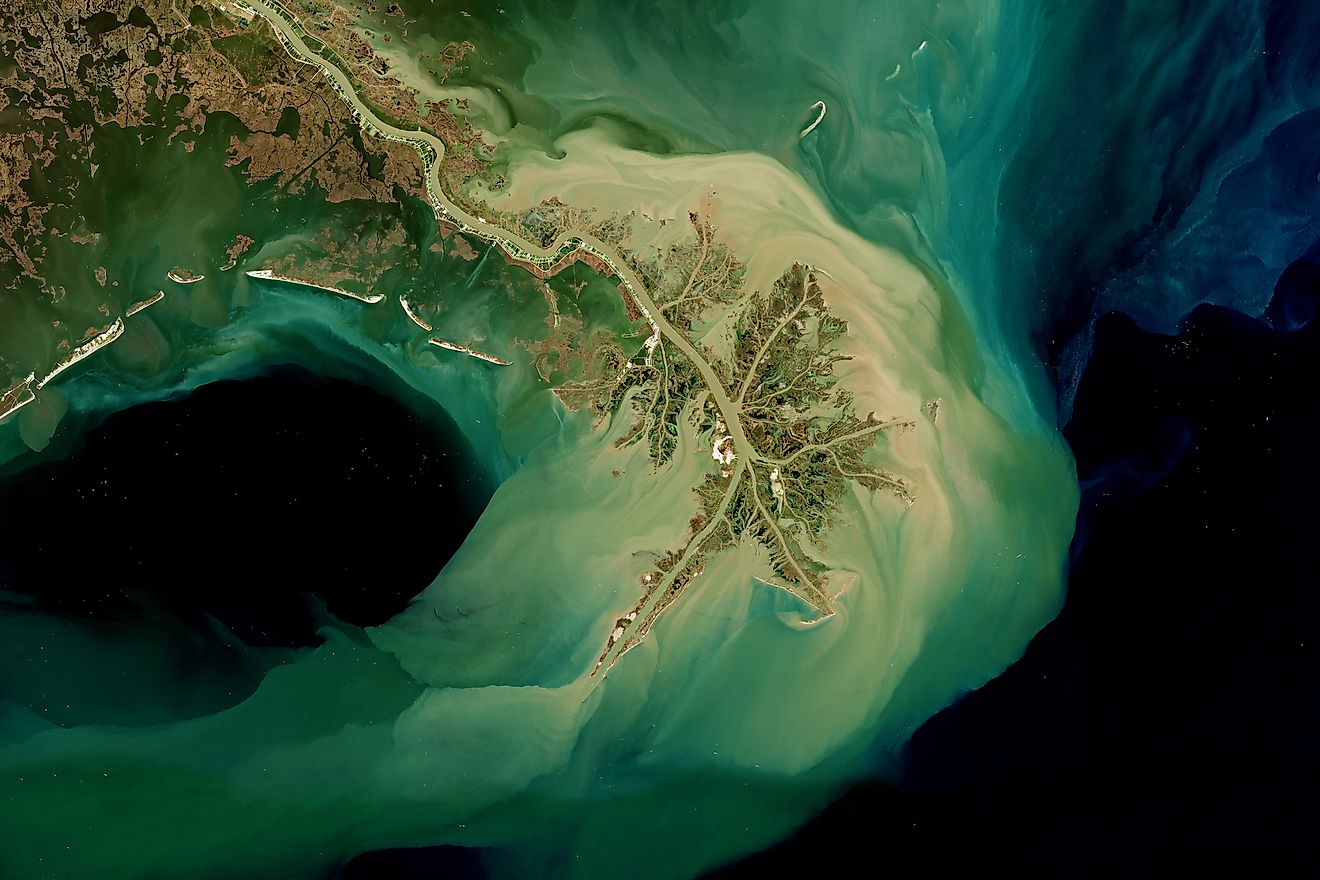
The Mississippi River Delta meets the Gulf of Mexico near Venice, Louisiana, where freshwater and saltwater marshes span 61,650 acres of coastal wetlands.
The delta contains close to 40 percent of all coastal wetlands in the lower 48 states. The river does not flow into the Gulf in one even stream but in a sediment-filled network of streams. Over millions of years, the Mississippi River expanded and grew in water volume as it was joined by other rivers.
At the end of the last Ice Age, melting glaciers caused sea levels to rebound, allowing the Mississippi River to flood a valley where the modern delta is located. Once the valley was flooded, the river steadily deposited vast amounts of alluvial deposits from melting glaciers further north, which contributed crushed materials that eventually built up to create landforms.
The river carries 500 million tons of sediment into the Gulf each year. Freshwater, less dense than saltwater, flows over the top, creating a visible brown-and-blue boundary at the mouth.
Discharge at the Gulf reaches 593,003 cubic feet per second, up from six cubic feet per second at the source in Lake Itasca, Minnesota. The Ohio River supplies more than 60 percent of the total volume, so droughts in the Ohio Valley quickly lower delta water levels.
Freshwater marshes make up 81 percent of the delta’s wetlands, with intermediate and brackish marshes accounting for the rest. Bayous thread through the region, supporting hunters, fishers, boaters and an alligator population that contributes to Louisiana’s total of more than one million. Bayous and marsh make up most of the delta’s surface.
Congress surveyed the delta in the 1860s and chose levees as the primary defense. Floods in 1912, 1913 and 1927 overwhelmed early structures. The 1927 event inundated 27,000 square miles, displaced 700,000 people and killed up to 1,000. The Flood Control Act of 1928 authorized the Mississippi River and Tributaries Project, which built 2,718 miles of levees, floodways, dams and channel structures designed to withstand a flood 11 percent larger than the 1927 disaster. This is why the St.

The bird’s-foot delta below Venice, Louisiana, was built by successive delta lobes. Bernard Delta 1,300 years ago.

GOP Strategist: Democrats Used 1994 Playbook to Break 32-Year Hold
Texas Republicans lost their 32-year hold on the state this month after Democrats adopted the GOP’s own 1994...

Lansing Honors Former Mayor David Hollister with Celebration of Life, Flags at Half-Staff
“David Hollister was a once-in-a-generation public servant who transformed the city of Lansing,” Gov. Gretchen Whitmer said. Whitmer...

Officials, Editor Explain Why People Link Unrelated Tech Outages
"This is an AI cyberattack," wrote Nalin Haley, a conservative influencer and son of Republican politician Nikki Haley,...
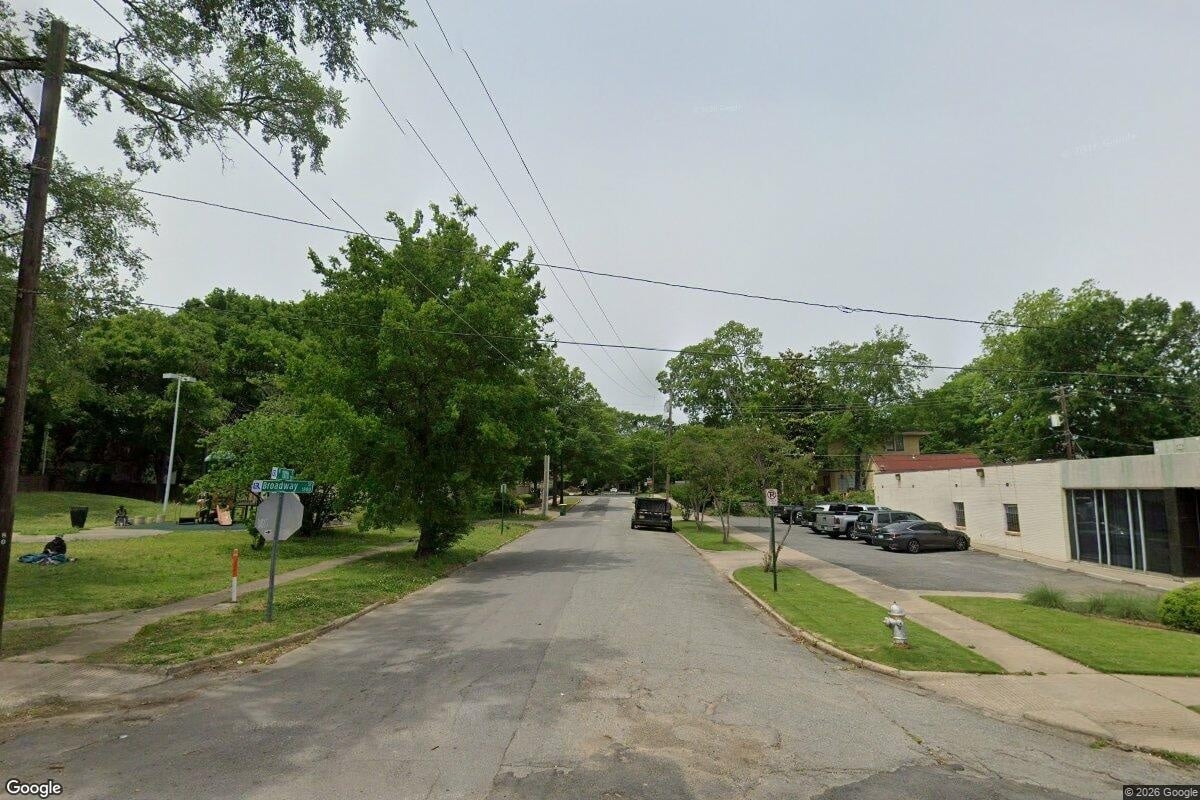
Little Rock Police Investigate Fatal Broadway Shooting; Second at Address Since 2024
Little Rock police responded to a fatal shooting at 3:04 a.m. Saturday in the 1800 block of Broadway,...