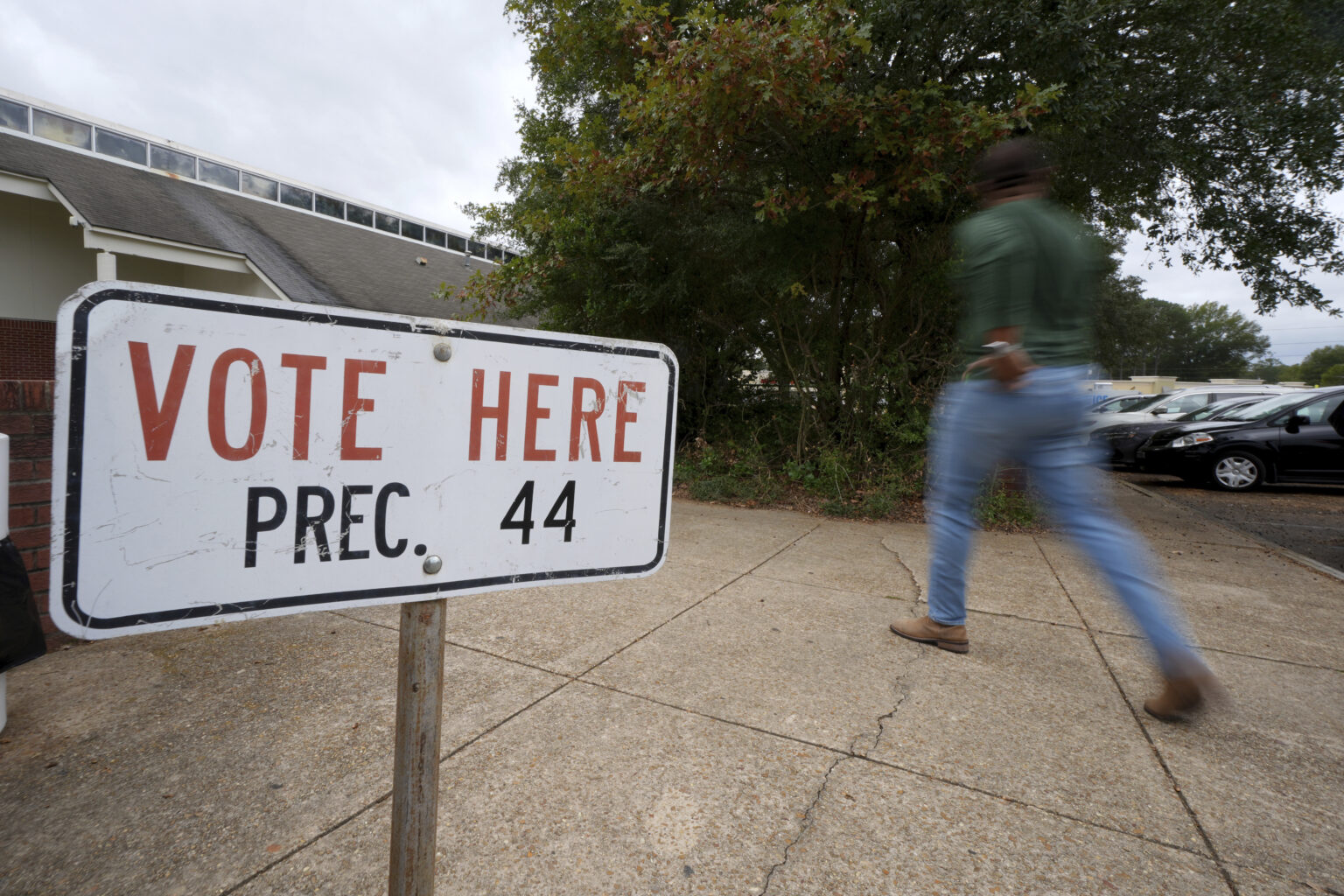
Democratic Senate candidate Scott Colom holds a tiny lead over incumbent Sen. Cindy Hyde-Smith, Republican of Mississippi, in a race so tight that the state has no law telling officials what to do next, Democracy Docket reported. Mississippi is the only state with no recount provisions for a U.S. Senate general election, and that gap leaves the outcome of a contest that could decide control of the chamber hanging on procedures written for entirely different offices.
The stakes reach beyond one seat. With mail ballots still arriving under a federal court ruling that lets Mississippi count ballots postmarked by Election Day and received up to five days later, the final margin will determine how large a majority Democrats carry into the Senate in January. If that margin comes down to a few dozen votes, neither candidate’s campaign will have a statutory recount to demand.
A handbook that covers counties, not the Senate
Mississippi’s election handbook runs to detailed rules for candidates who want to contest results in primary, general, and special elections, but those provisions apply specifically to any “county or county district office.” The state also maintains procedures for contesting state legislature races. What it does not contain is any instruction for contesting a U.S. Senate general election, a gap confirmed in the state’s own 2026 County Election Handbook.
That omission might sound academic until the vote totals freeze. Notre Dame election law professor Derek Muller, writing for Democracy Docket, noted that the situation echoes the 2017 Alabama Senate special election, when former Sen. Doug Jones narrowly unseated incumbent Roy Moore. Alabama, like Mississippi, does not allow a recount in federal elections for the U.S. House or Senate, and Moore refused to concede until every vote was counted. Jones ultimately won by more than 20,000 votes, according to Alabama’s official general election results.
The remedies that remain, and the constitutional wildcard
A losing candidate in Mississippi is not without options, Muller wrote.

“One remedy is to challenge decisions to exclude or to include certain ballots in the tabulation under state or federal law (if one could identify such ballots and then a legal theory). Those would require adjustment of vote totals even if not part of a ‘recount’ or a ‘contest.'”
Those ballot-level challenges would play out in court, not at a counting table, and they depend on identifying specific ballots and a viable legal theory. Beyond that, the U.S. Senate itself holds constitutional authority to judge the elections, returns, and qualifications of its own members. If the Mississippi race ends separated by a handful of votes, the Senate could ultimately determine the outcome. Congress usually leaves electoral disputes to the states, but it has stepped in before: in 1985 the House convened a three-person panel to settle Indiana’s “Bloody Eighth” congressional district race, which was decided by just 34 votes after certification, and the panel’s directed recount flipped the seat to a new winner by four votes, as documented by the U.S. House Office of History and Preservation.
The Elias Law Group represents the Democratic Senatorial Campaign Committee and is active in the legal effort on behalf of the Colom campaign; the firm’s chair, Marc Elias, founded Democracy Docket. Meanwhile, the late-arriving mail ballots permitted under the U.S. Supreme Court’s ruling in Watson v. Republican National Committee remain the most likely source of the decisive votes, since they can be counted through five days after Election Day. What remains unknown is whether Colom’s current lead survives those ballots — and if it does not, which of the untested remedies above either campaign would pursue first.
More on Mississippi Senate

Andrew Perchlik reelected to Vermont Senate for a fifth term
Seventeen thousand three hundred ten ballots carried Andrew Perchlik back to Montpelier on Tuesday, securing the Marshfield Democrat/Progressive...

Houston Astros 2027 Offseason Preview: New GM, Roster Overhaul and Infield Logjam
For the first time in Major League Baseball history, a team reached the postseason in a full season...

2026 South Dakota Senate Election Results by County
On November 4, 2026, a county-level results map of the 2026 United States Senate election in South Dakota...
Utah Senate Democrats Call for Sen. Kathleen Riebe’s Resignation After Discrimination Findings
Five Democratic state senators voted Tuesday to remove Sen. Kathleen Riebe from their caucus and demanded her resignation,...