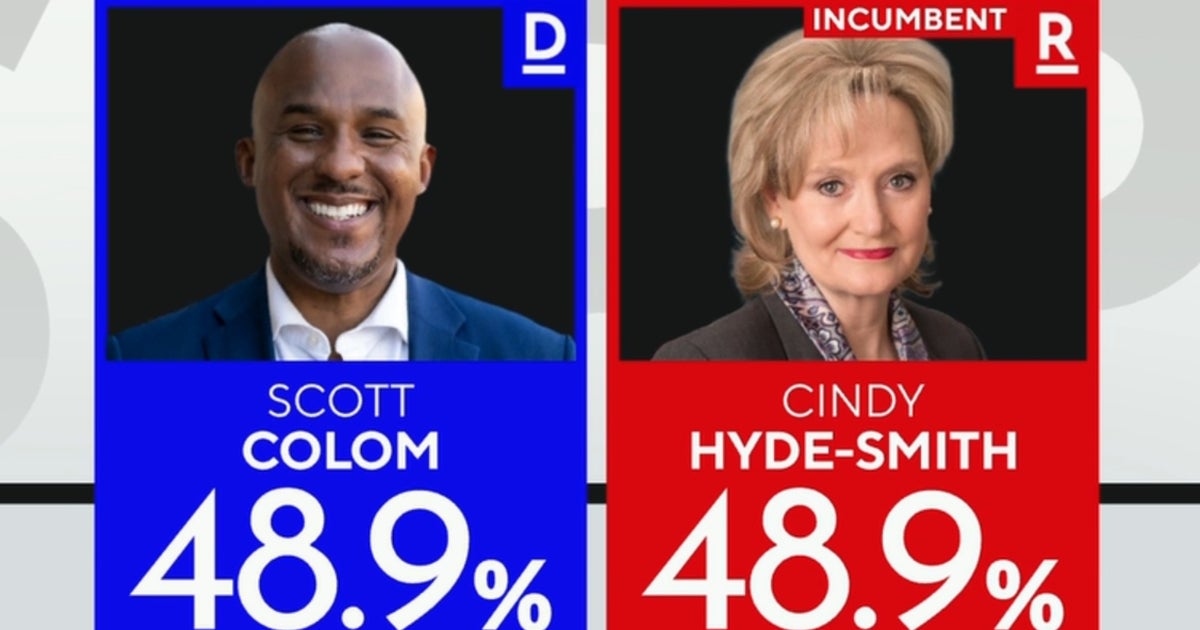
In Mississippi, the wait for a final tally in the U.S. Senate race is testing the patience of voters and the machinery of state election law. As of Thursday morning, Democrat Scott Colom holds a slim lead over incumbent Republican Senator Cindy Hyde-Smith, a margin that has fluctuated within a few thousand votes since polls closed. According to NPR, local officials have signaled that the final outcome may not be clear for several days, leaving the seat—and the composition of the Senate—in a state of tense suspension.
The delay is not a sign of systemic failure, but rather the result of specific state statutes governing ballot processing. Mississippi law allows for mail-in ballots postmarked by Election Day to be received up to five business days later. Additionally, voters who encountered issues at their polling place, such as missing identification or discrepancies on voter rolls, were permitted to cast affidavit ballots. These voters have until Tuesday, November 10, to provide the necessary documentation to have their votes certified, according to guidelines outlined by the Mississippi Secretary of State.
The Geography of the Uncounted Vote
The stakes are high, and the focus has shifted to the remaining ballots. While the Clarion Ledger reported that 11 counties had yet to finalize at least 10% of their reporting as of November 4, the demographic distribution of these votes remains a point of intense speculation. Five of those counties, including the heavily populated Hinds County, have shown a trend favoring Colom, while five others have leaned toward Hyde-Smith. The uncertainty is compounded by the sheer volume of outstanding ballots; while the Secretary of State’s office noted approximately 3,600 outstanding mail-in ballots, the Colom campaign estimated that as many as 15,000 affidavit ballots could still be processed.
For the average Mississippian, this creates a period of “clear as mud” uncertainty. The economic and social stakes are significant: a victory for Colom would represent a landmark shift, as the state has not elected a Democratic senator since the 1980s and has not sent an African American to the U.S. Senate since Reconstruction. Conversely, an Hyde-Smith victory would solidify the Republican hold on the seat, continuing a tenure that has seen her block Colom’s past federal judicial nominations.
The Legal Battle Over the Count
Both campaigns are operating under the assumption that the margin will remain razor-thin, leading to a visible presence of legal observers in counting rooms. Mike Hurst, chairman of the Mississippi Republican Party, told reporters that his party intends to “fight like hell to make sure that every legal vote that was cast is counted.” Meanwhile, the Colom campaign has expressed similar resolve, with the candidate stating he has an “army of lawyers” ready to address any challenges.

The intensity is heightened by the fact that Mississippi law provides no mechanism for automatic recounts or runoffs. Once the county clerks finish their work—a process that must be completed by November 13—the results are essentially final, barring a successful court intervention. This lack of a safety net is precisely why both parties are scrutinizing every affidavit ballot now, rather than waiting for a post-election challenge.
National Implications in a Tight Senate
While Mississippi navigates its own localized counting procedures, the national context remains equally fraught. USA Today reports that the race is one of two Senate contests currently too close to call, directly impacting the final tally of the Democratic-led Senate. With 54 seats already secured by Democrats and their caucus allies, the Mississippi result serves as a critical data point in determining the breadth of that majority. As David Becker, director of the Center for Election Innovation & Research, noted, the complexity of verifying provisional ballots in such a tight race means that the timeline for a definitive winner could easily stretch into the middle of November.
Ultimately, the state stands at a crossroads. Whether the result validates an incumbent’s long-standing hold on power or signals a generational political realignment, the process remains anchored to the meticulous, paper-heavy requirements of Mississippi election law. For now, the “Mississippi Queen” soundtrack from the NPR broadcast serves as the only definitive rhythm to a race that has refused to end on Election Night.
Related reading

Man Swept Into Lake Superior at Presque Isle Park Black Rocks
Marquette Police Close Presque Isle Park Following Lake Superior Incident The Marquette Police Department has shuttered Presque Isle...

Wichita School District Cancels Annual Magnet Choices Fair
Wichita Public Schools Ends Annual Choices Fair For more than two decades, the Wichita school district’s annual Choices...

IUP Cross Country Teams Set to Compete in 2026 PSAC Championships
IUP Crimson Hawks Head to Bloomsburg for 2026 PSAC Championships The Indiana University of Pennsylvania (IUP) cross country...

Carroll Men’s Basketball Heads to Idaho for Taco Bell Shootout
Carroll College Heads to Caldwell for Taco Bell Shootout The Carroll College men’s basketball team is heading into...