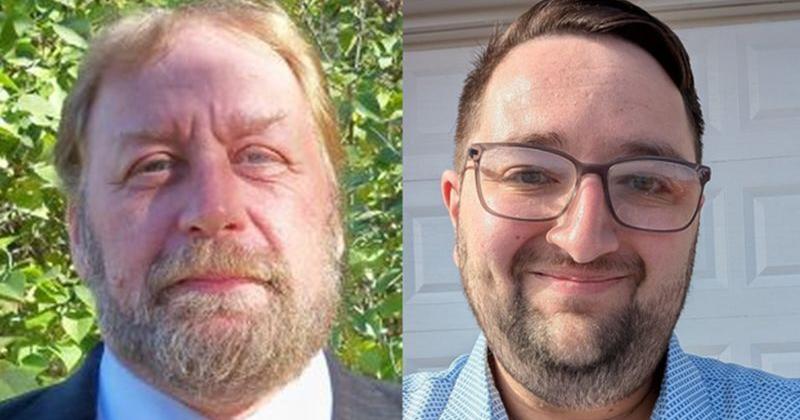
A Game of Chance Decides the Future of Spring Lake Park
The mayoral race in Spring Lake Park, Minnesota, has reached a rare and uncomfortable stalemate. According to unofficial results, both incumbent Robert Nelson and challenger Halyn Roth secured exactly 1,401 votes, leaving each candidate with 49.77% of the total, Channel 3000 reported. With all three city precincts accounted for and only 13 write-in ballots cast, the margin for error has effectively vanished.
This is not a political strategy issue or a debate over policy platforms; it is a mathematical deadlock that forces a local government into a procedure more commonly associated with a parlor game than a democratic election. If the vote tally remains tied following a public canvass by the City Council on Monday at 5:30 p.m., Minnesota law dictates that the winner must be determined by lot.
The City of Spring Lake Park announced that its mayoral candidates, Robert Nelson and Halyn Roth, are tied, with both earning exactly 1,401 votes in the election. READ MORE: https://t.co/QodWqg8env pic.twitter.com/L9ZZrVzmet
The Mechanics of a Random Selection
City Administrator Daniel Buchholtz has confirmed that the contingency plan involves a literal game of chance. “It’s a process that’s been outlined in state law for a long time and it’s a process that I believe is fair,” Buchholtz stated. The method, as described by city officials, involves drawing a name out of a bag to break the tie.
For the candidates, the gravity of the situation is heavy. While the process is codified in the Minnesota Statutes Section 204C.34, which governs the determination of tied elections by lot, the reality of potentially losing a mayoral seat to a random draw does not sit well with those on the ballot.
I don’t love it. I’ve heard from a lot of people who think that this is kind of a silly rule, that we wish we could do a revote or something else.
That sentiment, expressed by Roth, highlights the tension between rigid administrative requirements and the public’s desire for a more conventional democratic resolution.
The Margin for Error and the Recount Process
The mayoral race is not the only contest in Spring Lake Park currently under a microscope. The City Council race also faces scrutiny, as a narrow gap of just 17 votes separates Eric Julien and Kenneth Wendling. This specific margin qualifies the race for a publicly funded recount, should the candidates choose to pursue one.
History shows that these administrative remedies are not always final. In 2018, a tie in a Maplewood City Council election was initially slated to be settled by a coin toss. However, a subsequent official canvass revealed that the incumbent was actually leading by five votes, rendering the game of chance unnecessary. Similarly, in 2021, a recount in Brooklyn Park’s special mayoral election ultimately determined the winner by a margin of only two votes.
If a recount is requested in Spring Lake Park, the process is tentatively scheduled for November 17 at the Anoka County Courthouse. Candidates have until 5:00 p.m. on November 16 to submit their requests.

The Human Stakes of Administrative Deadlocks
For the residents of Spring Lake Park, the uncertainty creates a period of administrative limbo. While the City Council prepares for Monday’s meeting at City Hall, the silence from current mayor Robert Nelson, who did not respond to requests for comment, leaves the community waiting on the finality of a process that feels increasingly detached from the actual casting of ballots.
The question of whether a random draw truly represents the will of the voters remains a point of friction. As the city moves toward the Monday canvass, the focus shifts from campaigning to the cold, procedural requirements of the law. Whether the outcome is decided by a bag, a coin, or a recount, the result will fundamentally reshape the city’s leadership—a decision finalized not by a landslide, but by a handful of votes and a final, randomized turn of fate.
Related reading

Man Swept Into Lake Superior at Presque Isle Park Black Rocks
Marquette Police Close Presque Isle Park Following Lake Superior Incident The Marquette Police Department has shuttered Presque Isle...

Wichita School District Cancels Annual Magnet Choices Fair
Wichita Public Schools Ends Annual Choices Fair For more than two decades, the Wichita school district’s annual Choices...

IUP Cross Country Teams Set to Compete in 2026 PSAC Championships
IUP Crimson Hawks Head to Bloomsburg for 2026 PSAC Championships The Indiana University of Pennsylvania (IUP) cross country...

Carroll Men’s Basketball Heads to Idaho for Taco Bell Shootout
Carroll College Heads to Caldwell for Taco Bell Shootout The Carroll College men’s basketball team is heading into...