
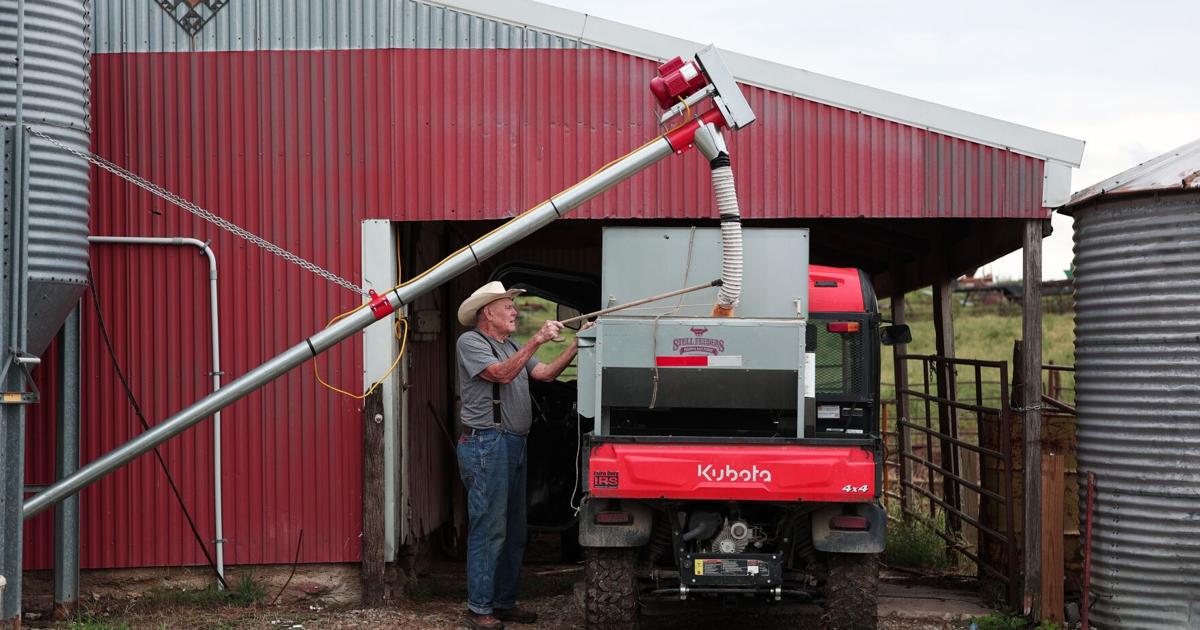
Gerald “Buster” Newberry, 87, and Katie Newberry, 81, will be the last in their family to farm their land near Parnell, Missouri, after none of their children or grandchildren chose to continue the operation, Courthouse News Service reported.
The couple bought their first 200 acres in 1965 for about $250 an acre, eventually expanding to 1,000 acres and running a herd that reached 400 head before transitioning from dairy to beef and grain, according to the Associated Press report carried by Courthouse News. Today they lease roughly 850 acres of cropland and 150 acres of pasture to local corn and soybean farmers, while Buster still feeds a few dozen cows by ATV each morning.
Nationwide, the United States is losing 2 million acres of farmland each year to urban development and infrastructure, the U.S. Department of Agriculture reports.
“A tremendous amount of wealth and productive farmland will change hands as this generation ages,” said Garrett Hawkins, president of the Missouri Farm Bureau. “The question for us is how we create opportunities for the next generation of farmers to compete for that land.”
The average age of Missouri producers reached nearly 58 in the 2022 Census of Agriculture, with the number of mid-career farmers aged 35–64 down 9.2% since 2017, Courthouse News reported. Meanwhile, average farm size continues to climb, meaning available land increasingly sells to larger operations.
Alejandro Plastina, director of the University of Missouri’s Rural and Farm Finance Policy Analysis Center, said crop production has been less profitable every year since 2023. Large owners who hold land debt-free can sustain lower earnings, but “that’s not the case for beginning farmers or even younger farmers,” Plastina said, putting smallholders and medium-scale growers at risk of exiting.
Katie Newberry said they started with seven or nine milk cows and a milker bought for $200, with a milk carrier making weekly pickups. Persistent drought across the Midwest made dairy production more costly, so the Newberrys transitioned to raising beef and grain crops, relying on only one hired laborer, the Associated Press reported.
Even as their herd reached 400 head and pastures extended into the next ZIP code, the farm remained primarily a family-run operation, according to the AP. Small and mid-sized farms like theirs have historically represented the bulk of American agricultural production, the wire service noted.
“You spend all your life building this and then what do you do with it?” Katie Newberry said, adding the farm will pass to their two daughters. The thought of it becoming something else in the future “worries us,” she said, resigned, the AP reported.
Garrett Hawkins, president of the Missouri Farm Bureau, said losing a farmer means potentially losing a customer for local equipment dealers, feed stores, banks and veterinarians, as well as a taxpayer, community leader and volunteer. Farm succession is really a rural-community issue, he said, according to the AP.
Missouri’s Beginning Farmer Tax Deduction encourages established farmers to enter rental, sale or crop-share agreements with producers who have less than 10 years’ experience. The number of new and beginning producers in Missouri rose from 41,416 in 2017 to 46,312 in 2022, Courthouse News reported. “But this is bigger than any one program,” Hawkins said, emphasizing the need for affordable credit, risk-management tools and regulatory relief.
“You spend all your life building this and then what do you do with it?” Katie Newberry said. The farm will pass to their two daughters. “They’ll just do what they want with it,” Katie said.
Related reading

No. 25 Middlebury Women’s Soccer Faces No. 14 Calvin in NCAA Division III Semifinals
The 25th-ranked Middlebury women's soccer team faces No. 14 Calvin University in the NCAA Division III semifinals Thursday,...

Washington Awards $4.5M to 43 Farms for Climate-Smart Equipment; Demand 14x Funding
Washington awarded $4.5 million to 43 farms for climate‑smart equipment — 14 times less than the $64 million...

Penn State Student Details NYC Broadway, Holiday, Museum Picks
In a first-person essay for Her Campus, a Pennsylvania State University student and lifelong New York resident argues...
Providence Mayor Smiley Signs Executive Order on Data Centers
Providence Mayor Brett Smiley signed an executive order Monday directing city departments to develop policies addressing the environmental,...