
The Atlanta Braves are confronting a shrinking pool of starting pitchers after Trevor Rodgers agreed to a five-year contract with the Chicago Cubs, joining Tarik Skubal and Sonny Gray as options now off the market, Battery Power reported.
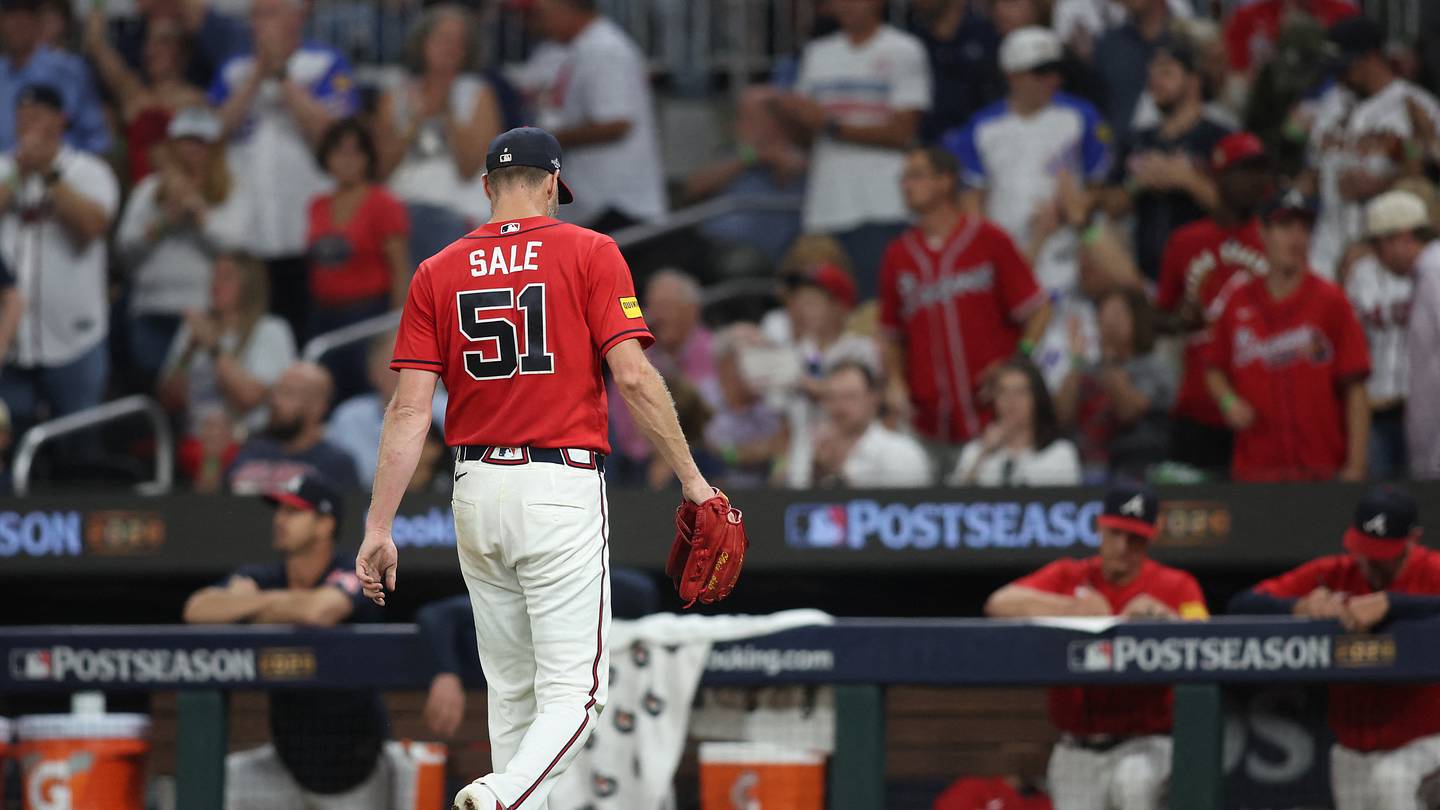
With Rodgers, Skubal and Gray no longer available, the number of arms capable of sliding in behind Chris Sale as a true No. 2 starter is dwindling just as the Braves also need to address left field and shortstop, the outlet said.
Sale is signed through 2027 on a one-year, $27 million extension with a $30 million club option for 2028, but he will pitch next season at age 38, SI.com noted. Behind him, the rotation depth chart carries significant injury uncertainty: Spencer Strider, Spencer Schwellenbach, Hurston Waldrep and Reynaldo López are all either major question marks for 2027 or likely absent altogether, according to the same report.
General Manager Alex Anthopoulos has been direct about the two Spencers, saying Strider and Schwellenbach could return in 2027 but that it “wouldn’t be responsible to count on either of them for a full workload given their injury histories,” SI.com reported. Atlanta, the outlet said, does not just need good pitchers — it needs innings, and a lot of them.
If the Braves pursue a premium starter, Michael King and Freddy Peralta are expected to command sizable multiyear deals, while Rogers was projected between $75 million and $100 million before signing with Chicago, SI.com said. Skubal, projected above $300 million, was viewed as a reference point rather than a realistic target given Anthopoulos’ reluctance to hand out massive free-agent contracts.
Signing Rogers would have carried an extra cost: because Atlanta exceeded the luxury tax in 2026, adding him after he declines the Orioles’ qualifying offer — a decision due Nov. 17 — would have surrendered draft picks and international bonus pool money, SI.com noted.
The alternative path is quantity and balance. Nick Martinez, an All-Star in 2026, could land around $40 million over two years; Clay Holmes is likely to receive multiple years after declining his $12 million option; and Kevin Gausman is a candidate for a large one- or two-year deal despite a 4.51 ERA last season, with underlying metrics suggesting better performance, SI.com reported.
Tyler Mahle, who posted a 1.99 ERA in nine appearances after a midseason trade to Atlanta, has expressed a desire to return, and the Braves have signaled mutual interest, the outlet added.
Uncertainty also surrounds the roles of Grant Holmes, Ray Kerr and Didier Fuentes, according to SI.com. Their undefined status adds to the list of pitchers — including Strider, Schwellenbach, Waldrep and López — who are either major question marks or likely absent for 2027.
The front office views the rotation not just as a need for talent but for volume, with the outlet noting Atlanta needs innings, and a lot of them.
The outlet noted the benefits of this route are real, providing more total innings, injury protection and a lighter load for Sale.
The front office must balance rotation additions against a glaring hole in left field, with every dollar for pitching unavailable for position players.
Every dollar allocated to the rotation is a dollar unavailable for left field, where the Braves still have a glaring hole, SI.com said. Mark Bowman has outlined the remaining offseason checklist as the front office weighs whether to concentrate resources on one high-end arm or spread them across multiple starters and position players, Battery Power reported.
Worth a look
MCA Chicago Updates Cookie Policy Detailing Tracking, Social Media Data and User Rights
The Museum of Contemporary Art Chicago updated its cookie policy to detail how it tracks visitors across its...

URI Wild Turkey Census Shows High Juvenile Rate, Suggesting Strong Productivity
URI researchers caught 205 wild turkeys across Rhode Island last winter and fitted 66 with transmitters. About 30...

Houston Pilot Jefferson Charged in First U.S. Seaman’s Manslaughter Case Over Fatal Channel Collision
A Houston ship pilot faces the first federal seaman's manslaughter charge in U.S. history after a fatal 2024...

Exploitation or Opportunity? The Fight Over Amazon’s New York Drivers | The City Reporter
“NYC Council could add up to $5 per order,” a pop-up notice on Amazon’s app and website warned...