
Montana ranchers skeptical of virtual fencing now run more than 6,000 collared cattle across 250,000 acres, The Cool Down reported.
- Eight private ranches in southwest Montana test GPS collars with The Nature Conservancy.
- Traditional fencing costs up to $24,000 per mile; virtual boundaries shift from a phone.
- Collars beep, vibrate, and then deliver an electric shock at the boundary limits.
- Projects extend to Oregon’s 500,000-acre Trout Creek Ranch and Wyoming’s Red Canyon Ranch.
How the collars work
Ranchers draw grazing boundaries on a smartphone or laptop app that communicates with battery- or solar-powered collars. As cattle approach a virtual line, the collar beeps, then vibrates, and finally delivers an electric startle to turn them back. The system lets managers move tightly grouped herds among smaller pastures so native grass regenerates between grazing rounds.
Labor and terrain drive adoption
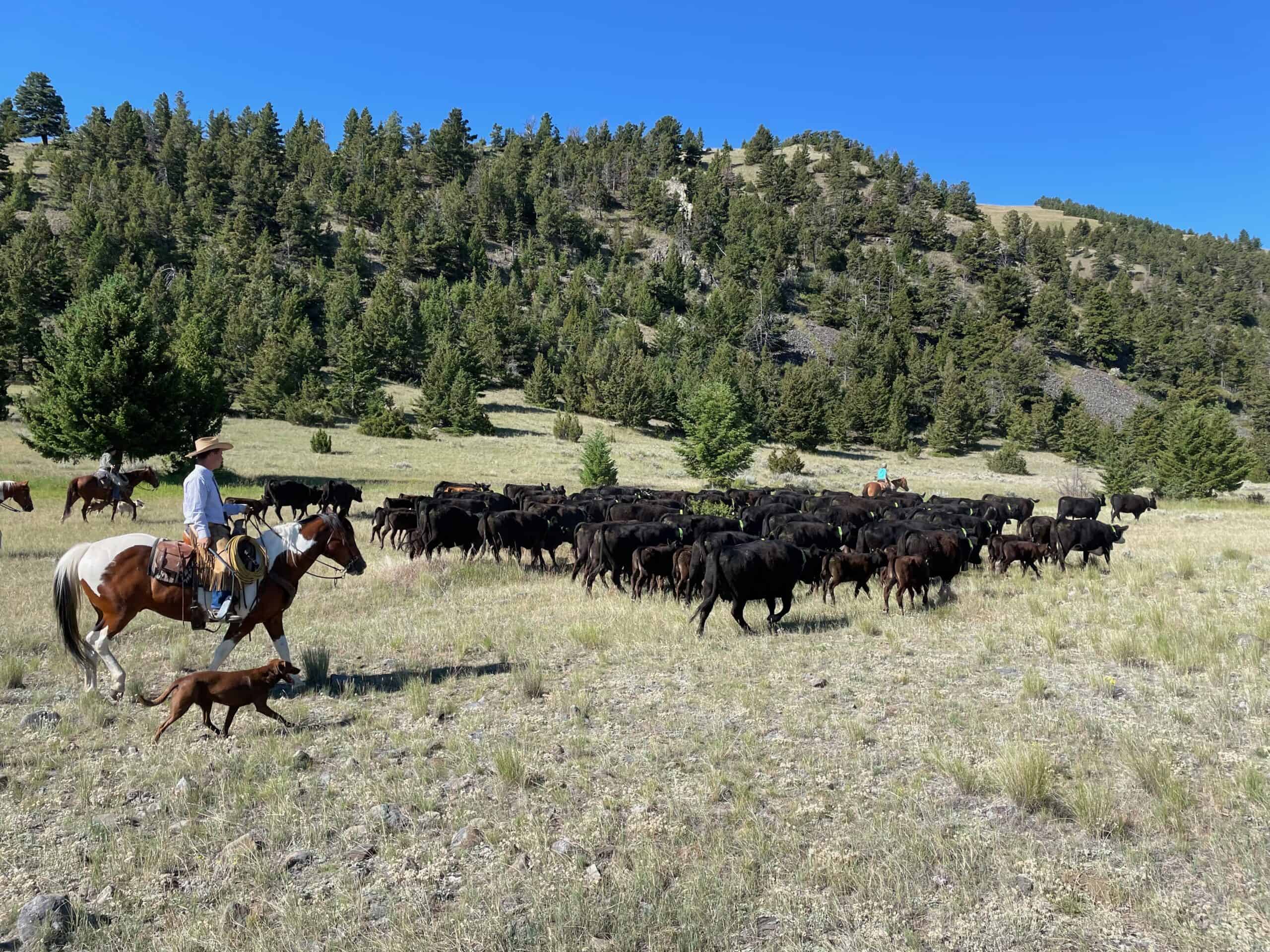
Cory Bird, a rancher near Townsend, said his family maintains over 100 miles of wire fence across steep draws, rocky slopes, thick timber, and riverside pastures that flood each spring. Drifting snow, falling trees, and migrating wildlife constantly damage wires.
“Usually we turn our cattle out in May, then spend the next six or seven months trying to find them all again,” Bird said. “Sometimes we’re still looking for the last few pairs come December. But this fall I’ve got all of them back down, already weaned and ready to go back out to fall graze.”

Bird first tested 62 Nofence collars on a Bureau of Land Management allotment along the Missouri River where cattle “island-hop” once water levels drop. “It was the easiest summer I’ve ever had with that bunch of cattle,” he said. A Rocky Mountain Elk Foundation grant later funded 43 collars on a U.S. Forest Service allotment in steep, timbered terrain where the GPS location feature cut search time dramatically.
“I was gathering cattle from the river bottom while I was in Denver the other day, funneling them into a hay field so we could ship them the following Monday,” Bird said. “We’re able to just put that virtual boundary right where we need it.”
Wildlife and habitat effects
Removing wire fences helps pronghorn, which struggle to jump traditional barriers, reach food and water more easily, The Cool Down reported. Keeping cattle out of riparian areas protects streamside plants and water quality.
The Nature Conservancy says strategic grazing can create vegetation gaps that influence wildfire speed and behavior, while targeted grazing helps control invasive cheatgrass. The Montana project sits within the Sagebrush Sea, an ecosystem spanning 13 Western states that loses an estimated 1.3 million acres annually to invasive grasses, drought-fueled wildfires, development, and overgrazing.
Funding and expansion
The Nature Conservancy covers equipment costs and seeks grant funding to reduce ranchers’ financial risk. In Oregon, TNC helped the Oregon Desert Land Trust acquire the 16,645-acre Trout Creek Ranch in 2022; the property includes permits to graze 500,000 acres of nearby public land.
At TNC’s 5,000-acre Red Canyon Ranch in Wyoming, conventional fencing is impractical in remote mountain pastures, and neighboring ranchers are testing collars there. TNC Wyoming Stewardship Director John Coffman said virtual fencing also streamlines winter feeding by guiding cattle to a single feed location without pre-searching for the herd.
“It’s really just trying win-win solutions that keep working ranches in business and maintain ranchers’ way of life while keeping the land healthy,” said Collin Peterson, a rangeland ecologist with TNC’s Montana High Divide Headwaters program.
“The ranchers we work with know as much, if not more, about vegetation dynamics than my college training has given me. This is their livelihood and their passion. Ranchers are critical partners in conservation and the protection of our lands.”

Hawai’i Rainbow Wahine Snap Losing Streak, Beat San Diego State 71-64
Honolulu — The Hawai’i Rainbow Wahine women’s basketball team snapped a three-game losing streak with a 71-64 win...

Manchester United Slump to 4-0 Home Defeat Against Brentford, Face Bottom-of-Table Prospect
Manchester United slumped to a 4-0 home defeat against Brentford on Saturday, leaving them 19th in the Premier...

Keep Going Run Virtual Oklahoma City: 5K, 10K, and Half-Marathon Registration Now Open
Registration is open for the Keep Going Run Virtual Oklahoma City, a virtual race offering 5K, 10K and...
Carson, CA: Addresses and City Information
Carson, California, a mid-sized city in the South Bay region of Los Angeles County, sits directly south of...