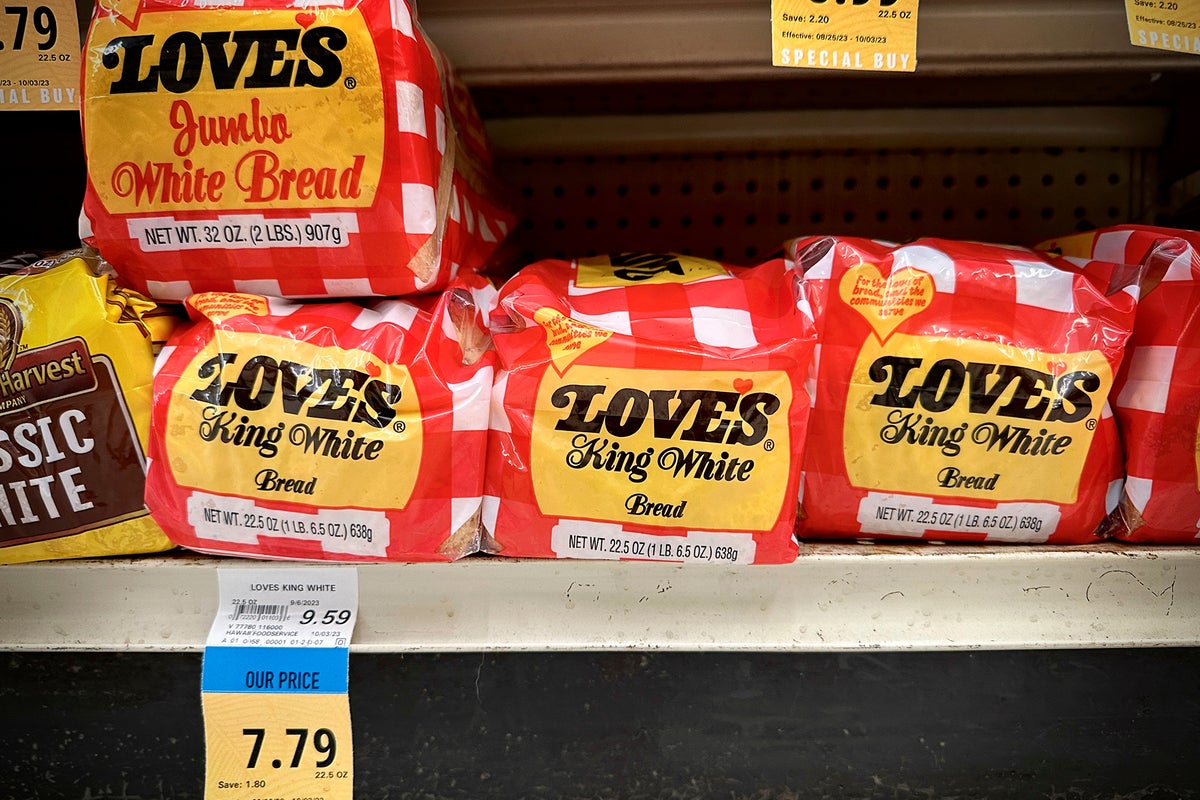
More than half of Hawaiʻi households now struggle to afford basic necessities, a steep jump from two years ago that shows a deepening crisis in the state’s social and economic fabric.
The finding comes from a new Aloha United Way report released Tuesday, based on a survey of 1,810 residents, which shows 52% of households fell below the ALICE threshold — asset limited, income constrained, employed — in 2026, up from 40% in 2024.
The federal poverty level for a family of four in Hawaiʻi sits just under $38,000 a year, but the ALICE survival budget, covering housing, child care, food, transportation, health care, taxes and a phone plan, exceeds $112,000 for that same family. For a single adult, the threshold is $45,804.
“It’s definitely straining the social and cultural fabric of our state,” Michelle Bartell, president and CEO of Aloha United Way, said of the financial burden residents are living under.
The math doesn’t work
Cole Mijo, 25, works three jobs — flight instructor, cashier and bookkeeper — yet still falls short of the roughly $46,000 he needs to cover basic costs living alone on Oʻahu. He lives with his parents and two siblings while paying down a $900 monthly flight-school loan, refinanced from $1,500. “So basically a rent payment,” he said. “I can’t afford two rent payments, so I’ll just pay one.”
Kathy Fujimoto and her husband, both retired on Social Security and a city pension, are scraping by after their rent doubled last year. She relies on coupons at Safeway and Longs Drugs, but digging for digital discounts adds hours to her shopping. “You almost have to almost have a second job doing that,” she said.
“We know that our families, our households here, are incredibly resilient. But we shouldn’t have to rely on the resilience of our families to make this economy better. We should be relying on our willingness to come together and do all of that for them, so no one has to continue to struggle.”
Disproportionate burden
The pain is not distributed evenly. The survey found 74% of Native Hawaiian households reported income insufficient to cover basics, the highest rate among ethnic groups. Renters, those without a college degree, and residents of neighbor islands also face higher hardship rates.
Coping mechanisms and consequences
More than three-quarters of surveyed households tapped savings, a similar share relied on credit cards, and 47% overdrew checking accounts. About 37% of those below the ALICE threshold struggle to pay off debt, compared to 21% above it. One in ten households cannot cover a surprise $400 bill; among ALICE households, nearly one in five cannot.
The trade-offs are physical. Almost half of ALICE households bought less fresh food. One in three turned to credit cards, loans or pawnshops. A quarter picked up extra jobs or shifts. Almost a fifth delayed medical treatment.
Hawaii is the most isolated population center on Earth, an archipelago of 137 volcanic islands spanning 1,500 miles in the Pacific Ocean about 2,000 miles southwest of the U.S. mainland. It is the only state in Oceania and the only one composed entirely of islands.
Settled by Polynesians between 1000 and 1200 CE, the islands became a unified kingdom in 1810 before American and European businessmen overthrew the monarchy in 1893, leading to U.S. annexation in 1898. Hawaii was the last state to join the union, on August 21, 1959. Its isolation drives one of the nation’s highest costs of living, even as tourism and military defense now anchor an economy once dominated by plantations.
Terry George, president and CEO of Hawaiʻi Community Foundation, framed the data as a call to action at the press conference.
“There’s three ways that we can react to this disturbing set of data. One is to blame somebody for it… A second way is to just hope somebody else will solve it. And the … third way is the only way that we all must respond to this. Roll up our sleeves, work together, and do something about it for the sake of our friends and neighbors, and the communities that we love,” said Terry George, CEO and president of Hawaiʻi Community Foundation.
Keep reading
Study: 82% of Older Unhoused Adults in Hartford Show Cognitive Impairment
The numbers out of Hartford are staggering: 82 percent of unhoused people aged 53 and older screened in...

Daniel Souza Scores for Missouri State in ESPN Video Clip
Daniel Souza found the back of the net for Missouri State on Tuesday, a moment clipped and distributed...
GM Will Open 43,000-Sq-Ft Seattle Tech Hub in Denny Triangle in Early 2027
General Motors will open a 43,000-square-foot Seattle tech hub in Denny Triangle in early 2027. "The opportunity is...

Mississippi State to Host Samford in NCAA Tournament Soccer First Round
Mississippi State will host an NCAA Tournament soccer match for the fifth straight year when Samford visits Starkville...