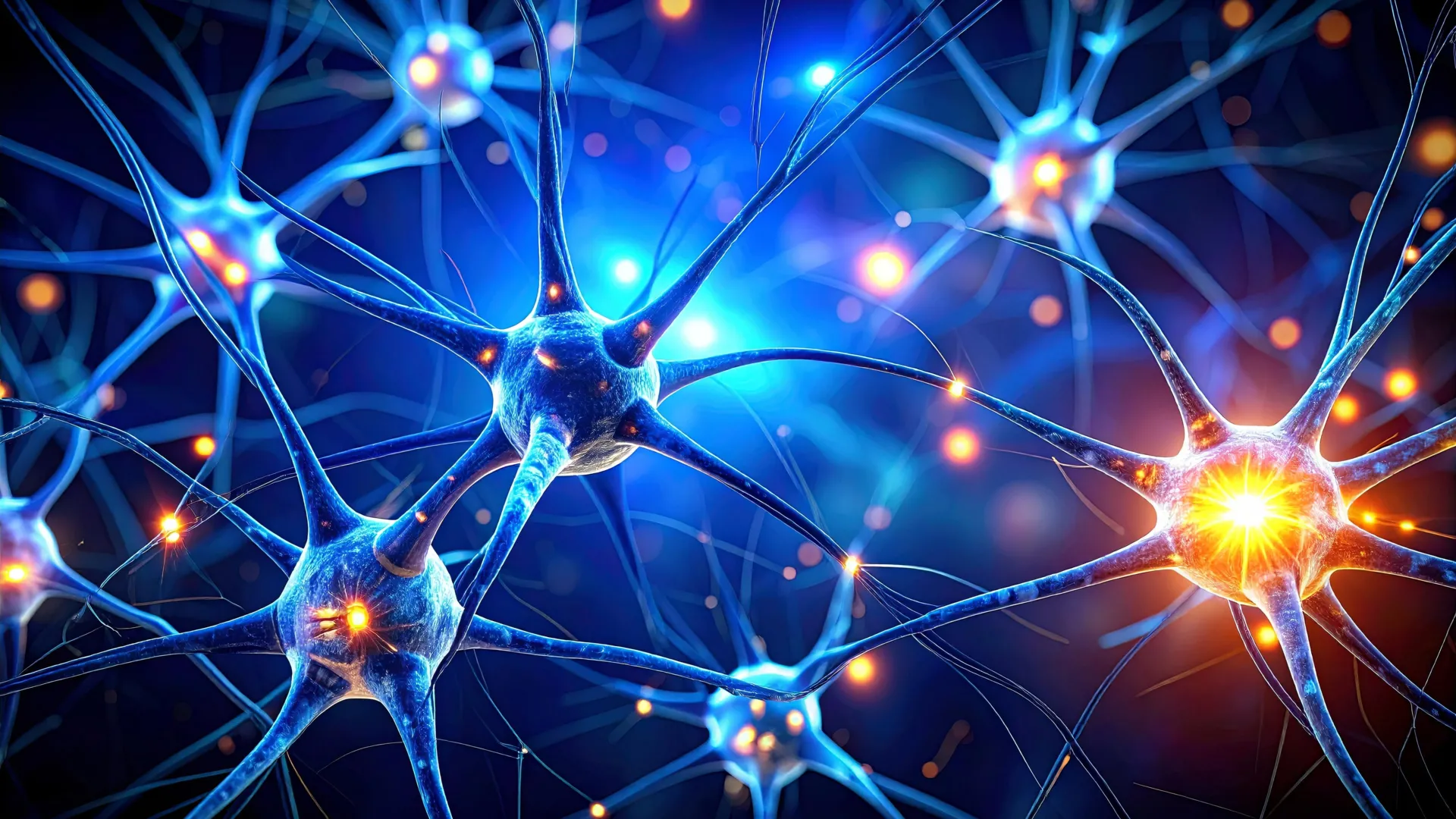
“We have to move away from this image of the brain as a machine made of gears, with every gear having an exact purpose that we can attach a label to,” said Stefano Fusi, principal investigator at Columbia’s Zuckerman Institute.
A study published in Nature reveals that most neurons act as versatile generalists rather than specialized tools, a finding the journal’s preliminary version drew more than 11,000 downloads before publication.
Researchers at Columbia’s Zuckerman Institute analyzed recordings from the International Brain Laboratory consortium, capturing individual neuron activity across 43 regions of the mouse cerebral cortex during identical tasks.
The dataset, considerably larger than typical neuroscience studies, showed that neurons in primary sensory areas tend toward specialization, while cells across the broader cortex display a much wider range of responses. “We’re not saying that there are no specialized neurons,” Fusi said. “We’re saying they are the exceptions. They’re not the rule.”
Despite this versatility, the brain retains distinct regional organization. Scientists could identify a neuron’s functional module from its task responses with surprising accuracy, yet module membership did not limit a cell to a single role.
“For example, compare this to maps of voter opinions,” said Lorenzo Posani, co-lead author and principal investigator at the Paris Brain Institute and CNRS. “There are clear clusters where people generally vote the same way. But when you zoom in, you see mixes of opinions.”

The study also found that individual neurons rarely mirror each other’s activity patterns. “Each is versatile in its own way,” said co-lead author Shuqi Wang, a doctoral student at École Polytechnique Fédérale de Lausanne. Wang said this diversity underpins the brain’s flexibility and computational power, allowing groups of neurons to form high-dimensional representations that capture multiple characteristics — such as an object’s color and shape — simultaneously.
Because single neurons carry information about several variables, determining what one represents by examining it alone is extremely difficult, Fusi said. A clearer picture emerges when analyzing combined activity across populations, a shift for a field that “for decades focused on one neuron at a time, discarding all neurons whose responses could not be understood.”
Lorenzo Posani, co-lead author of the Nature study, is a principal investigator at the Paris Brain Institute and CNRS as of the article’s publication.
The Paris Brain Institute (ICM) is a neuroscience center based in the Pitié-Salpêtrière hospital in Paris, the largest adult hospital in Europe, and hosts joint research teams such as the ARAMIS Lab, a collaboration between CNRS, Inria, Inserm, and Sorbonne University focused on building numerical models of brain diseases from multimodal patient data.
The team is now collaborating with Ueli Rutishauser’s group at Caltech to test whether human neurons show similar versatility. They also plan to examine whether specialization levels change with task demands. “There is still a lot to discover,” Fusi said.
The paper, “Rarely categorical and highly separable: how neural representations change along the cortical hierarchy,” was funded by the National Institutes of Health, the Simons Foundation, the Kavli Foundation, the Gatsby Foundation, the Swartz Foundation, the National Science Foundation, and the DoD Office of the Under Secretary of Defense for Research and Engineering.
Keep reading

NDSU Backup Niyonkuru Shines in Win; Bison Head to San Jose State Friday
North Dakota State backup noseguard Obald Niyonkuru recorded seven tackles, two for loss and a sack in a...
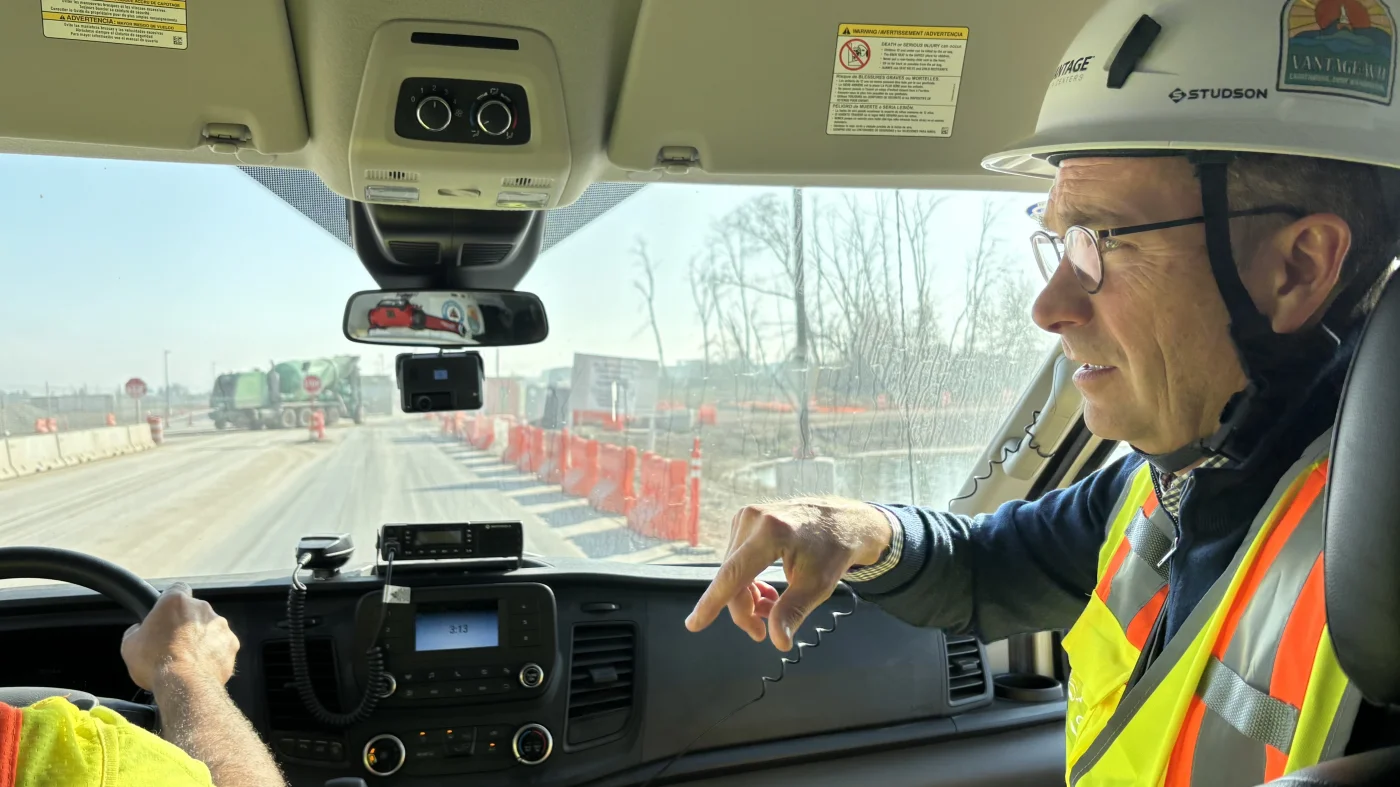
Port Washington Mayor Defends Data Center Project as Economic Model
Port Washington, Wis., Mayor Ted Neitzke is publicly backing a data center project the size of 500 football...

Pregnant Inmate Steals Transport Van During Whataburger Stop, Escapes in New Mexico
Rebecca Taylor, a pregnant inmate serving a six-year sentence for vehicle theft, stole a corrections transport vehicle Wednesday...

Nevada hosts Nugget Classic, seeks first DI win under Sopak
NEVADA, Reno — Nevada women's basketball (1-5) hosts the Nugget Classic tournament this weekend at the Lawlor Event...