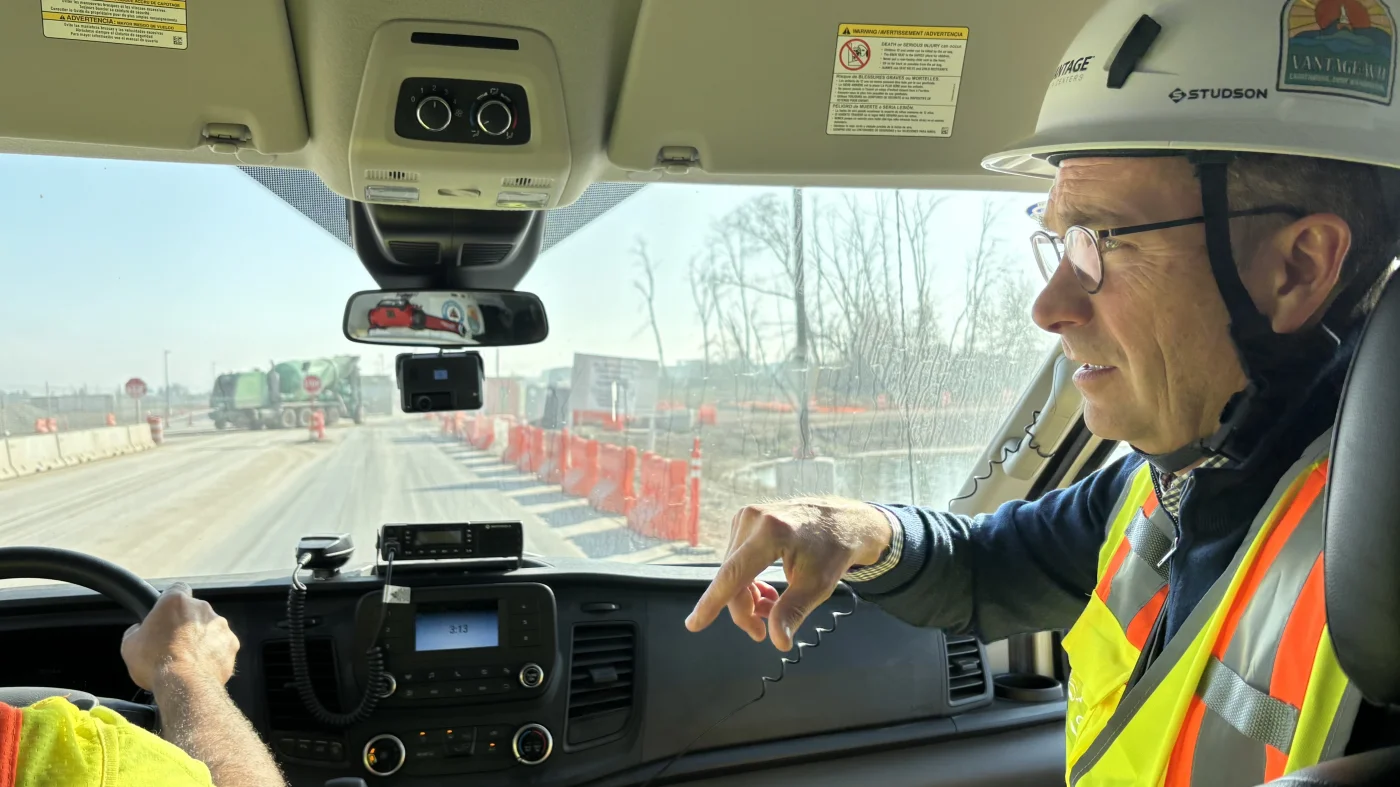
Port Washington, Wis., Mayor Ted Neitzke is publicly backing a data center project the size of 500 football fields even as midterm voters nationwide approved moratoriums on such facilities and the Senate passed legislation to ease their construction.
Neitzke argues the development on former farmland can lower local taxes and restore an industrial tax base the city lost decades ago. "Every revolution has brought an evolution, and that’s what I think is happening," Neitzke told NPR in October. "We are living in the early 20th century, just remodeled again. We have Zuckerberg. They had J.P. Morgan. We have Elon Musk. They had Rockefeller."
Communities across the country used the midterms to reject data center expansion, citing strain on power grids, water supplies and noise. Congress is moving in the opposite direction; a bill to streamline permitting cleared the Senate last week, NPR reported.
Neitzke says Port Washington’s agreement addresses the typical objections. He contends the deal structures payments to offset property taxes for residents while limiting the facility’s resource draw. "There is no better square-foot-value industrial development than a data center," he said, "and a lot of people will get very upset when I say that."

Critics in Port Washington maintain the project will increase traffic, threaten Lake Michigan water quality and lock the city into a single industrial tenant for decades. They argue the mayor’s revenue projections assume full build-out and maximum energy use, which similar projects elsewhere have failed to reach.
NPR Sacha Pfeiffer reports that Ted Neitzke leads the formerly industrial city of Port Washington, which sits north of Milwaukee along Lake Michigan. The mayor told NPR last month that his community lost its industrial tax base decades ago.
Neitzke frames the current moment as a historical echo, saying the city now has figures like Zuckerberg and Musk where it once had J.P. Morgan and Rockefeller. He argues the proposed data center on former farmland can restore that economic foundation.
Pfeiffer reports that local communities nationwide used the midterm elections to overwhelmingly approve moratoriums and restrictions on data center construction. The results delivered what the story calls a decisive rebuke of such projects.
At the same time, Congress moved in the opposite direction. A bill to streamline permitting for data centers passed the Senate last week, according to NPR’s reporting.
Neitzke acknowledges the political risk but says he does not understand why a community with an industrial heritage would fight to regain that base.
Mayor Ted Neitzke leads the city of Port Washington, which sits on Lake Michigan 27 miles north of Milwaukee and had a population of 12,353 in the 2020 census. The community was a commercial port from the 1870s until the early 2000s, when its generating station switched from coal to natural gas and the harbor closed.
For much of its history the city exported cord wood, wheat and rye flour, bricks, fish and hides, and beginning in the 1930s the Port Washington Generating Station used the harbor to receive large shipments of coal for electricity, an industrial base the mayor says was lost decades ago.
He frames the project as a template other former manufacturing towns could follow if the federal bill becomes law.
Related reading

Texas Democrats Win State Offices; Federal DEI Pressure Remains
Federal pressure remains Trump still controls agencies that have threatened funding cuts and lawsuits to force institutions to...

Scotty Fox Jr. Expected to Start for West Virginia vs. Utah, But Jyron Hughley Could See Action
Scotty Fox Jr. is expected to start at quarterback for West Virginia on Friday against Utah in the...

Denver DA Declines Charges in Waymo Eggings
A man in Denver has been trapping Waymo robotaxis with traffic cones and pelting them with eggs in...

Port of Seattle Commission Voted to Raise 2027 Property Tax Levy Without Voter Approval
The Port of Seattle Commission voted 5-0 on Monday to raise its 2027 property tax levy by 8.2%,...