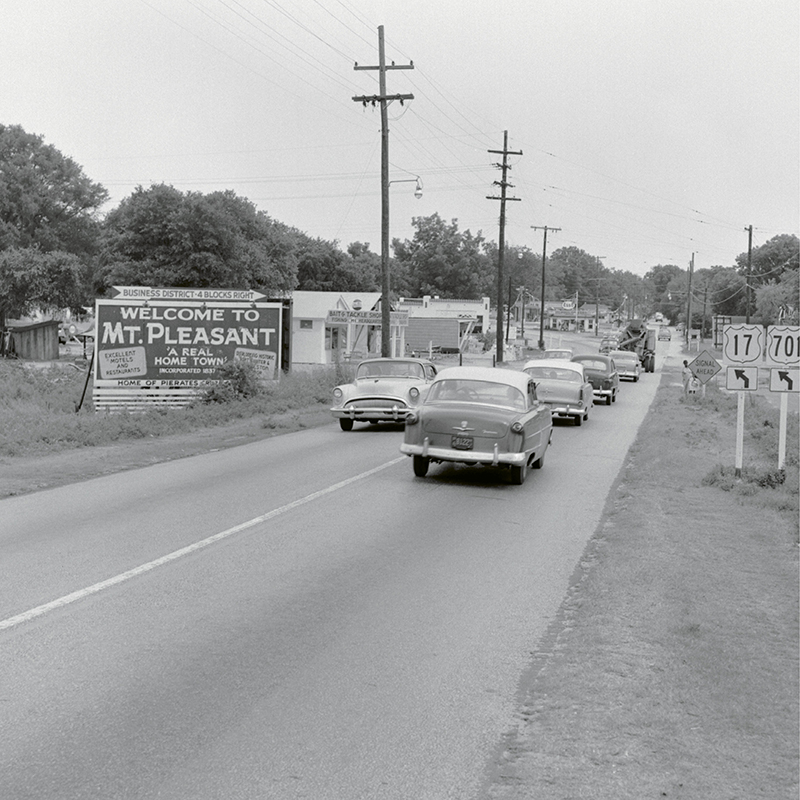
Mount Pleasant has changed from a quiet stretch of two-lane road and bait shops to a bustling corridor of modern commerce and dining.
According to a retrospective by Charleston Magazine, the area surrounding Sullivan’s Island Road once served a much smaller, more specialized community centered around the local shrimping industry and public gardens.
This transformation highlights a massive demographic shift in the East Cooper region, where the scale of growth has fundamentally altered the town’s original character.
In 1957, the thoroughfare was a simple two-lane road that led travelers toward the docks of Shem Creek and the gardens of Pierates Cruz.
During that period, the area was home to local landmarks like the elephant “Suzie Q,” who served as a mascot for the nearby WCBD-TV station.
The road was eventually renamed to honor Francis F. Coleman, who served as the mayor of Mount Pleasant during a period of intense development.
Coleman’s 14-year term oversaw a period of rapid expansion that redefined the town’s boundaries and infrastructure.
The scale of this mid-century growth is reflected in the population data from that era.
By the time Coleman retired in 1960, the population had more than tripled.

While the jump from 1,500 to 5,000 residents changed the town, modern figures dwarf those historical milestones.
Today, more than 90,000 people reside in the East Cooper area, a stark contrast to the “quaint scene” of rustic welcome signs and bait-and-tackle shops documented decades ago.
The economic drivers have transitioned from primary industries like shrimping to a diverse service and retail economy.
This evolution brings a tension between the modern necessity of high-density development and the community’s desire to maintain its “Real Home Town” charm.
The rapid influx of residents necessitates constant updates to transit and commercial zoning, often leaving the original, slower-paced atmosphere of the 1950s as a distant memory.
The promise of that older, smaller-scale charm continues to influence how the community perceives its current growth.
Related reading

Stock Futures Rise as Investors Eye Inflation Data and AI Earnings
Stock futures moved higher on Monday morning as traders assessed whether technology shares could sustain a recovery from...

Wyoming Man Michael Pannell Adds Antique Carriage to Collection
“I just saw it and thought it was really nice. I’d not restored a carriage before, so I...

Madison Common Council Begins 2027 Budget Deliberations
Madison officials begin a week of fiscal and policy deliberations that could set the city's long-term operational budget...

Penn State Edges Washington 28-25 as Rocco Becht and Carson Hansen Lead Way
The Penn State Nittany Lions secured a win against Washington on November 7, 2026, though the victory was...