
University of Sydney researchers have developed experimental nasal drops that use mRNA technology to restore memory performance in aged mice to youthful levels and prevent cognitive decline in a mouse model of Alzheimer’s disease, according to a study published November 18 in Advanced Science. The treatment delivers genetic instructions for brain-derived neurotrophic factor (BDNF) via lipid nanoparticles, turning nasal cells into a local protein factory that bypasses the blood-brain barrier.
How the nasal drops work
The drops contain messenger RNA encoding BDNF, a protein that supports neuron survival, synaptic connections, and the birth of new neurons in the hippocampus.
The mRNA is packaged in lipid nanoparticles (LNPs) — the same delivery platform used in COVID-19 vaccines — which protect the genetic material and help it enter cells lining the nasal cavity. Once inside, those cells produce and secrete BDNF, which then travels to the brain along nose-to-brain pathways, the study explains.
“In aged mice, we saw learning and memory significantly increased, returning animal cognition to its youthful prime,” said Professor Greg Neely of the Charles Perkins Centre, who led the research. “What’s exciting is that this was achieved with a simple non-invasive nasal delivery system that builds on the same underlying mRNA-LNP technology platform many people became familiar with during the COVID-19 pandemic,” he told Science Daily.
Memory restored in aged mice
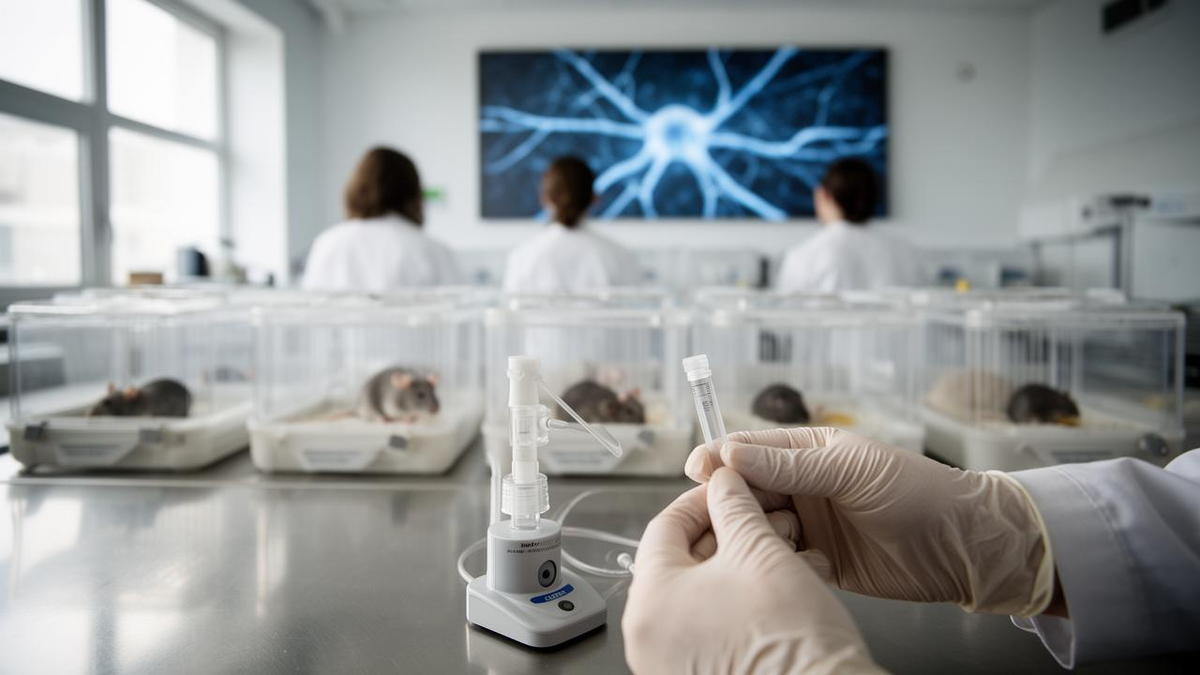
Compared with age-matched controls given mRNA for a harmless jellyfish protein, the treated mice performed significantly better on three standard memory tests: novel-object recognition, Y-maze working memory, and Y-maze spatial memory, Tech Times reported from the paper’s methods and results.
Their scores were statistically indistinguishable from those of three-month-old young mice, though the small group sizes (six to 10 animals per group) mean “not detectably different” is not proof of equivalence, Tech Times noted.
The treatment also increased neurogenesis. Treated aged mice showed 2.4 times as many cells expressing doublecortin, a marker of developing neurons, in the hippocampus compared with untreated aged controls.
Protection in an Alzheimer’s model without clearing plaques
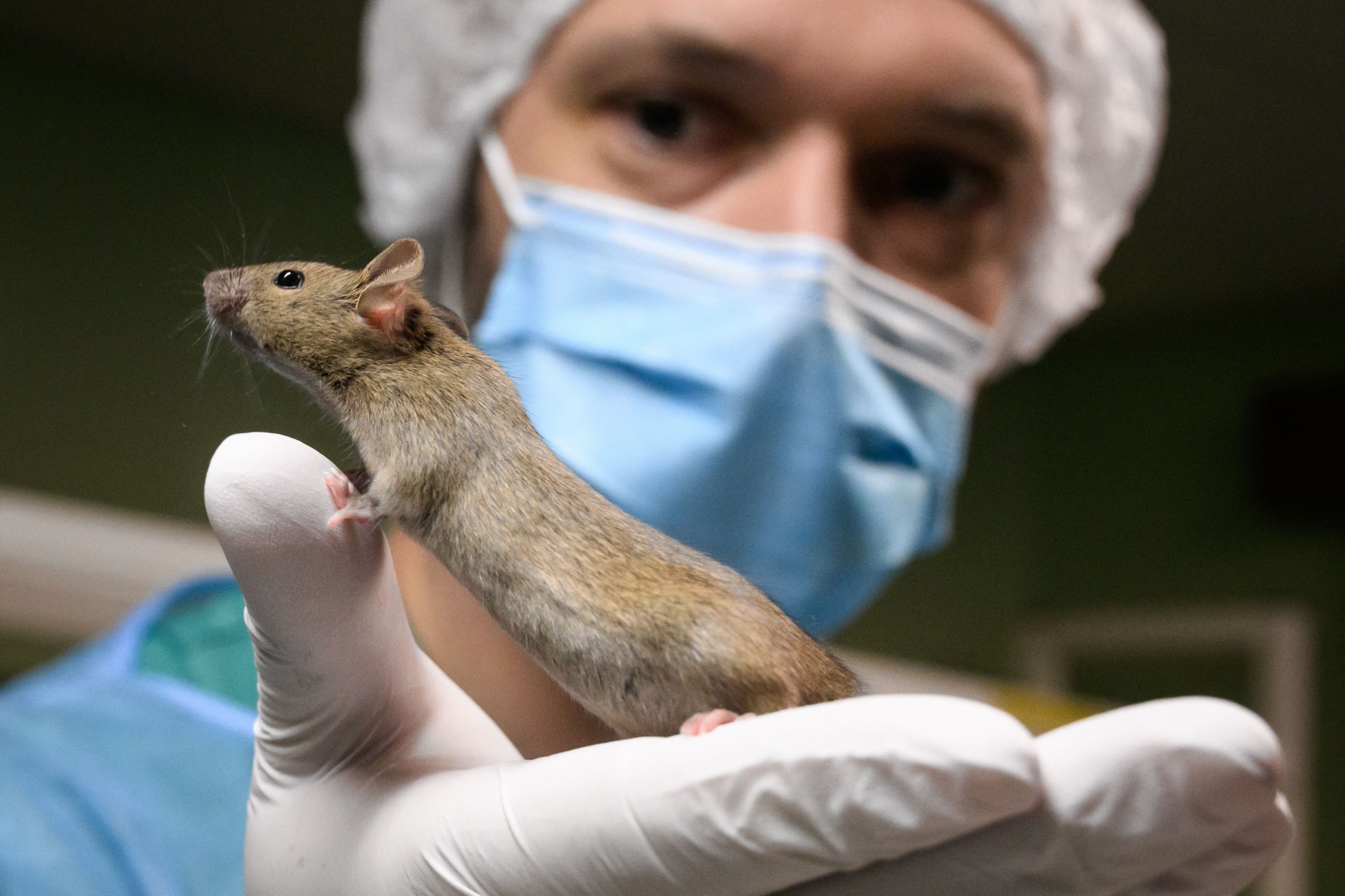
In a second experiment, the team used 5XFAD mice, a strain engineered to develop Alzheimer’s-like brain pathology from two months of age and measurable cognitive decline by four months. Treatment began at two months, with twice-weekly dosing continuing through behavioral testing at four months. Treated 5XFAD mice showed no further cognitive decline, performing comparably to healthy wild-type mice of the same age, BigGo Finance reported.
Critically, amyloid plaques — the abnormal protein deposits targeted by many current Alzheimer’s therapies — were not reduced. “Current Alzheimer’s treatments largely focus on clearing these amyloid plaques,” Neely said.
“However, just under a third of Alzheimer’s patients have serious plaques but do not suffer from dementia, and these patients show naturally higher BDNF levels, suggesting if we raise BDNF, it’s possible to live with Alzheimer’s disease pathology.” The approach instead supports neuron health and connectivity despite the plaques, raising the possibility the two strategies could complement each other, he told Science Daily.
From mice to humans: the anatomical hurdle
Despite the promising results, the treatment remains experimental. “Before we can trial this therapy in patients, we need to perform a series of safety studies in animals,” Neely said. “It is a very promising pathway, but human noses are different from mouse noses, so we will need to test our drugs in humans before we know whether it will work,” he told Science Daily.
The nasal anatomy difference is a major translational consideration; evidence that drugs travel directly from nose to brain in people is thinner than in rodents, with intranasal insulin in 2006 the commonly cited human demonstration, Tech Times noted.
The researchers hope to begin human clinical trials within two years, after completing required animal safety studies. Neely said that the individual components — the mRNA-LNP platform and BDNF — have prior human safety data, but the complete nasal formulation requires its own evaluation.
An experimental mRNA nasal therapy turns the lining of the nose into a protein factory to reverse memory loss in aged and Alzheimer's mice. Brain-derived neurotrophic factor, or BDNF, is essential for keeping neurons alive and forming memories, yet its levels plummet during… pic.twitter.com/LnA6xQs0Oa
Lipid nanoparticle formulation details
The mRNA is packaged in lipid nanoparticles that contain DSPC, cholesterol and a PEG lipid alongside the ionizable component, the study methods show.
Alzheimer's model results without plaque reduction
In 5XFAD mice, treatment began at two months of age and continued twice weekly through behavioral testing at four months. Amyloid plaques were not reduced, a finding Neely highlighted to Science Daily when noting that just under a third of Alzheimer’s patients have serious plaques without dementia and show naturally higher BDNF levels.
Preprint notes conflicting mRNA dose amounts
The preprint methods list 0.5 microgram of mRNA in 5 microliters per administration, while a figure legend lists 1 microgram; drops were given under light isoflurane anesthesia, Tech Times noted from the methods.
Researchers patent nasal mRNA delivery method
Neely and first author Dr. Maria Bergamasco are listed as inventors on a provisional patent application associated with the research. The work was funded by the National Health and Medical Research Council, the NSW Ministry of Health, and philanthropic support from Dr. John and Anne Chong. All animal experiments were approved by the University of Sydney Animal Ethics Committee.
“This study demonstrates that mRNA treatments have potential beyond infectious diseases, including for treating neurological disorders,” Bergamasco said. The team plans to refine the nasal delivery technology and conduct longer-term safety and efficacy studies before advancing to human trials.
Related reading

Philippine House Approves Bill Criminalizing Grooming, Toughening Safe Spaces Act Penalties
The House of Representatives approved House Bill 11264 on Tuesday by a vote of 200 to 2 with...

Man Stabs 5 Delhi Cops at Jama Masjid Station, Shot 6 Times in Legs During Confrontation
"How did you dare summon me?" he allegedly said while stabbing the cops, NDTV reported. A 30-year-old man...

ICMR Trial: Menu Labels Cut Calories at One Chennai Chain But Not the Other
Nutrition labels on menus cut calories at one Chennai restaurant chain but not another, an Indian Council of...

Jakarta Government Intervenes to Return Celebrity Mall Cat Parhan
The Jakarta government intervened this month to return Parhan, a celebrity cat living at the Senayan City mall,...