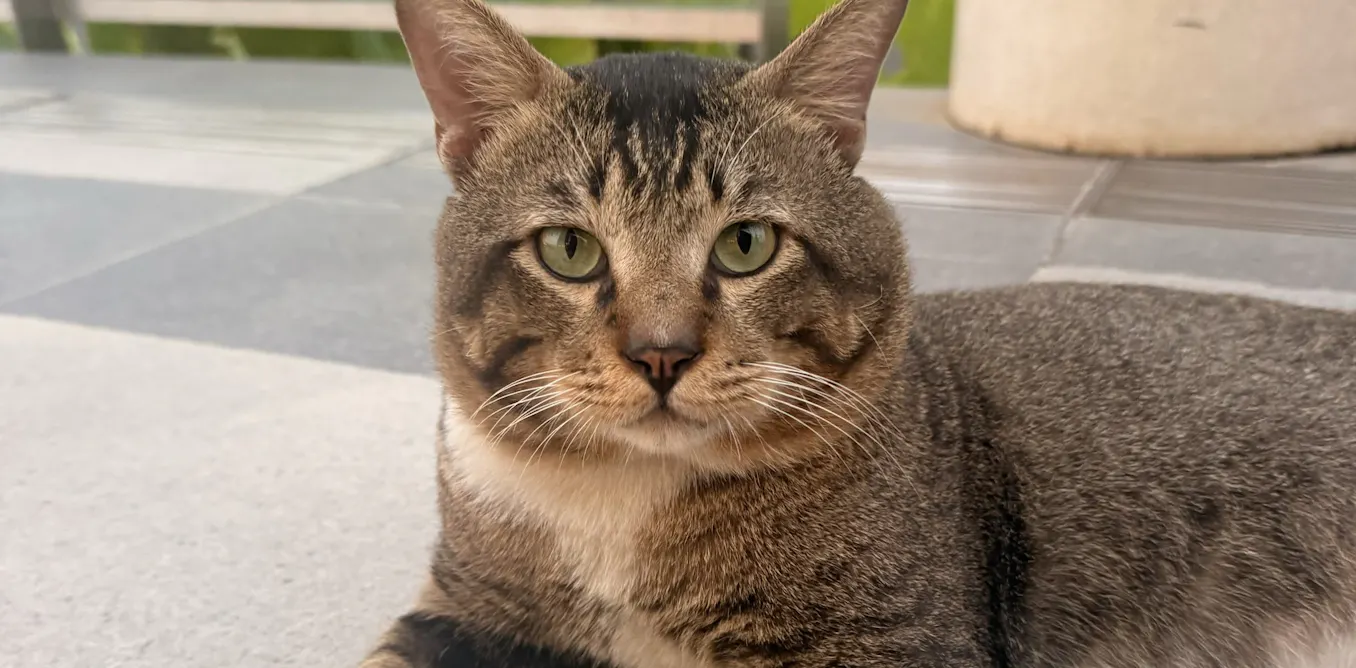
The Jakarta government intervened this month to return Parhan, a celebrity cat living at the Senayan City mall, after an Indonesian-Australian woman took him in October claiming she had adopted him, The Conversation reported.
Parhan, known to mall workers as “si ganteng” or “the handsome one,” had become a “selebcing” — slang for cat celebrity — cared for by security guards at the luxury mall, known locally as Sency. The woman’s social media posts about taking Parhan to Sydney triggered an online petition and advocacy by Animal Defenders Indonesia, leading to mediation involving local politician Francine Widjojo, who is known for animal rights work.
After delays related to medical concerns, Parhan was returned to the mall on November 18. A security guard who had cared for the cat engaged lawyers to fight for his return, providing a legal basis for government involvement.
The case unfolded amid turbulent politics, including student protests over fires, economic downturn and militarisation, clashes at Universitas Gadjah Mada that detained 154 protesters, and the resignation of Vice-Gibran Rakabuming Raka after a court ruled he lacked a high school diploma.
Jakarta Governor Pramono Anung justified the intervention by citing his administration’s special attention to animals. An advisor for social communication said the government acted in response to intense social media and public pressure.
“Unlike flooding or air pollution, a dispute over a cat requires little structural change and carries few political risks,” The Conversation reported. The successful mediation generated feel-good publicity and linked the government to a much-loved celebrity cat.
Cats hold a special place in Indonesia, the world’s largest Muslim-majority country, where cultural and religious affinity underpins their prominence in public life. President Prabowo’s cat Bobby Kertanegara has similarly helped project warmth and care.
Research on social media activism in Indonesia suggests simple, non-sensitive stories draw more mass support than explicitly political issues. The Parhan case reflects a widespread perception of “no viral, no justice” — the belief authorities act only when an issue goes viral, a phenomenon the national police chief has publicly acknowledged.
Kucing Parhan yang sempat menjadi sorotan publik akhirnya kembali ke kawasan Senayan City (Sency), Jakarta, pada Rabu (18/11). Pengembalian ini dilakukan langsung oleh pihak pengadopsi dengan disaksikan perwakilan Animal Community serta kuasa hukum. Momen tersebut sekaligus… pic.twitter.com/Ag29yBm2ij
Parhan, kucing komunitas yang sempat menjadi sorotan setelah dibawa pergi dari kawasan Senayan City (Sency), Jakarta Pusat, dipastikan akan dikembalikan pada Kamis (12/11). Kepastian tersebut diperoleh melalui mediasi yang difasilitasi Dinas Ketahanan Pangan, Kelautan, dan… pic.twitter.com/PYcDWv07Tk
Related reading
ICMR Trial: Menu Labels Cut Calories at One Chennai Chain But Not the Other
Nutrition labels on menus cut calories at one Chennai restaurant chain but not another, an Indian Council of...

Beaver Moon Kicks Off Supermoon Trio; December Moon Closest Since 2018
November's full moon reaches peak illumination at 9:53 a.m. Best viewing comes at moonrise — around 4 and...

OpenAI’s GPT‑6.2 Designed 322 Minibinder Backbones That Were Synthesized and Tested
OpenAI's GPT‑6.2 designed 322 minibinder backbones that were synthesized and tested; 35 bound their targets, a hit rate...
Gothic House Where Frankie Dunne Was Murdered Set to Be Demolished
A derelict 19th century Gothic-style house on the grounds where Frankie Dunne was murdered in 2019 is to...