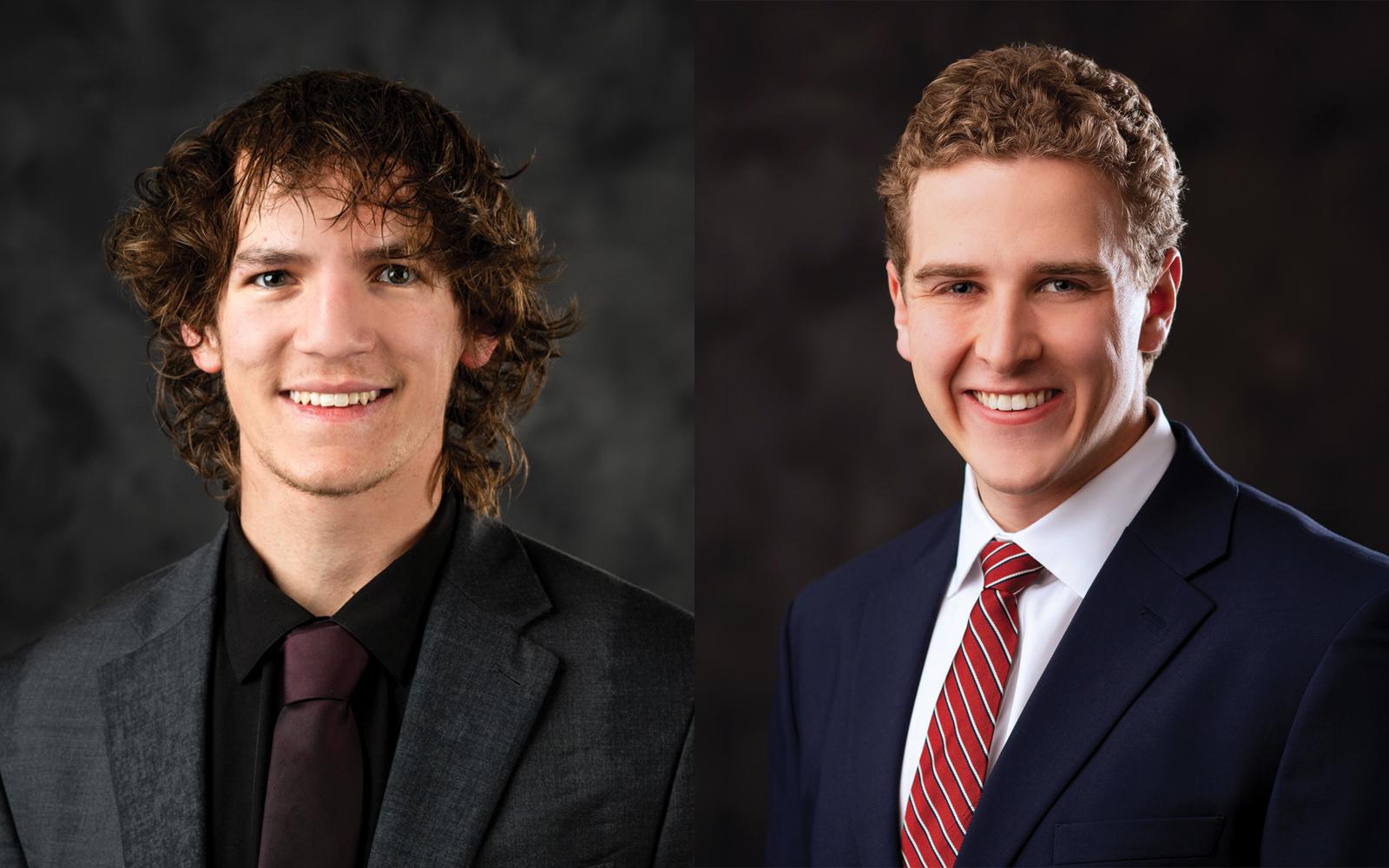
Two Mississippi State Students Finalists for Prestigious Marshall Scholarship
Two Mississippi State University students, senior Evan Garrison and alumnus Spencer Lile, have been named finalists for the Marshall Scholarship, a highly competitive national award funding graduate study in the United Kingdom. The news, reported by Mississippi State University, marks a significant achievement for the institution and its students.
The Marshall Scholarship is renowned for selecting up to 50 American students each year to pursue graduate-level studies in the U.K., a program symbolizing the enduring relationship between the two nations. Garrison, a finalist for the Rhodes Scholarship as well, is a double major in aerospace engineering/astronautics and mathematics, with minors in artificial intelligence, political science, and global engineering leadership. His research aims to bridge the gap between experts and policymakers to protect critical space infrastructure, focusing on the growing problem of orbital debris. Lile, who graduated this spring with degrees in biomedical engineering/pre-med and physics, is currently a medical student at the University of Arkansas for Medical Sciences. He plans to study computational modeling of how drugs bind to biomolecular pathways, a field that could accelerate the development of new treatments for various diseases.
A Legacy of Excellence
The selection of Garrison and Lile shows a tradition of high achievement at Mississippi State. The university’s Office of Prestigious External Scholarships, directed by Professor David Hoffman, provides crucial support for students aiming for these top honors.
“Both Evan and Spencer are engaged in research at the very forefront of science that has significant potential for developing solutions to critically important, global problems. Issues of this magnitude necessitate cooperation and experiences that broaden perspectives and deepen understanding, which they are both seeking via graduate studies in the U.K.,” said Professor David Hoffman, director of MSU’s Office of Prestigious External Scholarships. “It is remarkable to see how their work on space debris and rare disease treatment respectively was built upon the training, opportunities and mentorship they found at MSU. Ultimately, their research prowess and leadership experiences both on and off campus show the potential to reinforce U.S.-U.K. cooperation that is at the heart of the Marshall Scholarship.”
Their individual accomplishments prove their dedication. Garrison is a Louis A. Hurst Jr. Presidential Scholar and a Harry S. Truman Scholarship winner, an award for students pursuing public service. He has also been recognized as a U.S.-U.K. Science and Technology Stocktake Team Achievement Award nominee and an Air Force Research Laboratory Phillips Scholar. Lile’s accolades are equally impressive, including the nationally renowned Astronaut Scholarship in 2025, a Barry Goldwater Scholar designation, and the MSU Outstanding Research Award. He graduated with the Stephen D. Lee Scholar distinction, maintaining a perfect 4.0 GPA throughout his academic career.
The Stakes of the Scholarship and the Path Forward
The Marshall Scholarship, founded in 1953 by the British Parliament and named after U.S. Secretary of State George C. Marshall, is more than just a financial award. It covers university fees, living expenses, books, and provides grants for research, thesis work, and travel. The program is designed to cultivate future leaders who will strengthen the “special relationship” between the United States and the United Kingdom. For the communities these students hail from—Webb City, Missouri, and Benton, Arkansas—their success brings national attention and serves as a powerful example of what dedicated students can achieve with the right opportunities.
Of course, one might ask why this matters beyond the individual accolades. The answer lies in the nature of the problems these students are tackling. Orbital debris is a tangible threat to satellites that underpin global communications, GPS, and national security. Rare diseases often leave patients with few options, and computational modeling offers a path to faster, more effective drug discovery.
The selection process is fiercely competitive, and the final step is an interview phase scheduled for later this month. The future of these two promising scholars now hinges on their performance in these interviews. If selected, Garrison and Lile will join a distinguished lineage of Marshall Scholars, carrying their Mississippi State education and research ambitions to the United Kingdom.
Related reading

New Mexico US Attorney Charges 700 in Immigration Enforcement
New Mexico Federal Prosecutors Charge 700 in Four-Week Immigration Sweep ALBUQUERQUE – The numbers are stark, a snapshot...

Republicans keep Montana legislative majority despite blue wave
Montana's Red Map Holds Firm as Blue Wave Swells Nation Across the nation, voters reshaped state legislatures last...

Telemundo Deportes’ Weekend Soccer Schedule Includes Bayern, Man City, Juventus
Telemundo Deportes Unites Global Powerhouses for a Soccer Weekend in the U.S. Spanish-language sports fans in the United...

NJ Transit Service Suspended Due to Stuck Newark Drawbridge
Newark Drawbridge failure disrupts NJ Transit rail lines during Thursday evening commute A mechanical failure at the Newark...