
Myanmar’s leader Min Aung Hlaing has said the country will not comply with “inappropriate” parts of a landmark United Nations court ruling that found the country committed genocide against its Rohingya minority.
Min Aung Hlaing said “the term ‘genocide’ had seriously affected the country’s reputation,” state media reported. He added that “Myanmar would take the actions appropriate for a responsible country but would not comply with requirements it considered inappropriate.” The statement did not specify which exact parts of the ruling that the country objects to.
The International Court of Justice (ICJ) found Myanmar guilty of genocide in a 9-6 decision announced on November 19, 2026. The ruling centered on military “clearance operations” initiated in 2017 in Rakhine State that killed thousands of Rohingya civilians and forced more than 700,000 to flee. The court determined that the only reasonable inference from the evidence was an intention to destroy a substantial part of the Rohingya population in northern Rakhine State.
David J. Scheffer, the first U. S. ambassador-at-large for war crimes issues, Senior Fellow at Council on Foreign Relations, Arizona State University professor, and SWJ contributor, writes that the #ICJ’s ruling on Myanmar is a “legal watershed.” It is the first time an entire…
The court ordered Myanmar to stop ongoing violations and immediately investigate those suspected of breaking the Convention. However, the ICJ does not have the power to enforce these demands.
Legal experts weigh in on ruling
International lawyers highlighted the significance of the court’s decision, which set a precedent for holding states liable for genocide. “This case will certainly impact other genocide cases,” said Priya Pillai, an international lawyer who heads the Asia Justice Coalition.
The ruling clarified that a state’s obligation to prevent genocide is triggered by a serious risk, not just a confirmed violation, as the court quoted the Democratic Republic of Congo stating that conditioning prevention on prior establishment of a violation would be “manifestly absurd and unreasonable.”
'How the Campaign Against Israel Rewrote the Law of Genocide' – by @RoyKAltman. Genocide is the crime of crimes, and it requires a heightened standard of proof. In its Myanmar ruling, the ICJ abandoned that standard – because they hope that way they can convict Israel. Make no…
The court found that Myanmar had failed to use its available means to prevent acts that posed a serious risk of genocide, even if it could not conclusively determine the civilians possessed genocidal intent. This reinforced the distinction between a state’s duty to act positively to prevent genocide and merely refraining from facilitating it, a point emphasized in the declaration of Judge Cleveland.
Rohingya Community Welcomes Genocide Ruling
The Rohingya community reacted with relief to the long-awaited ruling. “Finally this is being recognised as a genocide,” said Ms Nayim Ullah, co-founder of the Australian Rohingya Women’s Development Organisation. “I’m relieved that we have finally reached this milestone together as it has been a long journey.” Similarly, UN General Assembly President told Rohingya refugees, “You will not be alone,” following the decision.

Rohingya Activists and Malaysia React to Decision
The ruling was welcomed by Rohingya communities and human rights groups. Wai Nu, a Rohingya activist who directs the Women’s Peace Network NGO, said the finding followed “decades” when “the Burmese military tried to erase our identity, deny our existence and dismiss our suffering.”
Myanmar has long denied committing genocide, arguing its forces were responding to attacks by armed groups. However, the ICJ ruling dismissed Myanmar’s argument that it was carrying out counter-insurgency operations. On Friday, its government described the ICJ decision as unfair and “a great disappointment”.
As the principal judicial organ of the United Nations, the International Court of Justice (ICJ) settles disputes between states, but its jurisdiction is founded upon the consent of the states involved. In contentious cases, the ICJ’s rulings are binding and final, yet the court has no formal enforcement mechanism of its own.
Since its first case in 1947, the ICJ has handled 201 cases as of September 2025, and enforcement of its decisions remains a political matter for the UN Security Council, where it is subject to the veto power of the five permanent members.
The Foreign Ministers of New Zealand, Australia, Belgium, Canada, Cyprus, Czech Republic, Estonia, Iceland, Latvia, Luxembourg, Portugal, Spain, The Gambia and the United Kingdom acknowledge the decision of the International Court of Justice concerning Myanmar under the Genocide…
“What was done to you in 2017 was genocide,” Khalilur Rahman told refugees and reporters. He called for justice for the victims, reparations for the survivors and guarantees that refugees can return home safely and with dignity.
More on Myanmar
A recent ICJ ruling protects Rohingya access to citizenship in Myanmar but stops short of requiring citizenship to be granted.@RudabehS examines the legal and geopolitical implications of the judgment:https://t.co/22QkQHPJh7
Keep reading

Francesco de Pinedo Completes 55,000 km Rome-Melbourne-Tokyo Flight in Flying Boat Gennariello
Francesco de Pinedo completed an aerial tour of about 55,000 kilometres on 7 November 1925, touching three continents...

Trump Announces New Tariffs on EU, China; Ireland Pharma Excluded
The Trump administration announced new tariffs on 14 major trading partners Wednesday, including the European Union and China,...

Stephen Olson: US Shifts Threaten Southeast Asia Economic Conditions
The United States is abandoning its post-WWII commitment to global institutions and free markets, a pivot that threatens...
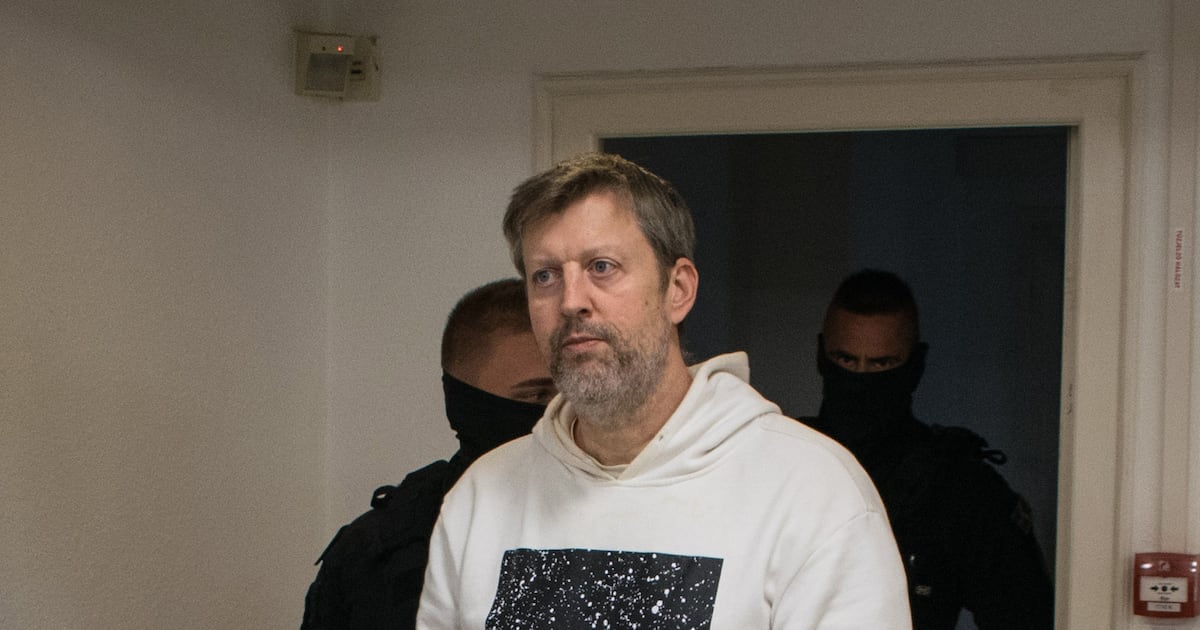
Irish Citizen Admits Killing Ex-Wife in Budapest Court
David Anderson, a 45-year-old Irish citizen originally from California, admitted in a Budapest court on Friday to killing...