Researchers to Present Breakthrough in Blood Cancer DNA Analysis at Major Conference
PROVIDENCE, R.I. — A Rhode Island company has announced a significant advancement in the way doctors can analyze the genetic roots of blood cancers, with researchers from two academic medical centers set to present their findings at a major pathology conference next week. Newswise reported that Nabsys 2.0, LLC, will be showcasing research on its Electronic Genome Mapping (EGM) technology, which promises a more comprehensive and less invasive method for detecting cancer-related genetic changes.
This news arrives as the medical community continues to seek more precise tools for diagnosing and researching hematologic malignancies—cancers that affect the blood, bone marrow, and lymphatic system. The announcement from Nabsys, made on November 5, sets the stage for what could be a critical moment in clinical oncology when the data is formally presented.
A New Lens on Cancer Genetics
The heart of the announcement is a presentation scheduled for the Association for Molecular Pathology (AMP) 2026 Annual Meeting, taking place November 10–14 in Seattle. On Friday, November 13, from 9:30–10:00 a.m. PT, researchers from Augusta University and The University of Texas MD Anderson Cancer Center will take the stage. They will present a study titled, “Electronic Genome Mapping for Structural Variant Detection: Implications for Advancing Clinical Research in Heme Malignancies.”
The researchers, Ravindra Kolhe, M.D., Ph.D., FCAP, of Augusta University and Rashmi Kanagal-Shamanna, M.D., of UT MD Anderson, are tackling a fundamental challenge in cancer diagnostics. Characterizing these complex diseases often requires a patchwork of technologies, including karyotyping, FISH (fluorescence in situ hybridization), chromosomal microarray, and various sequencing methods. Each test provides a piece of the puzzle, but integrating them is time-consuming and may not reveal the full picture.

EGM, powered by Nabsys’ OhmX™ Platform, offers a complementary, high-resolution, genome-wide approach. It aims to analyze both structural and copy number variants in a single assay, potentially streamlining the entire process.
“Structural variants are central to disease classification and risk assessment across many hematologic malignancies, yet labs still rely on a combination of karyotyping, FISH, and other molecular methods to identify them,” said Dr. Kolhe. “In our initial study, Electronic Genome Mapping detected every abnormality identified by standard cytogenetic testing and provided additional molecular insights in complex cases. I look forward to sharing these findings with the AMP community and discussing how EGM could help streamline cytogenomic analysis in clinical research.”
From Invasive Biopsies to Simple Blood Draws
One of the most compelling aspects of this new research is its potential to reduce the burden on patients. The current standard for cytogenetic analysis often involves invasive bone marrow aspirates, where a needle is inserted into the hip bone to extract marrow. This procedure can be painful, and the samples are sometimes compromised.
"Our preliminary data suggests that with EGM, we detect translocations, deletions and complex rearrangements directly from peripheral blood, with no culture needed and at a resolution far beyond karyotyping. I am thrilled with the possibilities that this EGM research opens up for the hematopathology community."
This shift from a painful, invasive procedure to a simple blood draw could be transformative, especially for patients who are already weakened by their disease. It also addresses a practical challenge in the lab: the inconsistent quality and quantity of bone marrow samples.
Barrett Bready, M.D., founder and CEO of Nabsys, emphasized the collaborative nature of this progress. “EGM is advancing rapidly, and collaboration with the hematopathology community is essential to its success,” he said. “It’s exciting to see leading experts like Drs. Kolhe and Kanagal-Shamanna, who have championed genome mapping, continuing to advance the field and share their findings at AMP. Their work is critical to building the evidence, confidence, and clinical research understanding needed for broader adoption of EGM.”
Beyond the Presentation: A Platform in Motion
The presentation at AMP is just one part of Nabsys’s presence at the conference. At Booth #937, the company will be demonstrating its OhmX Platform and its cloud-based analysis tool, Nabsys Navigator™. The platform includes specific pipelines: SV-Discover™ for genome-wide structural variant analysis and SV-Verify™ for confirming findings from other technologies.
Perhaps most importantly, attendees will get a first look at forthcoming software specifically designed for hematologic malignancy analysis. The company is actively seeking feedback from the pathologists and researchers who will use it, asking for input on data presentation, moving through the system, and overall interface design. This direct engagement with the end-user is a critical step in the development of any new clinical tool.
It is essential to note that the OhmX Platform is currently designated for Research Use Only and is not intended for use in diagnostic procedures. This distinction highlights the fact that while the preliminary data is highly promising, the technology is still in the validation phase before it can be integrated into standard clinical care.
For more information on Nabsys and its Electronic Genome Mapping technology, you can visit their official website at www.nabsys.com.

Wyoming Digital Government Summit focuses on AI and cybersecurity
Wyoming’s Digital Shift: Cybersecurity and AI at the Forefront On May 20, 2026, state and local government leaders...
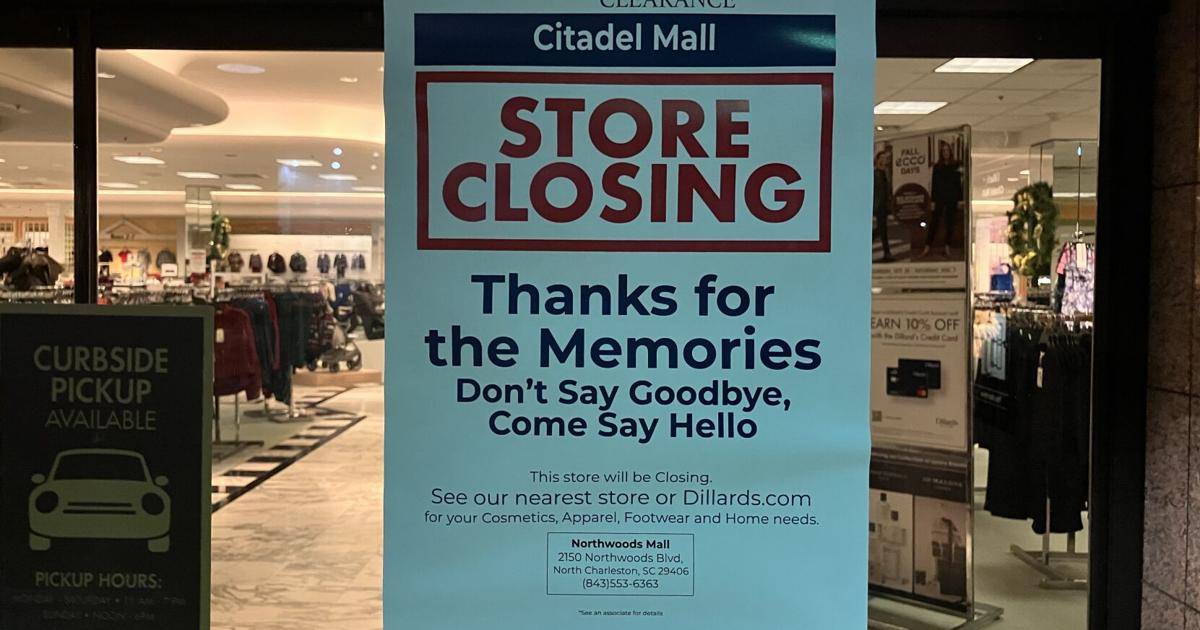
Dillard’s to Close Citadel Mall Location After 34 Years
Dillard’s to Exit Citadel Mall After 34-Year Run The West Ashley retail landscape is losing one of its...

Virginia Beach Launches Military-Themed Gingerbread Holiday Trail
Virginia Beach Expands Holiday Gingerbread Tradition to Military Families The annual gingerbread competition in Virginia Beach is evolving...

Two Men Charged in Burlington Card Shop Break-ins
Burlington Police Arrest Two Men Following Series of Trading Card Shop Break-ins Two men are now in custody...