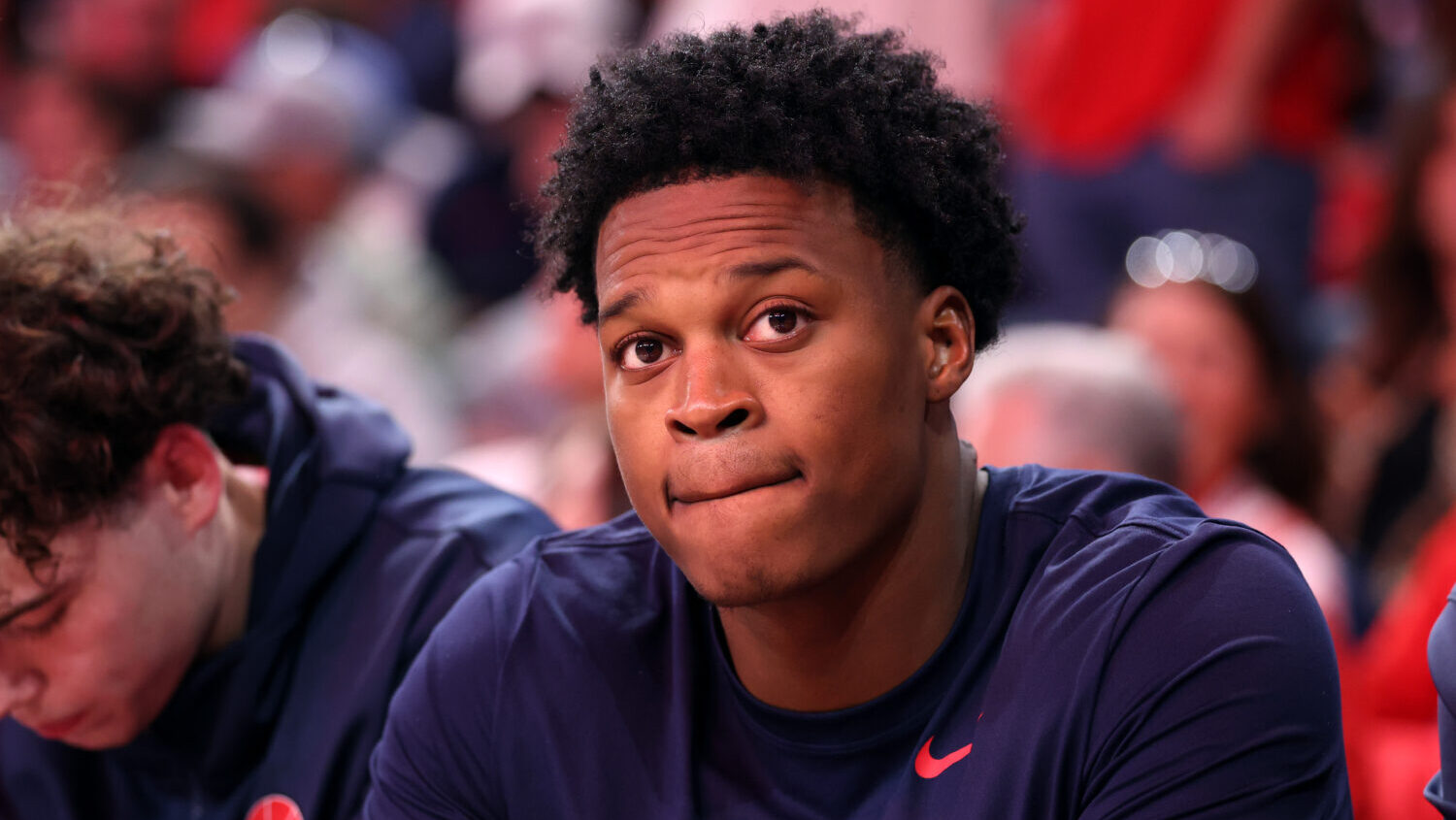
Arizona forward RJ Godfrey will not play against No. 3 UConn on Wednesday night after the NCAA refused to certify his eligibility, overriding a Pima County Superior Court injunction that had cleared him to compete just hours earlier.
The decision leaves the Wildcats without the 6-foot-8, 240-pound fifth-year transfer for a marquee non-conference matchup at McKale Center, forcing coach Tommy Lloyd to continue relying on a patchwork frontcourt rotation.
Arizona announced the NCAA’s position Wednesday afternoon, less than an hour before tipoff, stating the organization informed the school that Godfrey “is not eligible to compete in NCAA Division I basketball and is not entitled to, or subject to, any relief from the court as against the NCAA.”
“We are deeply disappointed with this decision and are currently assessing our next course of action,” the university said in a statement. “We stand firmly behind our student-athlete.”
The standoff escalated quickly Tuesday when Judge Jeffrey Bergin granted Godfrey a temporary restraining order and preliminary injunction ordering the Arizona Board of Regents and the NCAA to certify his eligibility.
The Board of Regents complied immediately, according to SI.com, but the NCAA refused, sending a letter warning the university that if it “permits Godfrey to compete, it does so at its own risk.” Godfrey’s attorneys are expected to ask Judge Bergin to hold the NCAA in contempt of court for failing to comply with the order.
The ruling scrambles Arizona’s game plan against a massive UConn frontcourt featuring Seton Hall transfer Najai Hines and Stanford transfer Oskar Giltay. Lloyd had built his roster construction around Godfrey sliding into the starting power forward spot, allowing Ivan Kharchenkov — arguably the team’s best perimeter defender — to remain at his natural small forward position.
Without Godfrey, Kharchenkov has been pushed to the four, and even center at times, while freshmen Maksim Brnovic and transfers Ugnius Jarusevicius and Evan Otten absorb the remaining minutes.
“(Godfrey) puts the pieces in the right place for our roster to kind of have the depth it needs to have and kind of the impact we would love to have off the bench,” Lloyd said at Big 12 Media Days on Oct. 21, per Arizona Sports.
RJ Godfrey is suing Arizona Board of Regents for his eligibility: "This action asserts a single claim, for breach of contract, against a single defendant. Godfrey does not sue the NCAA and seeks no relief against it. He seeks only an order requiring the University to perform its… pic.twitter.com/rnuG8AHvuW”
Godfrey’s legal odyssey spans three states and five months. The 23-year-old Georgia native initially joined a group of 16 plaintiffs in a Georgia lawsuit filed in July challenging the NCAA’s restriction on games played during the five-year eligibility window, arguing it unjustly restrained their NIL earning potential.
Godfrey committed to Arizona after a Georgia court granted a temporary restraining order in July, but the NCAA has not cleared him to play. An injunction followed on Aug. 5, but the Georgia Court of Appeals stayed that ruling on Sept. 9, rendering Godfrey ineligible again.
After the Georgia appeals court delayed oral arguments until mid-January — well into the season — Godfrey and 15 other plaintiffs withdrew from the suit. Godfrey then joined a separate filing in Waco, Texas, alongside Gonzaga’s Chauncey Wiggins and others seeking a faster track. Wiggins secured a preliminary injunction in Spokane County last week and has played two games for Gonzaga; that injunction runs through Dec. 14, when arguments are scheduled.
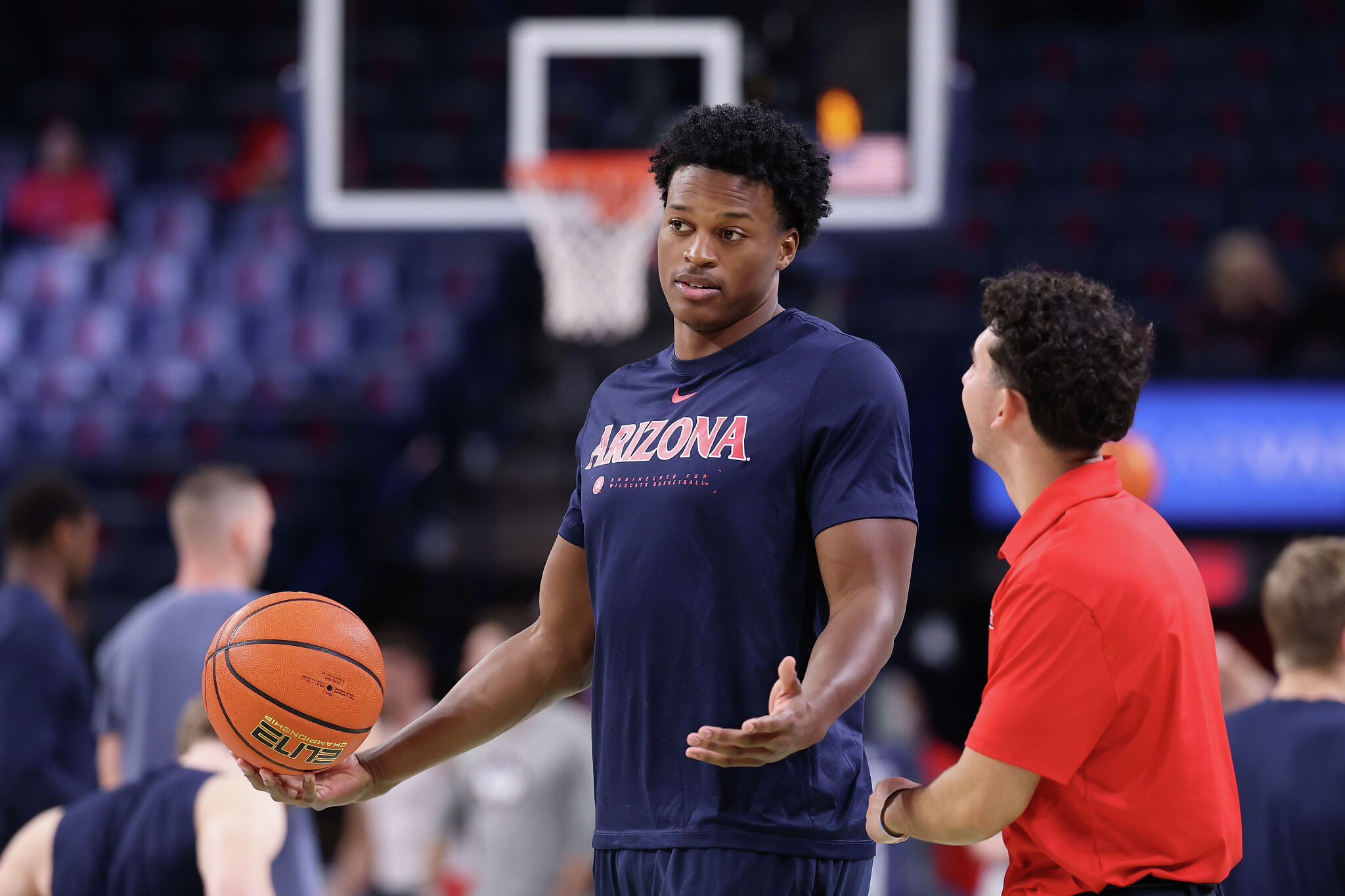
Godfrey took a unique third route, filing suit against the Arizona Board of Regents for breach of contract. His attorney, Ryan Downton, argued that because the NCAA maintains schools determine eligibility, the university was at fault for denying him.
Downton also contended Godfrey and the other plaintiffs were being punished for filing their lawsuits first, while other “five-for-five” athletes — those seeking a fifth year of competition under the NCAA’s June 23 rule change replacing the traditional five-year clock with five years of total eligibility — have largely been cleared, especially in the Big 12.
The NCAA’s refusal Wednesday centers on Godfrey’s status as the lead plaintiff in the original Georgia case, Godfrey v. NCAA, which remains pending. SI.com reported the NCAA’s position is that Godfrey remains a party to that litigation and is therefore not eligible for relief from the Pima County court.
The Wildcats missed on several high-profile power forwards and lost Koa Peat to the NBA draft, leaving Godfrey as a critical missing piece for a Final Four roster.
“RJ is going to help put all the pieces in the right place,”
The NCAA’s June 23 rule change eliminated traditional redshirts and limited future waivers strictly to pregnancy, military service, or religious missions, creating the cliff that Godfrey and dozens of other “five-for-five” athletes are now litigating. Godfrey’s multi-jurisdictional path through Georgia, Texas, and Arizona has left him uniquely exposed to the NCAA’s argument that his status as a named plaintiff in the original suit bars relief elsewhere.
Godfrey did not participate in warmups Wednesday. The game tips at 7:15 p.m. MST on FS1. Arizona’s next step is a contempt motion in Pima County; the Georgia case remains stayed. For now, the Wildcats face a top-three opponent without the player Lloyd said completes the roster.
Worth a look

Iowa State Event Links Horticulture to Health and Economics
Iowa State University’s Department of Horticulture gathered growers, researchers, and state officials in October for an event that...

Ivan Juric Gets Sixth Straight Double-Double as Penn State Beats IU Indianapolis 81-74
Penn State rallied from a ten-point first-half deficit to beat IU Indianapolis 81-74 on Wednesday night, securing a...

Blue Man Group Returns to Chicago for Limited Holiday Run at CIBC Theatre
Blue Man Group returns to Chicago for a holiday run at the CIBC Theatre, the troupe’s first local...

Hawaiʻi Swimmers Sweep Mile, Podium Relay But Trail SMU Invite Leaders
Hawaiʻi opened the SMU Invite on Wednesday with a podium finish in the women's opening relay and a...