
North Dakota State football prepares for a grueling 3,800-mile journey to Honolulu this Saturday night. The Bison must contend with significant travel fatigue and a four-hour time difference while facing the Hawaii Rainbow Warriors.
Bison Travel to Hawaii for Saturday Night Matchup on The CW https://t.co/CgyMrB2cJT
The logistical burden of the trip is substantial, InForum reported. Head coach Tim Polasek’s squad is flying a direct charter from Fargo to Daniel K. Inouye International Airport, a trip expected to last 8.5 hours. This journey serves as a stark contrast to the schedule faced by the home team, which involves much more frequent long-distance travel.
“It’s like no other,” Hawaii head coach Timmy Chang said after his team’s morning practice on Tuesday. “For us, it’s a challenge and it’s going to be a challenge for teams that come over. But ultimately, it’s football. You roll it out there and the guys will have to be ready to play and that’s what it is.”
The immense mileage of the Mountain West
While the Bison face a single, long trek, the Rainbow Warriors deal with a season defined by constant movement. According to the Action Network, a sports and gambling website, Hawaii will fly over 37,000 miles this season. This schedule includes trips to Stanford, Wyoming, Arizona State, Northern Illinois, UTEP, and Nevada.

The physical toll of these trips is a core component of the Mountain West Conference. Former NDSU and Wyoming coach Craig Bohl once described the trip to Hawaii as “a death march,” noting that the difficulty of the travel was a primary factor in the challenge of playing in Honolulu.
| Team | Estimated Season Air Miles |
|---|---|
| Hawaii Rainbow Warriors | Over 37,000 |
| Hawaii’s recent round trip (DeKalb and El Paso) | ~14,800 |
Hawaii’s players have developed specific protocols to mitigate the effects of jet lag and physical strain. Receiver Titan Lacaden said that the team relies on sports performance training to manage hydration, stretching, and sleep schedules to prepare for time zone transitions.
“I’ll tell you this, it’s 10 hours, your back will be aching. It’s not an easy flight. I wish them the best,” said Titan Lacaden, Hawaii receiver.
High stakes in a temporary stadium
The matchup affects both programs. Hawaii enters the game with a 3-6 record, while the 7-2 Bison are fighting to keep their hopes alive for a Mountain West Conference championship berth or a bowl game appearance. For NDSU, avoiding a bowl game in Boise, Idaho, remains a secondary but relevant goal.
The game will be played at Hawaii’s 15,000-seat home stadium, which serves as a temporary venue while the previous Aloha Stadium undergoes replacement. A near-sellout crowd is expected for the Saturday night contest.
To engage the local fans, the university is offering mini-bobbleheads of Coach Chang—who was a record-setting quarterback for the program from 2000 to 2004—to the first 3,000 attendees. Chang said that this is his second bobblehead, having received a full-sized version during his playing days.
“The pads gotta come on, the helmets gotta come on, the cleats gotta go on. So ultimately, it’s just football. Playing a sport you love. The time change does make a difference, but either you want it or you don’t,” said Jamih Otis, a Hawaii senior linebacker.
Keep reading

Two Arrested After 6-Week-Old Girl Taken From Lebanon Store
A 6-week-old girl was reunited with her mother Tuesday after being taken from a store in Lebanon, Missouri....
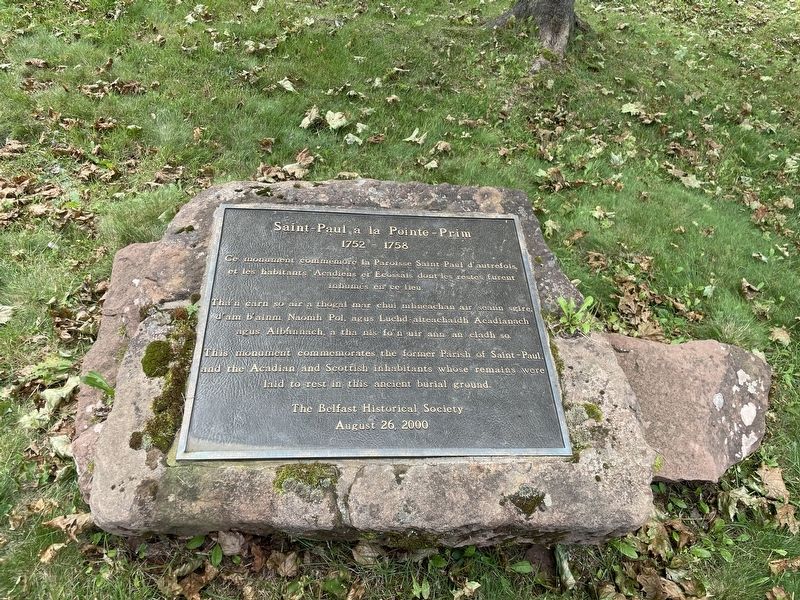
Saint-Paul a la Pointe-Prim Marker Honors Acadian and Scottish Settlers
A historical marker in Belfast, Prince Edward Island, preserves the memory of the former Parish of Saint-Paul and...

Mayor Wu Proposes Zoning Rollbacks to Aid Boston Housing Production
Mayor Michelle Wu is proposing to roll back specific aspects of her administration's 2024 inclusionary zoning updates to...

3 Nature Exploration Classes for Children Ages 2-5
Maine Audubon is opening its doors to young children and their caregivers this January through a new series...