
A Neandertal-derived genetic variant shrinks the occipital lobe in modern humans and is linked to a lower risk of schizophrenia, researchers Hugo Zeberg and Svante Pääbo reported November 16 in Proceedings of the National Academy of Sciences.
The deletion of four DNA letters on chromosome 14 sits in a stretch of about 59,700 base pairs that appears in all five high-coverage Neandertal genomes but is absent from two Denisovan genomes, Archaeology News Online Magazine reported. Its length makes an ancient shared-ancestor origin unlikely — the odds are roughly 1.2 in 100,000 — pointing instead to interbreeding roughly 47,000 years ago, the study says.
Each copy of the variant is associated with 0.85 cubic centimeters less occipital lobe volume, and two copies with about 1.7 cubic centimeters less, after adjusting for total head size. The effect localizes to the cuneus, a visual-processing fold on the inner occipital surface, and lies 24,300 letters upstream of DAAM1, a gene involved in early brain development. The region is largely silent in adult brain tissue, suggesting the variant acts during development.
Carriers also show reduced schizophrenia risk: an odds ratio of 0.95 per copy and 0.91 for two copies, close to a 10 percent reduction, which holds after correction for 16 traits tested. Bipolar disorder, depression, ADHD, autism and intelligence showed no link; a weak signal for educational attainment failed correction and amounts to at most 13 days of schooling per copy against an average of 15 years.
“Differences in the occipital region of the brain between Neandertals and modern humans have long been inferred from the fossil record,” Zeberg and Pääbo wrote. “Here, we show that a common genetic variant influencing occipital brain volume in present-day people was inherited from Neandertals.”
The finding adds a puzzle: fossil casts suggest Neandertals had relatively larger occipital lobes than modern humans, yet this Neandertal variant goes with a smaller lobe. “Neandertals could have an overall larger occipital lobe, but they still contain some variants that contribute smaller sizes and some that contribute larger sizes,” Zeberg told Scientific American.
“A single Neandertal variant need not reflect the overall anatomy of Neandertals,” he told ScienceAlert.
The authors also tested whether Neandertal ancestry as a whole lowers schizophrenia risk. Among variants in Neandertal-derived segments, 54.9 percent of Neandertal alleles associated with lower risk, compared with 54.4 percent elsewhere in the genome — a small, non-significant gap, indicating the effect is specific to this locus.
Faint associations with sports-club membership and religious-group participation in UK Biobank data did not survive correction, and no independent cohort exists to check them. The authors caution against equating the size of a brain region with cognitive ability.
Authors test genome-wide Neandertal ancestry
The authors also tested whether Neandertal ancestry as a whole lowers schizophrenia risk.
Faint associations with sports-club membership and religious-group participation in UK Biobank data did not survive correction, and no independent cohort exists to check them. The authors caution against equating the size of a brain region with cognitive ability.
Svante Pääbo, founding director of the Department of Genetics at the Max Planck Institute for Evolutionary Anthropology in Leipzig since 1997, pioneered the field of paleogenetics and led the sequencing of the first Neandertal mitochondrial DNA in 1997 and the draft nuclear genome in 2010. His work established the framework for identifying archaic introgression in modern humans, including the 2010 discovery of Denisovan ancestry from a Siberian finger bone.

DA Opens 3 Cold Storage Facilities, Launches Fuel Aid for Truckers in Ilocos Sur
The Department of Agriculture opened three modular cold storage facilities in Ilocos Sur on Friday and launched fuel...
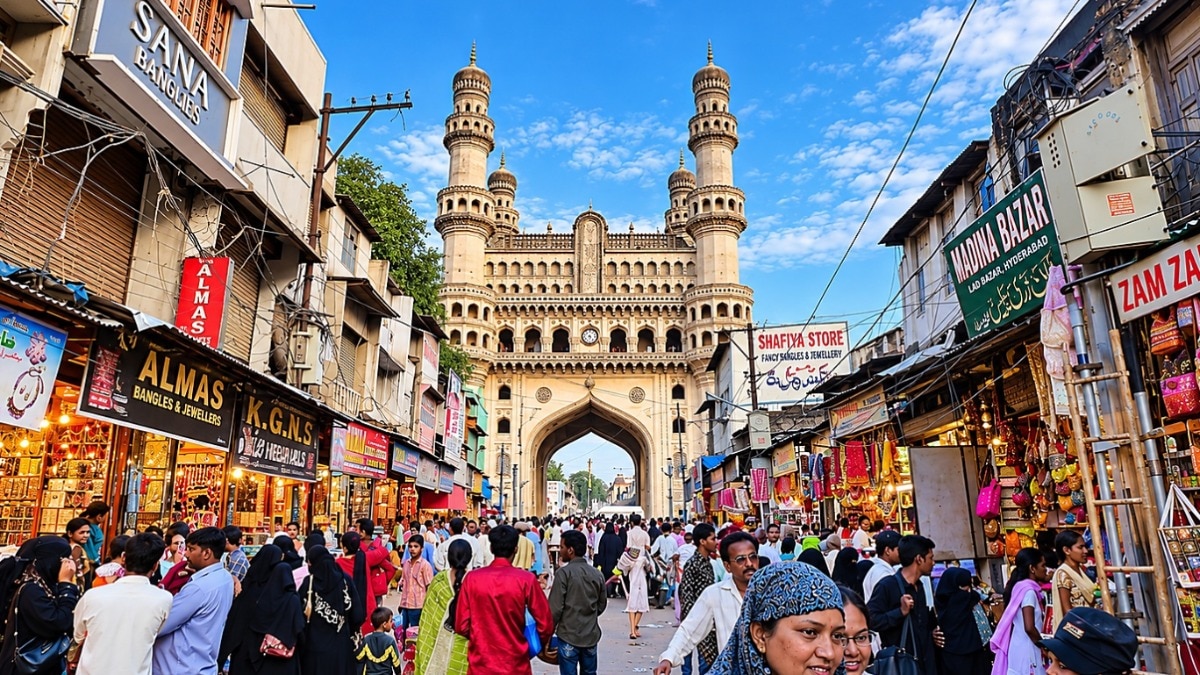
Hyderabad Police Step Up Security After LeT Email Threatens 26/11-Style Attack; Official Calls It Hoax
Hyderabad police stepped up security across the city on Sunday after an email titled “Lashkar-e-Taiba” threatened bomb blasts...

Nearly 1M Gastric Cancer Cases in 2024: 76% Linked to Treatable H. pylori, IARC Data Shows
New global estimates show nearly one million people developed gastric cancer in 2024 and about 650,000 died, with...

Milkita Factory Fire: 24 Body Bags Recovered, 37 Missing, Search Resumes Monday
Fire broke out Saturday at 5 p.m. local time at the Milkita factory in Serang district, Banten province....