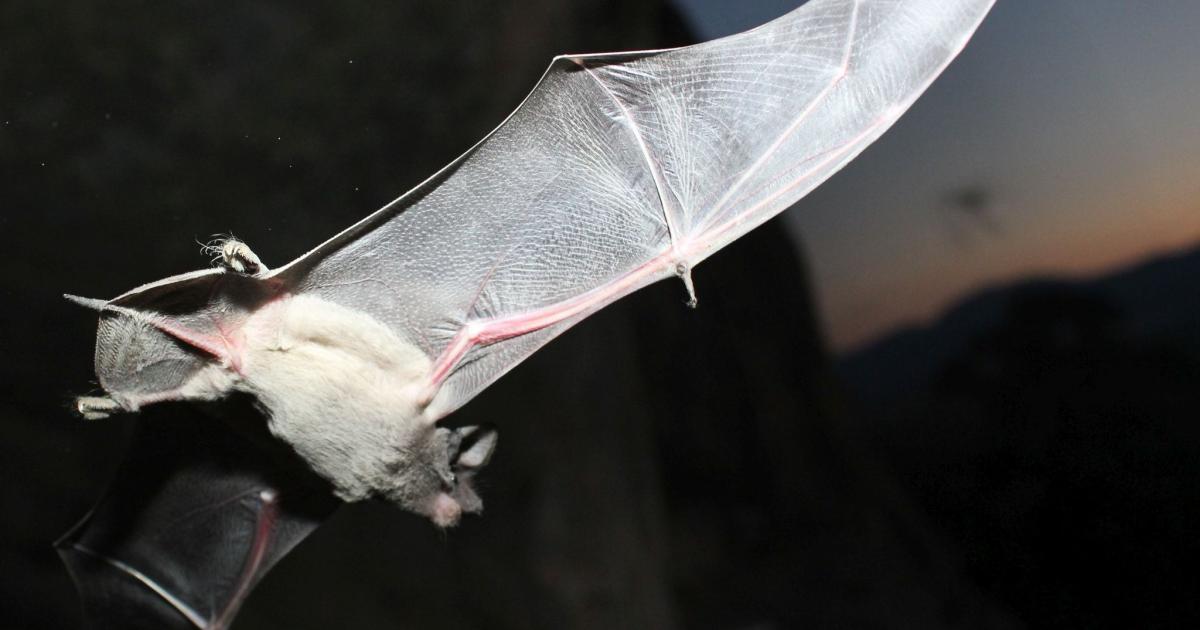
A Nevada dirt road at mile marker 76 leads to the state’s largest known bat roost and a hidden natural arch, both unmarked from U.S. Highway 50.
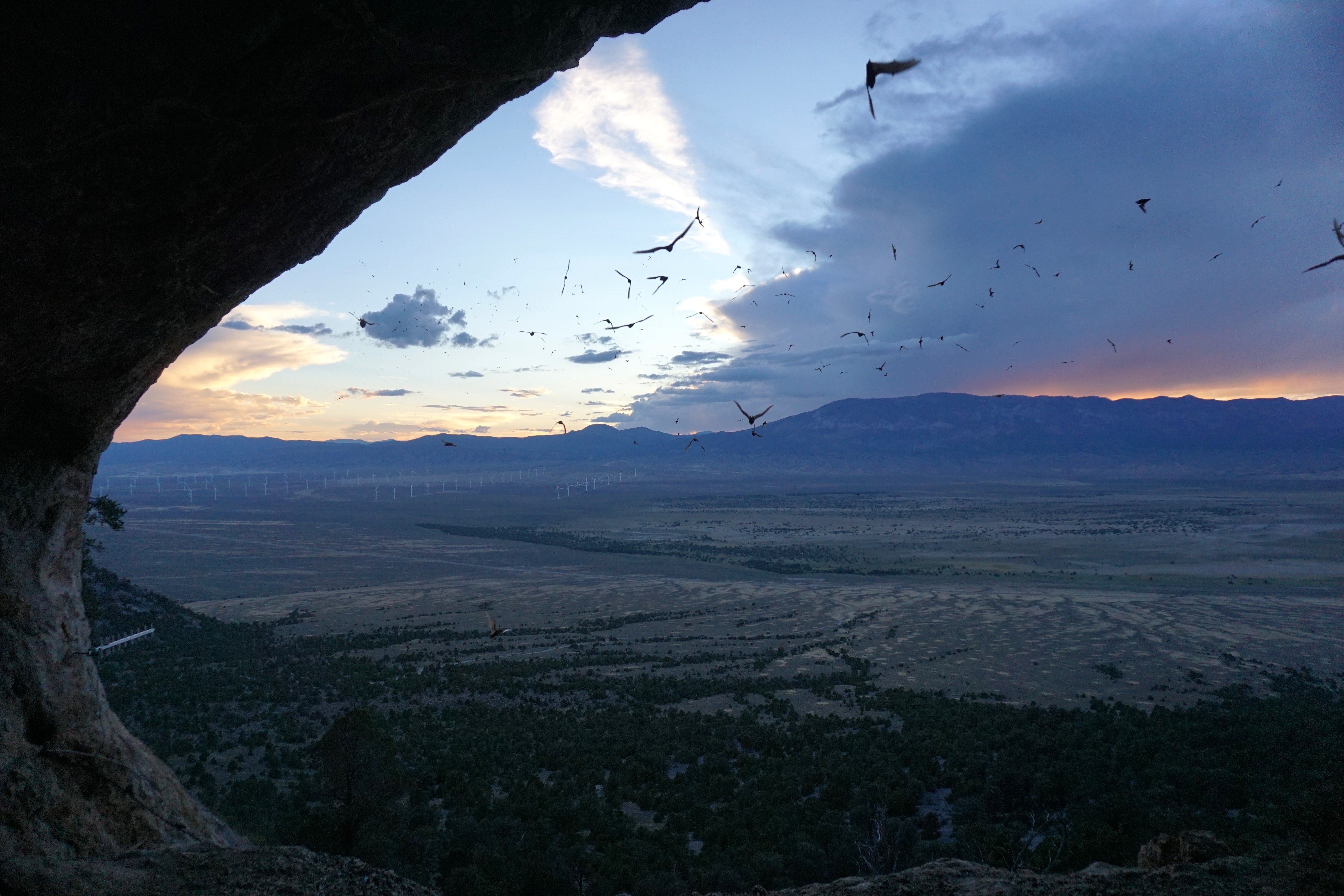
- Rose Guano Cave hosts 1 million to 3 million migratory bats each fall, making it Nevada’s largest known bat roost.
- A laser system slows Spring Valley Wind Farm turbines when bats exit the cave at dusk.
- The cave was mined for guano fertilizer from 1913 until its last recorded activity in 1986.
- Osceola Arch, invisible from the highway, sits steps from the cave entrance on BLM land in White Pine County.
Cave serves as continental migratory stopover
Rose Guano Cave supports multiple bat species, primarily Mexican free-tailed bats, and functions as a critical migratory stopover where bats rest and refuel during long-distance journeys, said Kenzie Margiott of the Nevada Department of Wildlife.
“The cave highlights just how connected Nevada’s wildlife is to the rest of the continent, with some bats traveling as far south as Central America,” she said. The cave also provides habitat for bats to rear their young, Margiott added.
Wind farm uses laser to cut bat deaths
A government wildlife sign at the site states each bat consumes 200 to 600 insects nightly, and a colony this size eats approximately 20 tons of insects each night. Geological Survey data.
Guano mining ended four decades ago
Miners began extracting bat guano for fertilizer in 1913, according to blm.gov. In 1926, they blasted an adit — a horizontal tunnel — into the hillside below the natural entrance to reach deposits more easily. The cave was designated a Bat Cave and Guano Mine Historic Area in 1970.
Its last active mining activity was recorded in 1986, and the Bureau of Land Management no longer issues mining permits for the site, rgj.com reported. A painted warning inside — “Danger, Positively No Trespassing, Rose Guana (sic) Mining Claim” — remains but is outdated.
White-nose syndrome risk closes cave to entry
Signage urges visitors not to enter from April 1 to Nov. 1 during peak migration, but the Nevada Department of Wildlife recommends staying out entirely. “The cave can be safely appreciated by viewing the bats’ evening emergence from a distance outside the entrance,” Margiott said.
“Limiting access also helps reduce the risk of introducing white-nose syndrome, a disease that poses a serious threat to bat populations.” The approach requires a sturdy vehicle on a washed-out, rutted dirt road, then a steep climb over loose jagged rocks and sagebrush with no defined path.
Osceola Arch revealed only up close
Steps from the cave, Osceola Arch appears as a simple rock mountainside from the highway. Only near the cave does the opening frame a view of sky through stone, rgj.com reported.
The arch is named for the nearby ghost town of Osceola, a gold-mining community from the late 1870s where a few residents still live. The turnoff sits across from the Bahsahwahbee Sacred Water Valley turnout, which memorializes three “Swamp Cedar Massacres” of Native people by the U.S. Army, a California militia, and vigilantes.
Outdated mining claim warning remains posted
Painted on an interior wall are the words “Danger, Positively No Trespassing, Rose Guana (sic) Mining Claim,” a message the Nevada Department of Wildlife says is outdated.
Adit closed to protect bat habitat stability
In 1926, miners drove an adit into the hillside below the natural entrance to access guano deposits; that tunnel has since been closed to limit human access and maintain a stable environment for bats, the Bureau of Land Management said.
The Bureau of Land Management said it works to balance habitat protection with public access opportunities at the site, which was designated a Bat Cave and Guano Mine Historic Area in 1970.
BLM balances access with habitat protection
The cave extends approximately 483 feet with two large chambers separated by roughly 50 feet of vertical relief, according to blm.gov. Under the Federal Cave Resources Protection Act of 1988, the BLM works to protect significant caves on public lands while providing public access opportunities. The adit driven in 1926 has since been closed to limit human access and maintain a stable cave environment for bats and other cave resources.
Related reading

Over 100 Rally, March in Minneapolis Demanding State Fund Trans Healthcare
Over 100 people rallied in Chute Square Park and marched through Northeast Minneapolis on Friday, November 20, to...

Bleacher Report Analyst Projects Jaguars Could Trade Brian Thomas Jr. to 49ers in 2027 Offseason
Jacksonville Jaguars wide receiver Brian Thomas Jr. remains a candidate to be traded in the 2027 offseason, with...

Prosecutors Seek Carver Trial Delay, Citing Defense Attorney Conflicts
East Baton Rouge prosecutors asked Judge Gail Horne Ray on Monday to postpone Casen Carver’s Nov. 30 bench...

Massachusetts Golfers Post 2.8 Million Scores in 2026; Captains, Vesper, Long Meadow Lead Facility Rankings
Massachusetts golfers posted more than 2.8 million scores in 2026, up from roughly 2.7 million a year earlier,...