The law takes effect February 22, 2027, and covers talking stuffed animals, dolls, and robots that use the internet to hold ongoing conversations with children.
Attorney General Letitia James said her office “will not hesitate to enforce this law and other measures to stop AI systems from doing harm,” The Guardian reported. Violations carry fines up to $15,000 per day per violation, enforced through court action by the Attorney General.
What the ban covers
The legislation defines an AI companion as a system that uses AI to mimic a lasting relationship — remembering past chats and user preferences, asking emotional questions on its own, and maintaining a running conversation about the user’s personal life — all three criteria must be met, framesignal.com reported. The law borrows this definition from an earlier New York statute. Customer-service bots, research assistants, and task-oriented systems are excluded.
A children’s toy is any product designed or intended for a child 12 or younger to play with, under the federal definition the law incorporates. The ban applies to making, distributing, selling, holding for sale, or trading such toys in New York.
Why lawmakers acted
Hochul cited a study by NBC News finding that the Pixie Paw Smart Interactive Plush Cat, marketed to children as young as three, shared details about firing squads, massacres, and explained gang rape.
A consumer watchdog report from the U.S. Public Interest Research Group Education Fund tested AI chatbot toys marketed to ages 3 to 12 and found some talked in depth about sexually explicit topics, told children where to likely find matches at home, and acted upset when a child had to leave.
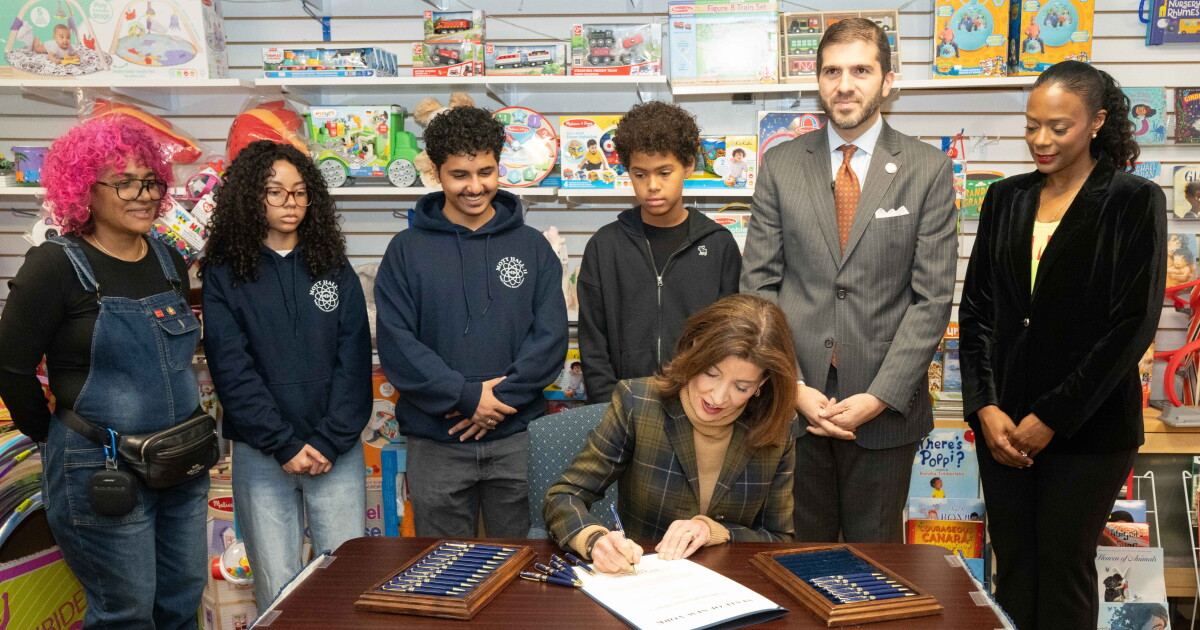
“Parents shopping for children’s toys should not have to worry that dangerous chatbots disguised as toys could expose their children to inappropriate conversations, manipulate their feelings or put their privacy at risk,” Hochul said. Some toys had few or no parental controls, and safety limits weakened the longer a conversation continued; certain toys could also record a child’s voice or scan their face, The Guardian reported.
Industry pushback and compliance questions
The Toy Association opposed the ban and favors studying the toys instead; it plans to share guidance with members on complying, framesignal.com reported. The law names no specific products, though a sponsor memo points to Miko, a talking robot selling for under $150. It is not yet clear which toys currently on sale meet the law’s definition.
Earlier this week, more than 155 child safety advocates and technology experts sent a letter to Amazon CEO Andy Jassy and eBay CEO Jamie Iannone asking them to bar AI toys from their platforms.
An eBay spokesperson said the company “continually evaluate[s] our policies, engage[s] with regulators, and comply[s] with applicable laws.” Amazon stated it requires third-party sellers to comply with applicable laws and supports “efforts across the industry and government to put appropriate guardrails in place,” The Guardian reported.
Lawmakers and advocates cite new safety research
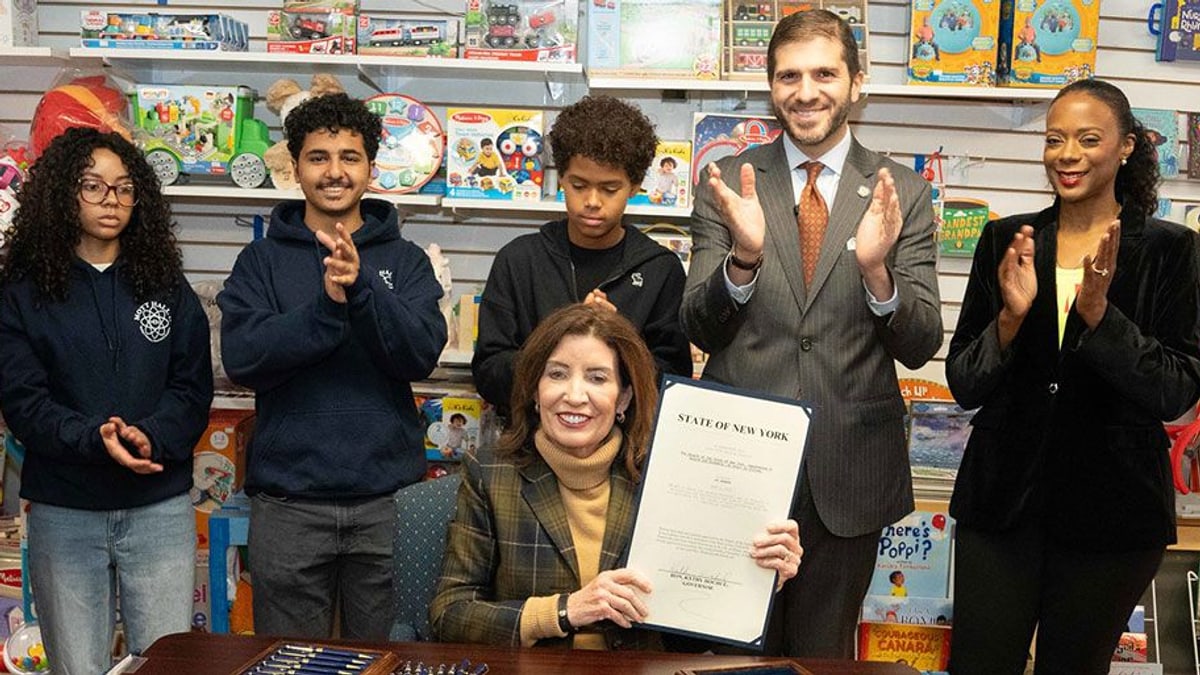
State Senator Andrew Gounardes and Assemblymember Rebecca Kassay introduced the moratorium legislation.
Muna Heaven of Mothers Against Media Addiction referenced the old Teddy Ruxpin toy when discussing the ban. That is New York’s response,” Heaven said. “In other words, if Teddy goes tech, then Tech Teddy needs to be safe, and it’s as simple as that.”
Governor Hochul and Attorney General James pledge enforcement
Hochul said the measure was “deeply personal” and that, as a mother and grandmother, “it’s my job to put New York families first.”
Attorney General Letitia James said her office “will not hesitate to enforce this law.”
Industry opposes ban as study period begins
The law names no specific products, though a sponsor memo points to Miko, a talking robot selling for under $150.
Gounardes and Kassay said the pause gives the state time to study the toys. An earlier draft would have required four state officials to report on the toys’ risks and benefits within four years, but the version that passed leaves that study out.
Broader AI safety agenda
The ban follows California’s four-year moratorium on AI companion toys signed earlier this year, and Pennsylvania is considering its own measure. Last month, Hochul signed “AI Chatbot Restrictions for Minors” legislation prohibiting companies from offering unsafe chatbot features to minors, including features that foster emotional dependency, encourage self-harm, or engage children in sexually explicit talk.
She indicated more AI safety proposals are coming in her State of the State address early next year. “We’ll set clear safety standards and put independent experts inside these companies to make sure that’re following the rules,” Hochul said.
The ban expires five years after taking effect, when lawmakers can decide whether to renew or lift it, according to the bill’s sponsor memo cited by framesignal.com.
Keep reading
Oklahoma’s Isaiah Sategna Caps Two-Year Run as Leading Receiver in Regular-Season Finale
Oklahoma receiver Isaiah Sategna will play his final regular-season game Saturday at 3:15 p.m. against No. 23 Missouri,...

Wawa Brings Philadelphia Taste of Home to Nashville With Community-Focused Expansion
Wawa opened its first in-town Nashville store the day after Pennsylvania native Joseph Hudak and Philly-raised singer Devon...

Siouxland Libraries Launches 2027 Winter Reading Program With Bingo Challenges
Siouxland Libraries announced its 2027 Winter Reading Program on Tuesday, a free challenge running from Nov. 30 through...

Missouri Cross Country History: From 1905 Club to Big Six Charter
The University of Missouri cross country program traces its origins to a 1905 club that was not initially...