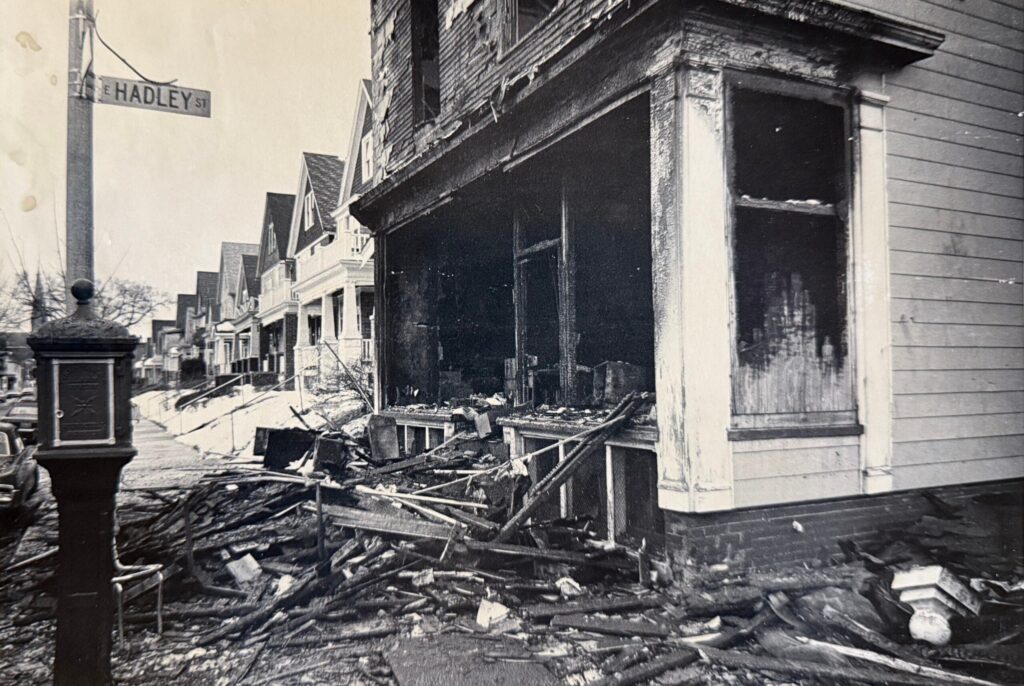
Six people — including a 20‑month‑old baby — escaped a firebomb that gutted the Bugle American’s Milwaukee offices at 2 a.m. on Feb. 22, 1975, and the underground weekly still hit the streets one day late.
The paper’s survival is the backbone of “Some Things Don’t Burn: Art, Activism and Arson at the Bugle American,” a new book by Wisconsin‑born author Aurore Sibley, whose parents met on the staff, Wisconsin Public Radio reported. “The counterculture was really thriving,” Sibley told “Wisconsin Today.” “It culminated into this very politically active consciousness of the young generation, and they were really searching for ways to express themselves.”
Founded in Madison by former UW‑Milwaukee journalism students Dave Schreiner, Mike Hughes, Ed Goodman, Mike and Judy Jacobi, and cartoonist Denis Kitchen, the Bugle launched its first issue on Sept. 16, 1970, WPR reported. Schreiner sank his savings into the venture. After moving to Milwaukee, the paper went free for two and a half years to boost circulation and ad sales, Urban Milwaukee reported.
The Bugle made enemies covering prison abuse, police brutality, war resistance and marijuana legalization — topics the Milwaukee Journal and Sentinel ignored.
A standing police detail watched the office until the nights before the bombing, when officers vanished and pro‑Nazi pamphlets appeared on the fence, Urban Milwaukee reported. The arson destroyed back issues, typewriters, desks and Daydream Productions’ concert records, including ticket checks for two Herbie Hancock shows. The typesetting machine survived.
Readers and supporters delivered replacement equipment and back issues so the next edition could publish with a photo of the burned‑out office on the cover, Urban Milwaukee reported.
Milwaukee police and fire departments never formally reported the fire to the State Department of Justice or the State Fire Marshal’s Office, and the case went cold.
Decades later, former news editor Peter Spielmann gathered evidence pointing to possible involvement by Waupun State Prison guards, Sibley said, though theories also implicated police or neo‑Nazis.
The Bugle published until December 1978, when fading counterculture momentum and lost ad revenue ended its run. Kitchen, in his foreword to Sibley’s book, called the paper’s seven‑year, 316‑issue run “a remarkable accomplishment.”
Related reading

New Mexico Gov. Lujan Grisham Releases Universal Childcare Blueprint for Other States
New Mexico Gov. Michelle Lujan Grisham released a 32‑page universal childcare blueprint on Tuesday, offering other states a...

CFP Committee Ranks Tennessee Over Alabama for First Time This Season
The College Football Playoff selection committee ranked Tennessee No. 5 and Alabama No. 6 on Tuesday, marking the...

Nevada DOT Warns of Deadly Rural Road Risks Ahead of Holiday Travel
On Tuesday the Nevada Department of Transportation reminded drivers to take extra precautions on rural highways ahead of...

Cheyenne Cup Fills Thanksgiving Orders With Off‑Menu Pies, Kolaches, Casseroles
Cheyenne Cup owner Eloy Martinez is filling advance Thanksgiving orders — apple pie kolaches, peach sweet potato casserole...