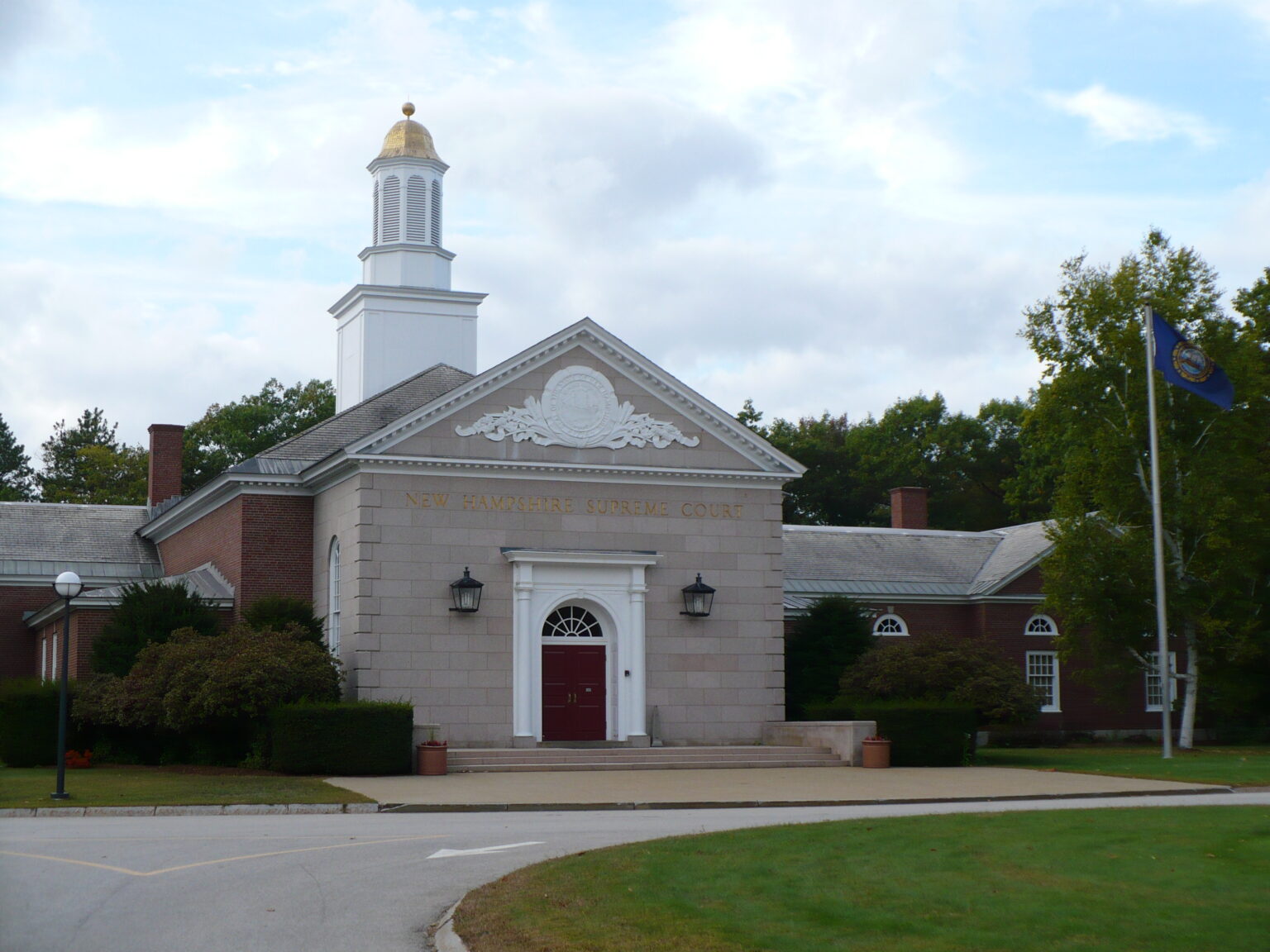
New Hampshire’s top lawyers argued Monday that voters have no fundamental right to cast absentee ballots, even as the state constitution requires absentee voting be available to those who cannot vote in person. The argument came during a hearing before specially appointed justices on a lawsuit challenging strict new identity-verification requirements for mail voting, Democracy Docket reported.
Mary Triick, a senior assistant attorney general, told the court that while voting is a fundamental right, absentee voting is not. “Obviously, you have a fundamental right to vote. You do not have a fundamental right to vote absentee,” Triick said during the hearing.
Lawsuit targets SB 287 requirements
Three visually impaired voters sued Secretary of State David Scanlan and Attorney General John Formella, both Republicans, over SB 287, which took effect last year. The law requires absentee voters to either present a valid photo ID in person when requesting a ballot or submit a notarized signature or copy of their ID with every application for local, primary and general elections.
The plaintiffs allege the requirements impose undue burdens on disabled, elderly and low-income voters. A trial court dismissed the suit last December, ruling the ID requirements were “ordinary burdens” justified by the state’s interests in election security and fraud prevention.

The case reached the state Supreme Court on appeal, but all five justices recused themselves. The court appointed Superior Court justices to hear the case instead, according to an August 14 order specially assigning temporary justices.
Much of the state’s defense relies on McDonald v. Board of Election Commissioners of Chicago, a 1969 U.S. Supreme Court ruling that held absentee voting is a privilege rather than a constitutional right, giving states broad discretion to restrict access.
Justices press distinction in state constitution
Justice Charles Temple noted a key difference from the McDonald precedent: unlike the U.S. Constitution, New Hampshire’s constitution orders the legislature to make absentee voting available to certain voters, including those with physical disabilities. “Isn’t that a huge difference?” Temple asked.
Triick responded that the constitutional directive to the legislature does not establish a fundamental right to vote absentee. “It’s certainly not clear that that establishes a fundamental right to vote absentee, right? Not every topic addressed in the Constitution is a fundamental right,” she said.
Justice Martin Honigberg added that absentee voting may “make sure that people can exercise that fundamental right?” Triick replied: “I think that voting absentee is part of exercising your fundamental right to vote, but you have to be alleging that the thing unconstitutionally burdened is your right to participate in the franchise writ large and not simply your ability to get an absentee ballot.”
Plaintiffs say state avoids central claim
During rebuttal, David Fox, an attorney representing the visually impaired voters with the Elias Law Group, said the state’s focus on whether a right to vote absentee exists ignores the lawsuit’s core argument.
“The state seems to fault us, at times, for not alleging a burden on the right to vote, and at other times for not alleging a burden on a right to vote absentee. And it is sort of a divide-and-conquer strategy that ignores what I think is the quite straightforward nature of the claims being made,” Fox said.
New Hampshire among strictest mail-voting states
Even before SB 287, New Hampshire required voters to have a qualifying reason to vote absentee — such as being out of town, having a disability or illness, or observing a religious holiday — and lacks a grace period for ballots arriving after Election Day. A separate law, SB 218, adopted at the same time, requires documentary proof of citizenship for voters registering by absentee ballot.
The state also eliminated student identification cards as acceptable voter ID; the U.S. Supreme Court lifted a lower court order allowing limited use of student IDs just weeks before the 2026 midterms.
A federal court this year ruled the documentary proof-of-citizenship requirement for registration was an “unjustifiable burden on the right to vote in violation of the First and Fourteenth Amendments.” New Hampshire’s appeal of that ruling is ongoing in the First Circuit.
Keep reading
Minneapolis Council Blocks Mayor’s Police Chief Pick Bill Peterson in 8-5 Vote
Council President Elliott Payne listened to interim Chief Bill Peterson struggle to name a single instance of racist...
MoDOT Moves Up Westbound I-70 Traffic Shift to Monday at 3 p.m. Due to Cold Forecast
MoDOT accelerated a westbound I-70 traffic shift between Wright City and Foristell to 3 p.m. Monday, November 23,...

New York Historical Marks Marilyn Monroe Centennial With Lawrence Schiller Photographs
The New York Historical opened “Marilyn Monroe Centennial: Photographs by Lawrence Schiller” on Nov. 20, marking the 100th...

Jeffrey Lee Klick, 71, Woodward Banker and Farmer, Dies
Jeffrey Lee Klick, a longtime banker and farmer in Woodward, Oklahoma, died Nov. 17, 2026, at age 71...