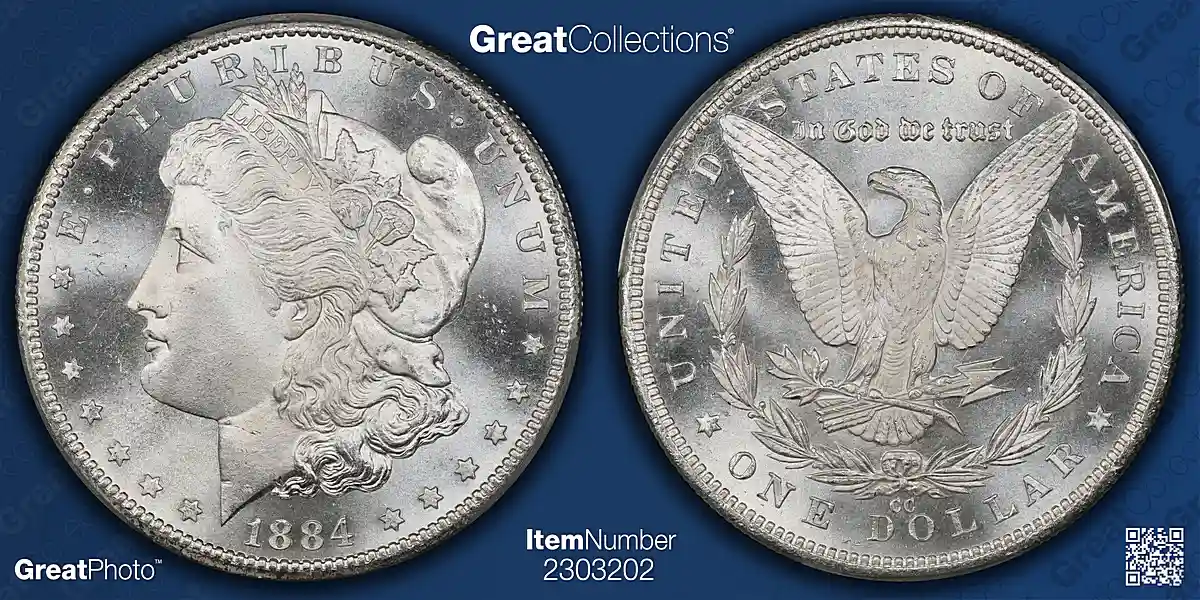
In March 1964, the U.S. Treasury halted silver dollar payouts and revealed it still held 962,638 examples of the 1884-CC Morgan Dollar, 84.7% of the original mintage, Coin Week reported.
The hoard transformed a coin long considered a major rarity into the most abundant Carson City issue in Mint State, yet the finest survivors remain exceptionally scarce. PCGS population data from June 2026 lists just 26 regular-strike examples graded MS-67+ and only four graded higher, with the finest at MS-68+. An MS-67+ example is being offered by GreatCollections on Nov. 29.
Early collectors struggled to locate the 1884-CC. Q. David Bowers documented that an Uncirculated example brought $11 in 1919, a meaningful premium over face value. The Pittman Act of 1918 authorized melting more than 270 million silver dollars, but Bowers estimated very few 1884-CC dollars were destroyed. Most remained in government vaults until the Treasury released some bags in 1938 and additional quantities in the 1950s.
By the early 1960s, rising demand for silver dollars depleted Treasury stocks. When officials stopped payouts in March 1964, the remaining inventory included nearly three million silver dollars, predominantly CC-mintmark issues. The 962,638 1884-CC coins represented nearly 85% of the entire 1,136,000 mintage.
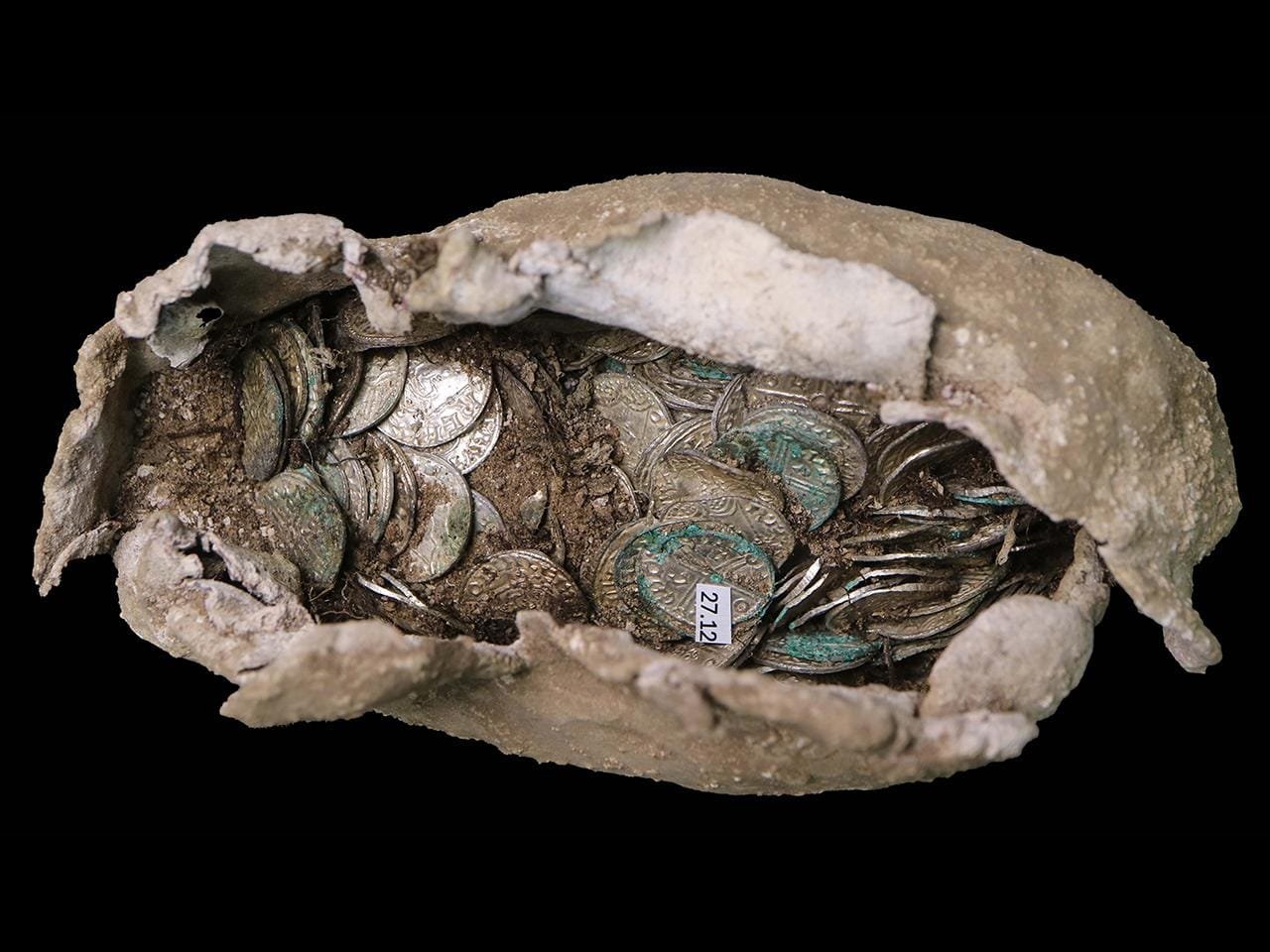
Congress authorized the General Services Administration to distribute the coins. In December 1971, approximately 2.9 million silver dollars were transferred to the West Point Bullion Depository. The GSA conducted seven sales between 1972 and 1980, offering Uncirculated 1882-CC, 1883-CC, and 1884-CC dollars for $30 each in distinctive black plastic holders.
Of the 962,638 surviving 1884-CC dollars, officials classified 788,627 as Uncirculated, separated 174,008 as culls, and retained three for inspection. Many culls showed surface problems rather than circulation wear. Bowers estimated only 5,000 to 10,000 genuinely circulated examples survived, creating a paradox: the issue is common in Mint State but scarce in circulated grades.
Silver dollars are large, heavy coins that acquired contact marks during decades of bag storage. At the highest grades, preservation separates affordable coins from five-figure rarities. Collectors prize strong detail in Liberty’s hair above her ear, the eagle’s breast feathers, and lively cartwheel luster.
Recent auction results illustrate the spread. At the Stack’s Bowers June 2026 Showcase Auction, a PCGS MS-67 example brought $3,660, while an MS-67+ specimen realized $20,740. Another MS-67+ with CAC approval achieved $26,840. In April 2024, two other PCGS MS-67+ examples brought $11,400 and $15,600. The auction record for a regular-strike 1884-CC stands at $85,188, paid on June 25, 2015, for a PCGS MS-68+ coin from the Jack Lee and Coronet collections through Legend Rare Coin Auctions.
Coins with Prooflike (PL) or Deep Mirror Prooflike (DMPL) fields carry separate grading populations and markets. Examples remaining in original GSA holders with boxes and certificates attract a dedicated following, and PCGS and NGC recognize eligible GSA pedigree holders. CAC approval may also influence prices among advanced collectors seeking exceptional quality.
“The 1884-CC Morgan Dollar reminds us that the number of coins originally struck tells only part of the story,” Coin Week reported. “Sometimes, the rarest thing about a coin is not its date or mintmark, but the condition in which it survived.”
Related reading
- Boston, BHA Sue Over Trump Rule City Says Could Displace 500 Families
- Nvidia Reinstates CEO Jensen Huang After China Spy Affair, Citing US Government Input
- Dollar General's Four Test Buys: 30 Price Errors, 21 Against the Shopper (daybreakwire.com)
- Dollar edges off 19-month high after market rout; yen softens (newsarchyuk.com)

Boston, BHA Sue Over Trump Rule City Says Could Displace 500 Families
Boston and its housing authority filed suit Monday in US District Court in Massachusetts challenging a Trump administration...

Nvidia Reinstates CEO Jensen Huang After China Spy Affair, Citing US Government Input
Nvidia reinstated Jensen Huang as president and chief executive officer on Monday, less than two weeks after he...
Louisiana Holds 2-3 Million Wild Alligators, Largest Population Worldwide
Louisiana holds an estimated two to three million wild alligators, the largest population in the world. The numbers...

U.S. Army Delays Lead Azide Detonation in Iowa to Nov. 25
The U.S. Army delayed the controlled detonation of degraded lead azide explosives at the Iowa Army Ammunition Plant...