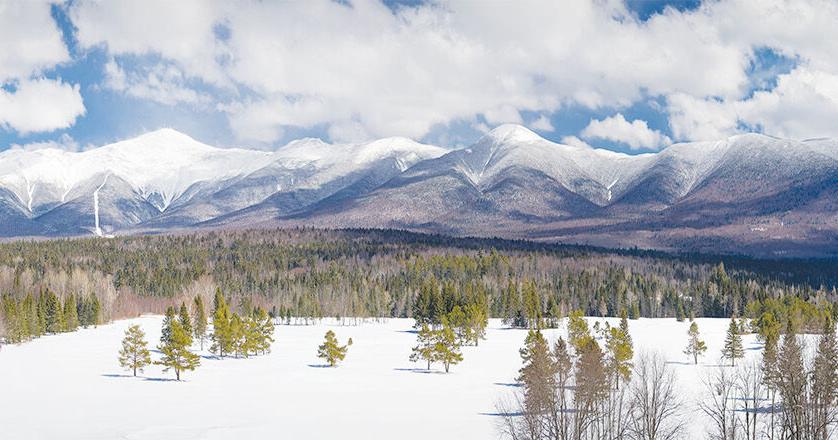
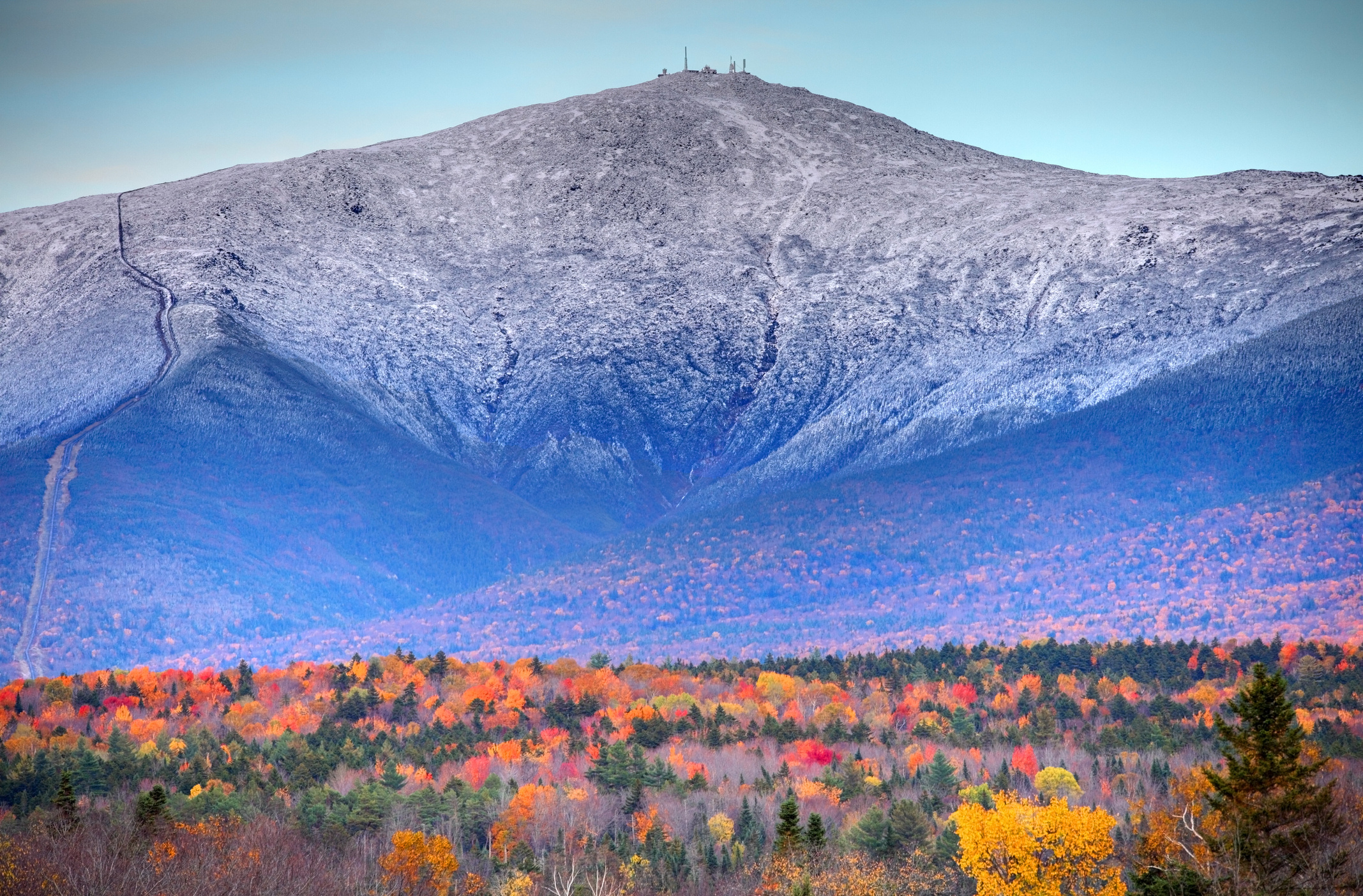
New Hampshire claims 48 summits that rise above 4,000 feet, far outpacing Vermont’s five and Maine’s 14, and holds the highest peak in the Northeastern United States at 6,288-foot Mount Washington, according to a comparison of the three northern New England states.
The analysis also shows New Hampshire is the smallest of the three by land area at 9,349 square miles (5.98 million acres), while Maine spans 30,865 square miles (22.6 million acres) — roughly 3.8 times larger — and Vermont covers 9,615 square miles (6 million acres). Despite its smaller footprint, New Hampshire’s 2026 population of approximately 1.342 million edges Maine’s 1.405 million and dwarfs Vermont’s 647,464, making it the most populous of the trio.
Beyond raw summit counts, New Hampshire’s White Mountain National Forest hosts more than 160 miles of the Appalachian Trail. The Franconia Ridge Loop Trail, featuring three peaks above treeline topped by 5,260-foot Mount Lafayette, was ranked by National Geographic as one of the world’s best hikes. The Appalachian Mountain Club maintains eight high-mountain huts in the Whites, including Greenleaf Hut.
Tuckerman Ravine, a glacial cirque on Mount Washington’s southeast face, draws expert skiers each spring to its 42- to 55-degree slopes. Mount Monadnock is reputed to be among the ten most-climbed mountains worldwide, while Mount Chocorua in Albany is cited by the Appalachian Mountain Club as one of the most photographed peaks in the country.
Mount Major in Alton now sees heavy summer and fall traffic, with parked cars lining the highway beyond its lot for panoramic views of Lake Winnipesaukee.
Vermont’s highest summit is 4,393-foot Mount Mansfield, noted for its profile resembling a face gazing skyward. The Green Mountains contain 150 miles of the Appalachian Trail and the 272-mile Long Trail, the nation’s first long-distance hiking path, whose construction began in 1910.
Maine’s tallest peak is 5,269-foot Mount Katahdin, named by the Penobscot people and the centerpiece of Baxter State Park.
Related reading
Warming Slows Deep Bedrock Water Renewal in Idaho Headwaters
Warming slows the renewal of deep bedrock water that feeds mountain streams even as shallow pathways turn over...

Bridgeport, Herbert Hoover Meet in WV Class AAA Title Game
Bridgeport and Herbert Hoover meet Saturday at 1 p.m. in the West Virginia Class AAA state championship at...
Maryland Extends Chesapeake Bay Commercial Blue Crab Season Four Days After Nor’easter
Gov. Wes Moore and the Maryland Department of Natural Resources announced Saturday, Nov. 28, that the Chesapeake Bay...

Columbia-Greene Humane Society Announces $500K Match for Grubin Center
The Columbia-Greene Humane Society/SPCA announced that an anonymous donor has pledged to match public donations dollar for dollar,...