Dolores Huerta’s Ofrenda in Albuquerque Honors a Labor Icon Hours After Her Death
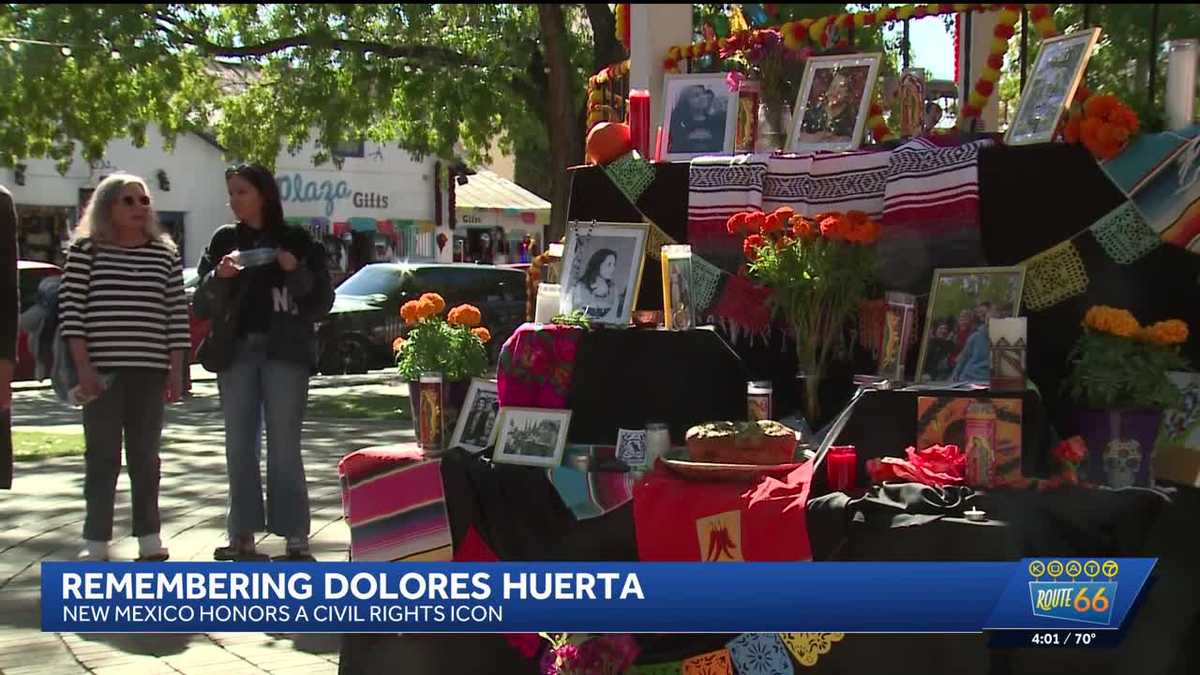
Hours after the news of Dolores Huerta’s passing spread on Wednesday, an ofrenda—traditional Mexican altars for remembrance—appeared in Albuquerque’s Old Town Plaza, transforming the space into a site of collective grief and celebration. Marigolds, photographs, and candles filled the tribute, offering a tangible expression of the labor leader’s enduring impact. The memorial, organized by New Mexico leaders including U.S. Representative Melanie Stansbury and Albuquerque Mayor Tim Keller highlighted Huerta’s role as a "voice of truth" and a catalyst for social justice.
“It’s an incredible loss for us, not only in New Mexico, but for the world,” said Alicia Romero, curator of history at the Albuquerque Museum. “She was always a voice of reason, someone we could rely on to help us see the bigger picture.” The tribute reflected a broader cultural reckoning with Huerta’s legacy, as her family announced she had died at 96, leaving a void in the movements she helped shape.
The Legacy of a Labor Leader: From Dawson to the Nation’s Capital
Born April 10, 1930, in Dawson, New Mexico, Huerta’s early life was marked by the struggles of working-class families. The daughter of a miner and union activist, she moved to California, where she co-founded the National Farm Workers Association with Cesar Chavez. This partnership would define her career, as she became a leading voice in the fight for farmworkers’ rights, advocating for fair wages, safer conditions, and the right to organize. She helped popularize the slogan “Sí, se puede,” a phrase that would later become a rallying cry for social justice movements nationwide.
Her influence extended beyond labor rights. Huerta was a pioneering Chicana activist and advocate for women’s rights, challenging both systemic racism and gender inequality. “Her role as a labor activist, as a Chicana activist, as a woman’s rights activist in many ways, is unparalleled,” Romero noted. This multifaceted legacy is now being reexamined in New Mexico, where she spent her formative years and where her work continues to resonate.
The Ofrenda as a Civic Act: Community, Memory, and Political Symbolism
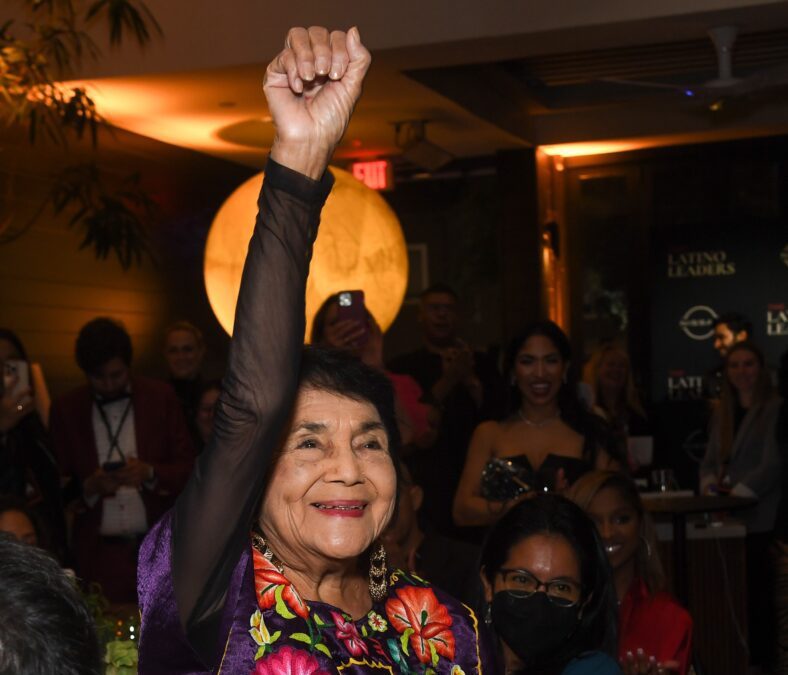
New Mexico leaders placed a tribute in Albuquerque’s Old Town Plaza, reflecting Huerta’s connection to the state. The memorial included photographs of Huerta, showing her connections to the community.
“Dolores was a force of nature,” said New Mexico Gov. Michelle Lujan Grisham, who signed legislation in 2023 establishing April 10 as Dolores Huerta Day. “She gave farm workers a voice and she gave all of us ‘Sí, se puede.’” This sentiment was echoed by U.S. Rep. Teresa Leger Fernandez, who called Huerta “a towering figure whose influence extended far beyond the labor movement.”
A Nation Mourns: Political Tributes Cross the Spectrum
Huerta’s death sparked an outpouring of tributes from across the political spectrum. Democratic gubernatorial candidate Deb Haaland praised her as “a true servant of humanity,” while Republican candidate Gregg Hull called her “one of our own.” “Few New Mexicans have left a mark on our nation like she did,” Hull said, a rare bipartisan consensus on a figure often associated with progressive causes.
“She marched for justice, dignity and people who were too often ignored,” said U.S. Rep. Leger Fernandez. “Today, we mourn a giant. But her footsteps will echo in every march, her spirit will live in every movement, and her words will carry us forward.”
The Unfinished Work: What Comes Next?
As New Mexico and the nation reflect on Huerta’s legacy, the movements she helped build continue to be influenced by her work. Her 2022 interview with CBS, in which she expressed hope that her legacy would inspire “people to take time out of their life, to do the civic work that we need to do,” feels particularly urgent. Activists have commemorated her life, including the dedication of an Albuquerque park in 2017.
The candles in Huerta’s ofrenda at Albuquerque’s Old Town Plaza symbolized her fight for the marginalized.

Nevada Pierre receives support from Roc Nation and Eddie Johnson
“I just want him out. Immediately.” Those were the words of a youth sports organizer in Florida, captured...

South Carolina Senate Race: Polls Show Dead Heat Between Graham and Andrews
A U.S. Senate race in South Carolina that was once considered a safe Republican hold has tightened into...
Providence Lands 5-Star Center Lewis Uvwo for Hodgson Rebuild
Providence secured a commitment from five-star center Lewis Uvwo on Wednesday, October 28, 2026, landing the top-ranked center...

Man Shot Dead, Another Stabbed in Philadelphia Altercation
A 62-year-old man was shot and killed and another man in his 30s was stabbed during a violent...